



Evidence confirms germ warfare and more by Japanese Unit 731










Various forms of evidence including trial recordings, documents and archives reveal bacterial development, human experiments and germ warfare committed by Unit 731, a Japanese biological and chemical warfare unit during World War II.
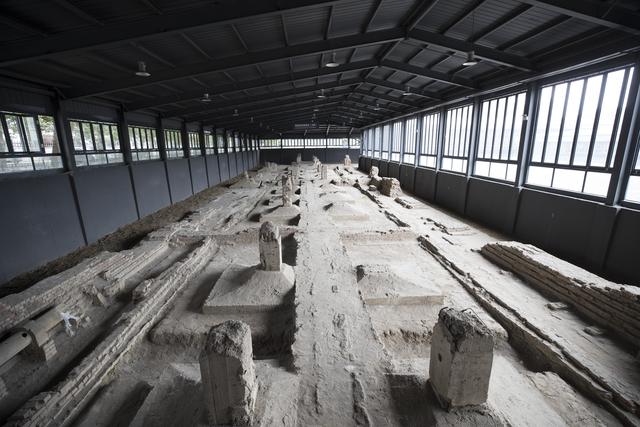
Unit 731, a top-secret biological and chemical warfare research base established in Harbin, Northeast China's Heilongjiang province, was the nerve center of Japanese biological warfare in China and Southeast Asia during WWII.
At least 3,000 people were used for human experiments by Unit 731, and more than 300,000 people in China were killed by Japan's biological weapons.
Trial recordings confirm establishment of germ warfare system
In 1949, 12 members of the Japanese Kwantung Army were tried as war criminals in the Russian Far Eastern city of Khabarovsk for manufacturing and using biological weapons and carrying out inhuman medical experiments during WWII.
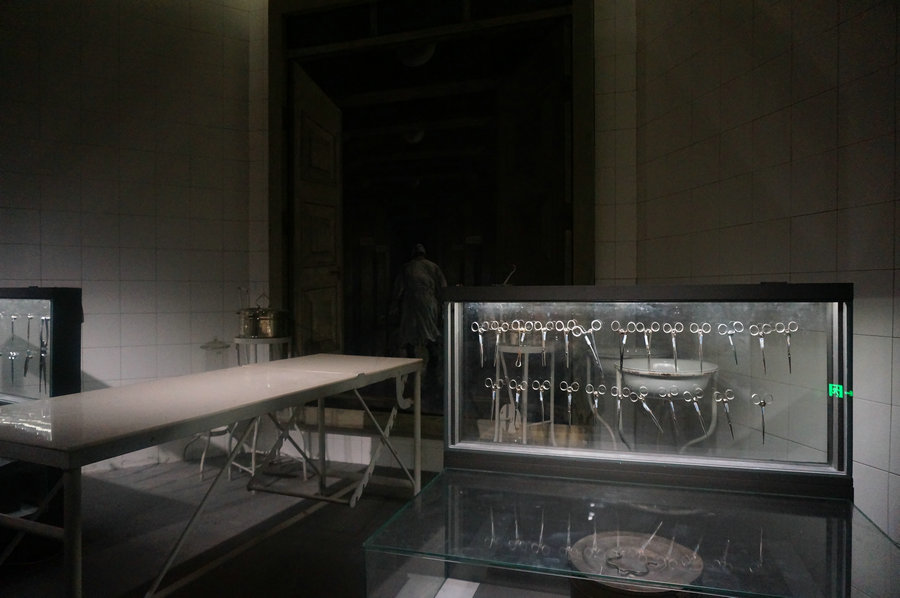
The recordings of the Khabarovsk War Crimes Trials, lasting 22 hours, 5 minutes and 57 seconds, contain contents concerning the transformation and organization of Unit 731, as well as the live human experiments, field toxicity tests, preparation and implementation of germ warfare by Unit 731.
From 1946 to November 1948, during the Tokyo Trial, the United States and Japan reached a secret deal, in which the United States obtained data on human experiments, bacteria experiments, germ warfare and gas experiments conducted by Unit 731 on the condition that the unit members were exempted from their war responsibilities. As a result, the Japanese germ war criminals escaped the Tokyo Trial.
According to Jiao Hongshuang, chief expert of a research team, the Soviet Union repeatedly demanded the extradition of Japanese germ war criminals before December 1949, but it proved futile. As a result, it conducted the Khabarovsk War Crimes Trials from Dec 25-30, 1949.
"The trials revealed for the first time the crimes of human experimentation and germ warfare committed by the Japanese army in Northeast China during its invasion," Jiao said, adding that the recordings also confirmed the establishment of the germ warfare system centered on Unit 731 was a top-down organized war crime committed by the Japanese state.










