



US must lift tariffs on Chinese goods to curb inflation









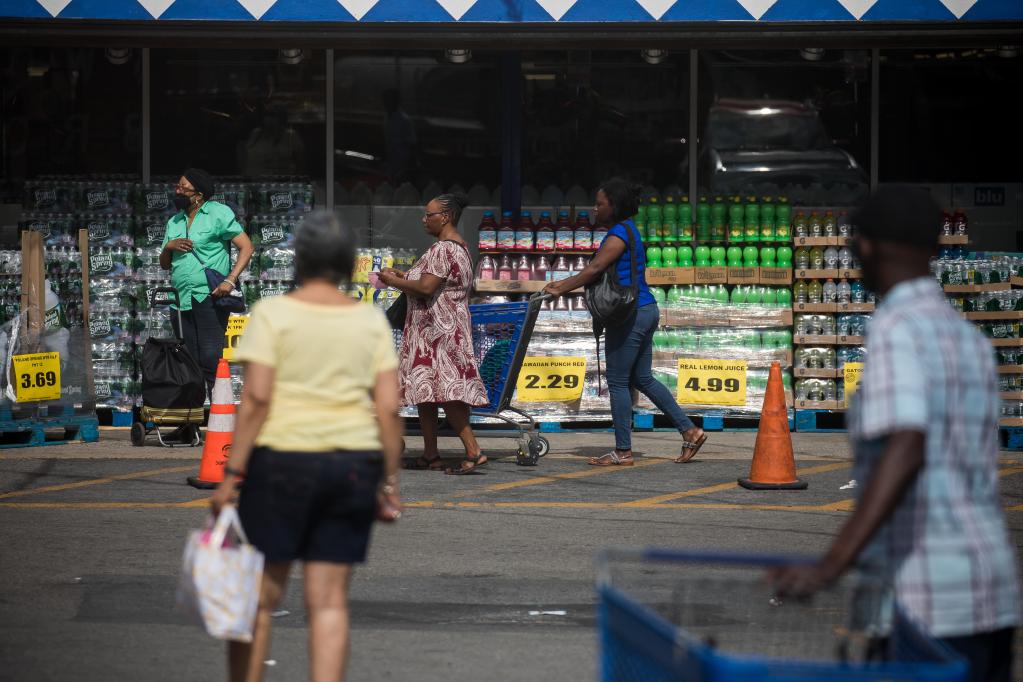
The annual inflation rate in the United States surged to 9.1 percent in June, the highest since November 1981, from 8.6 percent in May and above market forecasts of 8.8 percent, according to the US Bureau of Labor Statistics.
But despite being under increasing pressure to reduce, if not altogether lift, the punitive tariffs on Chinese imports to ease the inflation, the Joe Biden administration is yet to take a final decision.
High inflation has caused a sharp increase in prices of energy, especially gasoline, natural gas and fuel, food and durable goods. And the historical high inflation can be attributed to several factors including the US Federal Reserve's aggressive monetary policy, which raised its balance sheet assets to about $9 trillion from about $4 trillion in early 2020.
Unfortunately, the annual growth rate of the consumer price index, a key measure of inflation, in the US may remain between 7 percent and 8 percent this year.
The impacts of the COVID-19 pandemic on the global supply chains, too, contributed to the high inflation in the US.
Domestic supplies of goods and services in developed economies such as the US and the European Union have fallen short of meeting the demands for quick recovery, with congestion at ports and inefficiency of the supply chains, combined with high tariffs, aggravating the supply shortage.
While the Russia-Ukraine conflict has driven up global energy prices, dealing a blow to the country on wheels that is the US, which has suffered from the rising CPI, severe labor shortage has forced companies to raise employees' salaries to recruit and/or retain workers, pushing the US economy into an inflation-salary hike spiral. This has raised concerns that the US economy could soon enter into recession.
Will these factors prompt the US to lift the tariffs on Chinese goods to curb inflation?
Indeed, the Biden administration is making efforts to bring inflation down, particularly before the midterm elections in November. The US administration has adjusted monetary policy, and the Fed has raised the interest rate to 1.5-1.75 percent-and could further increase it all the way up to 3-3.5 percent this year.
No doubt, the US needs to take emergency measures to help deal with the disruption in global supply, reduce tariffs on Chinese products and enhance global cooperation.
But amid all these developments, the International Monetary Fund slashed the US' growth forecast for 2022 to 2.3 percent on July 12-from 3.7 percent in April and 2.9 percent in June. Issuing the latest forecast in June, IMF Managing Director Kristalina Georgieva said: "There is a narrowing path to avoiding a recession in the US."
In fact the US economy could benefit from the cancelation of tariffs on Chinese goods, including punitive duties on Chinese steel and aluminum. From 2018 to 2019, former US president Donald Trump announced four rounds of additional tariffs, ranging from 7.5 percent to 25 percent, on more than $370 billion worth of Chinese goods. As a result, the average US tariff on Chinese goods rose from 3.1 percent to 19.3 percent.
The US Trade Representative is reviewing the necessity and effectiveness of the tariffs on Chinese imports under Section 301 of the US Trade Act of 1974, not least because, apart from Chinese exporters, American importers and consumers are paying these additional tariffs. Lifting the tariffs can help re-boost the purchasing power of American consumers that has diminished due to inflation.
Although the Biden administration is yet to take a final decision, it is expected to lift the tariffs on daily necessities, clothing and household appliances. But since the legal process of lifting or reducing the tariffs could take three months or more, tariffs on Chinese goods are not likely to be lifted until then.
In addition to the tariffs, the US has imposed several other sanctions on China, including adding Chinese companies to the US Entity List and Unverified List. Hence, the chances of the US changing its economic strategy against China are low. In fact, based on the assessment of its key strategic industries, the US is trying to increase inputs in new energy, transportation and semiconductor industries, and deepen cooperation with its allies.
In short, faced with rising inflation, the US is likely to maintain cooperation with China on the middle and low-end sectors of the supply chains, while continuing to compete and take measures to contain China's development in the middle and high-end sectors.
However, for its own sake, the US would do better to lift the tariffs as soon as possible.
The author is a research fellow on American studies, Chinese Academy of Social Sciences. The views don't necessarily represent those of China Daily.
If you have a specific expertise, or would like to share your thought about our stories, then send us your writings at opinion@chinadaily.com.cn, and comment@chinadaily.com.cn.





