



Further nurturing of China's carbon trading system urged









Key driving factor
While major electricity companies have benefited from carbon trading, Lu Zhengwei, chief economist of Industrial Bank, noted that trading activity was lower during the noncompliance cycle. The limited number of carbon trading participants is one cause for the lower activity during the noncompliance period, Lu said.
"Only electricity companies with emission control targets are allowed (to participate in) carbon trading. Individual or institutional investors cannot access such trading. Therefore, compliance is the most important factor driving electricity companies to conduct quota transactions, which can be easily translated into higher transaction activity during the compliance period," he said.
The lack of a clear long-term carbon emission goal has also resulted in lower trading activity, said Lu. The carbon emission quota is now updated annually in China, and as a result, electricity companies cannot produce clear long-term market forecasts.
"Meanwhile, the unused carbon emission quota can be carried over to later trading periods in China. Therefore, electricity companies that have compliance obligations may tend to hold the unused quota, rather than trade it, so that they can cope with future uncertainties. This has also resulted in the lower willingness to trade," Lu added.
Zhang Xiliang, director of the Institute of Energy, Environment and Economy, began leading a team in designing the framework plan for national carbon trading in 2015. He suggested that short-term, midterm and long-term development goals of the Chinese carbon market should be released on time to stabilize market expectations.
"While electricity companies will still be the major participants in carbon trading during the second compliance cycle, the cement, electrolytic aluminum, steel, oil and chemical industries will take part in carbon trading in the future. Related government departments have been making such trading regulations," said Zhang.
He added that institutional investors are sure to participate in the trading of carbon emission allowances in the third compliance cycle.
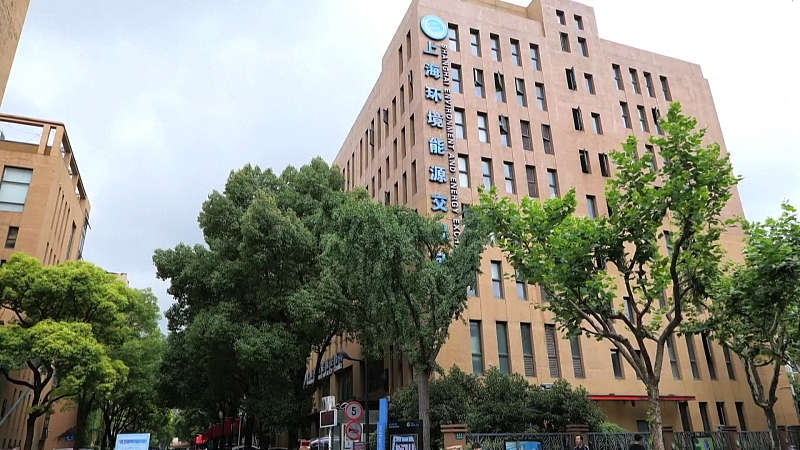
Lai Xiaoming, chairman of the Shanghai Environment and Energy Exchange, where national carbon trading is conducted, said that the 194 million tons of carbon traded over the past year only accounted for a very limited part of the 4.5 billion tons of carbon dioxide discharged by the major electricity companies. There is much room for development regarding the total traded amount of greenhouse gas, he added.



- China celebrates National Science and Technology Workers' Day
- East-West fusion at Lujiazui coffee festival
- 5 dead in illegal mining collapse in Yunnan, 1 injured
- China strengthens support for child-friendly society
- Mayors get down to business on Huangshan Mountain
- Shanghai hosts internet content creators gala





