


Tongren is home to Nuo experiences










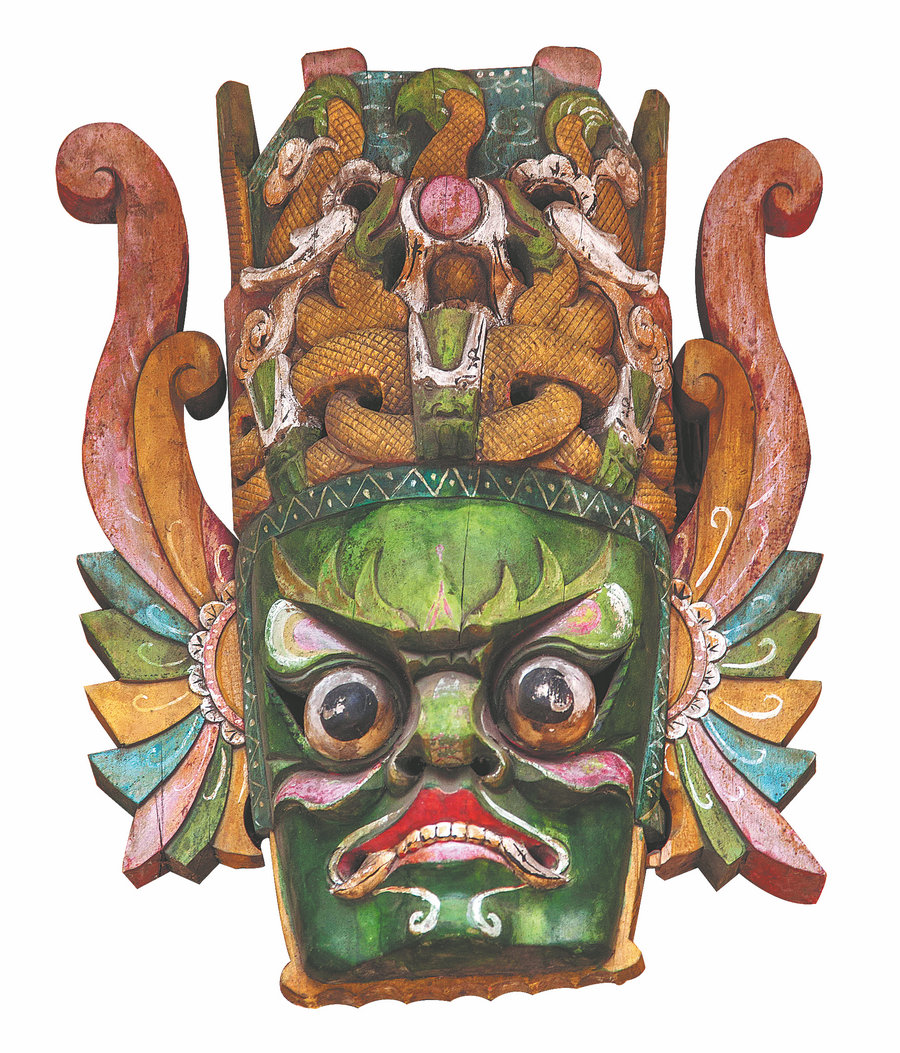
Divine and secular
An Yongbai, 58, is a representative inheritor of Dejiang Nuotang Opera, which was inscribed on the national intangible cultural heritage list in 2006.
Born into a family of Nuotang Opera performers, he was 15 years old when he first started learning the art form from his father.
"I always liked to watch the performances as a child. They are fun to watch. Some of the stories are presented in a humorous way, and the movements of the performers are very expressive," An says.
After a decade of learning from his father, he served as an apprentice to local master performers for seven years, before becoming a qualified performer himself.
The folk genre is called Nuotang Opera because the performances often take place in peoples' homes, and tang refers to the central room of a house. When locals are praying for good fortune, they would invite the local troupe for an elaborate performance that could take days.
A complete Nuotang Opera performance usually begins with a ritual where the performers pray on behalf of the host, such as appealing for longevity of the elderly, or for a child to grow up safe and sound.
Following the ritual, the main part of the opera consists of music and dance pieces that tell stories passed down since ancient times. These are categorized into two main types — the divine and the secular. While the former centers on stories about deities, the latter is closely relevant to people's everyday lives, usually serving to entertain or educate.
The last part of the performance is a show of spine-tingling stunts that require great skill and arduous training. An is among the few people to master some of the most difficult feats.
He explains that it took courage and diligence for him to learn the stunts, and he continues to set high standards for his own apprentices. He currently has 16 apprentices, three of whom are his sons.
The local government also invites him to give courses at schools and cultural institutions, to teach primary school students the basics of the art form, such as some of the dance moves.
"Many primary school kids can learn the dances very quickly, and can give a fairly good Nuo dancing performance. It's all about passing down and carrying forward the art form," he adds.





