


Three rivers' source area whets appetite for conservation










As such, the government provides each ranger with an annual stipend of 21,600 yuan ($3,100), while more than 22 billion yuan has been invested in environmental restoration projects in the area, he added.
Local residents enjoy the gifts given by nature, and the establishment of the national park has enabled local herdsmen to transition from exploiting nature to becoming its protectors and benefiting from it, Sun said.
Samdrub, a herdsman in Angsai township, Yushu Tibetan autonomous prefecture, Qinghai, said seniors in his village always say that to protect the grassland is to protect homes, because herders make a living by raising cattle and sheep.
His pasture is located in Angsai canyon, where the Lancang rises. He said that the grassland in his hometown "suffered from a major disease" more than 10 years ago.
Climate change and voracious rats meant grassland degradation was a serious problem as rivers were polluted, and there was garbage everywhere, he told Xinhua News Agency. In 2018, the Sanjiangyuan National Park pilot granted the township the right to operate a franchise tourism business and trained some herders to work as tour guides around the canyon, assisting visitors from home and abroad.
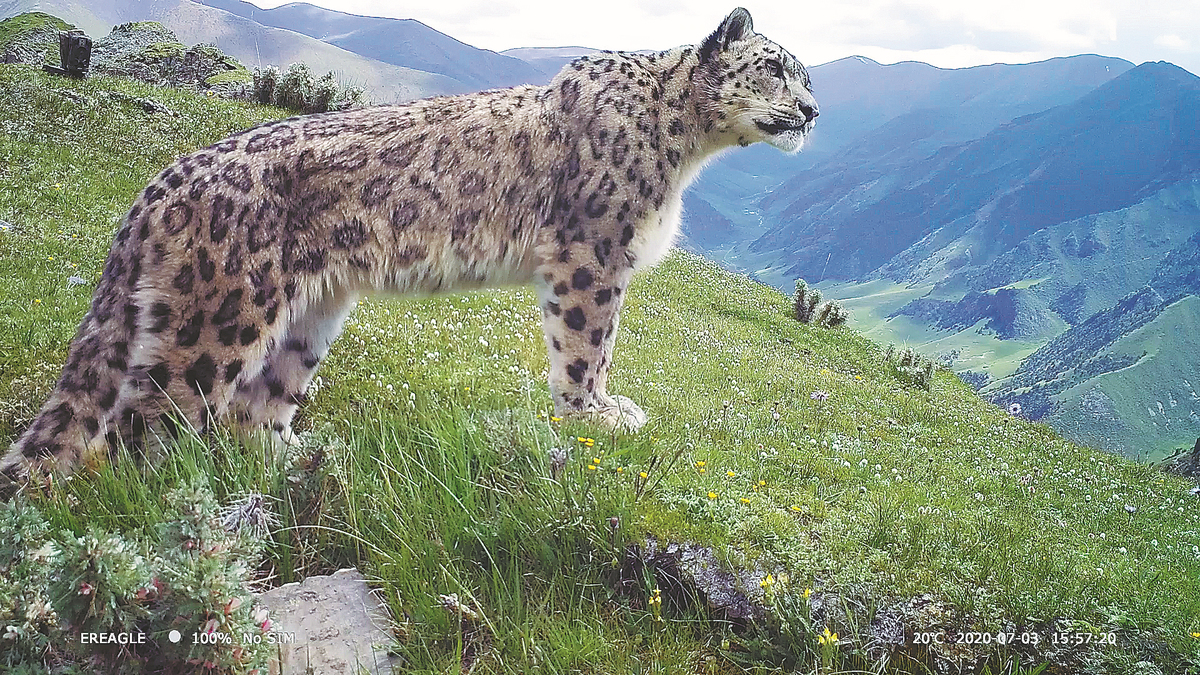
Samdrub is one of 22 local herders who received training as tour guides. They offer introductions to a range of activities, from a cultural experience to a wildlife tour that includes a "snow leopard quest".
In the past five years, Samdrub has made 30,000 yuan from the work. "It is unimaginable that I can make money just by showing people around and watching wild animals. It's all thanks to the improved environment in Angsai and the increase in wildlife here," he said.
Tsewang Dorje, head of the township, said the income generated by tourism is split three ways: 45 percent goes to the residents; 45 percent is spent on local public affairs; and the remaining 10 percent is used to help protect the environment. The environmental protection revenue has been used to save many injured wild animals, he said.
Tashi Dondrub, a local official, said that when the residents realize that their hometown is a place people want to visit and they can make money from the good environment and ecosystem, the idea of harmony between humanity and nature takes root in their minds.





