


Harvesting cooperation










Sharing knowledge
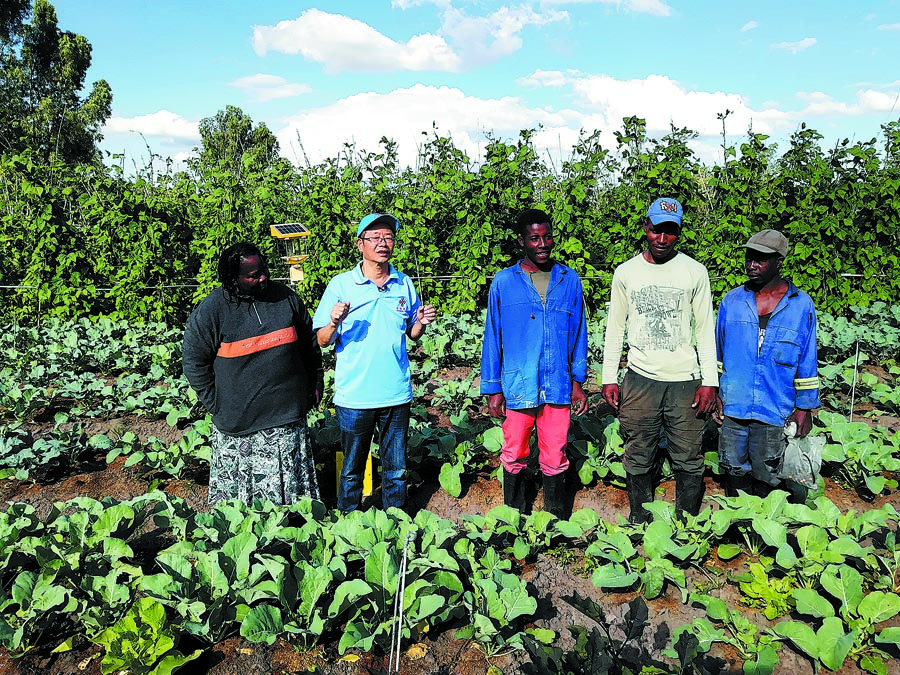
At first, Luo and other Chinese experts visited different places across Zimbabwe to learn about the country's agriculture via investigation and research, so as to make suitable experimental demonstrations and provide the locals with appropriate training.
"Give a man a fish, and he'll eat for the day. Teach a man to fish, and he'll eat for a lifetime. That's what we did in Zimbabwe," Luo says.
The Chinese team offers training in accordance with the demand of the locals. The trainees include those who work in agricultural institutions or corporations, teachers and students from agriculture colleges and farmers. Luo used the photos that he took in Zimbabwe in his training program to enhance the lessons.
He chose suitable farm crops and planting and management methods, according to the local weather and soil types. He introduced organic farming and three-dimensional agriculture to the locals, and taught them basic techniques, for example, using biological control of pests and diseases.
Luo has written over a dozen reports based on his investigations and put forward possible solutions to the problems, saying that he hopes local government officials can take inspiration from them when making decisions.
Negotiations for the current citrus fruits export protocol between Zimbabwe and China started in 2015, and it was finally signed in January.
The two countries signed a citrus phytosanitary protocol that allows the southern African country to export fresh citrus fruits including sweet orange, mandarins and lemons to the Asian giant. China also agreed to provide technical assistance to Zimbabwe regarding fresh citrus exports to the Chinese market.
During Luo's stay in Zimbabwe, he visited citrus farms and shared his research findings at a number of symposiums. He also wrote a report about it, tackling the problems such as pest risk management in exported citrus.
"With the signing of the protocol, China's citrus industry standard may be applied in Zimbabwe, and it can help the African country to improve its citrus industry as well," Luo says.
"Zimbabwe's soil, sunshine and weather are suitable for citrus planting. The flavors of some Zimbabwean citrus species are unique, which is appealing for Chinese customers," he adds.
According to Luo, the harvest season for oranges in both countries has a time difference of about half a year, which is complementary for the consumer market in China.





