



Sports sector eyes growth with modern and better services









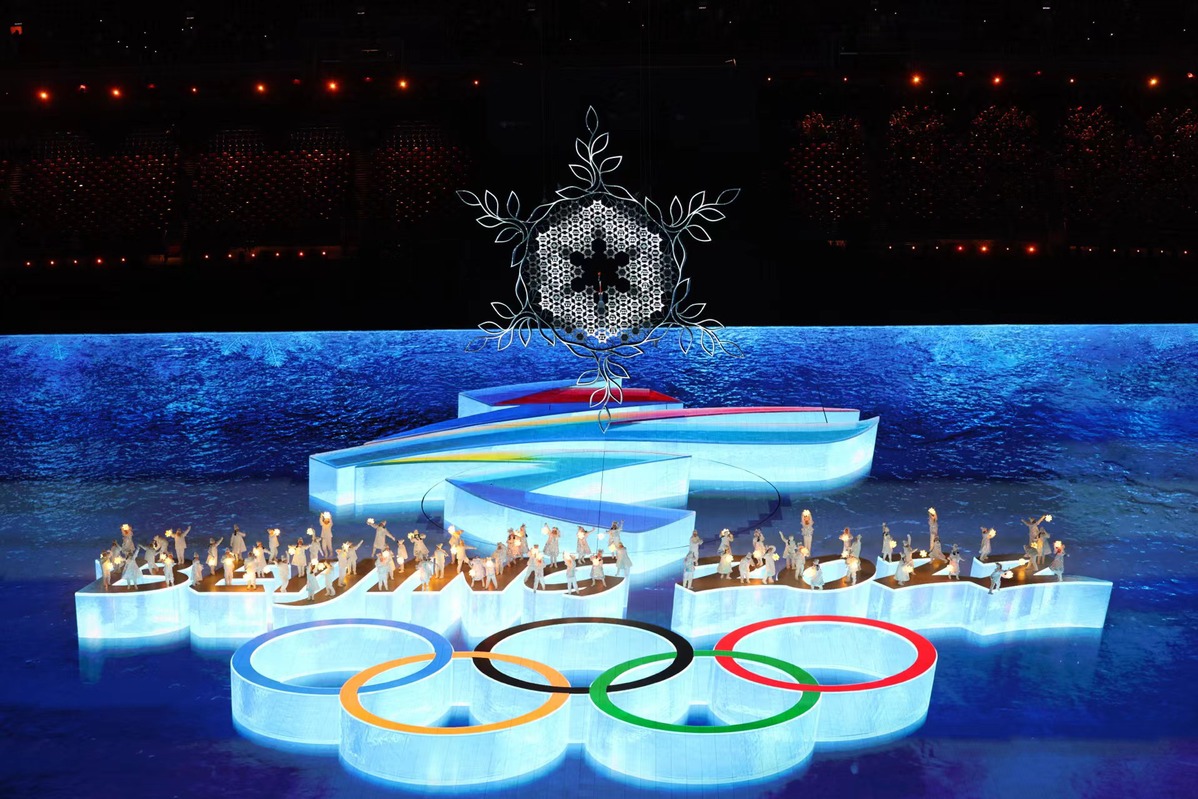
China hosted "simple, safe and splendid" Winter Olympic Games last year, and ensured that the people share the fruits of the Games and benefit from its rich legacy. Accordingly, the central government has intensified the national fitness campaign, by launching programs to especially popularize ice and snow sports and bolster the high-quality development of the sports industry.
True, China is a newcomer to winter sports, and its ice and snow sector lags behind those of the United States and many European countries due to climate and shortage of facilities. But the Beijing 2022 Winter Olympic Games have prompted many people to join the national fitness campaign and take to sports.
China achieved the goal of having at least"300 million people" engaged in "ice and snow activities" by January last year. In fact, more than 346 million people, accounting for 24.56 percent of China's total population, have been engaged in winter sports since 2015, when Beijing won the bid to host the Winter Olympics. That so many people are engaged in ice and snow sports in China is in itself a major contribution to the development of winter sports globally and the growth of the domestic sports industry.
As a matter of fact, China saw 344 million tourists in the sector during the 2021-22 winter sports season, raking in 474 billion yuan ($70.67 billion), according to the China Tourism Academy's annual report on the development of ice and snow tourism released in January. Also, the upgrading of the snow and ice sports industry will make the products much more diverse.
While a wide range of related events have been held to help people take up winter sports, the country has independently developed some high-end winter sports equipment.
More important, the Beijing Winter Games were the first "carbon neutral" Olympic Games in history and greatly promoted the development of the sports industry, especially the ice and snow sports industry. All the energy consumed at the Winter Games was generated using environmentally friendly resources, while renewable energy was used to power all the Games' venues, and the refrigeration system in several stadiums used new carbon-neutral technologies for the first time in the Games' history. And all the venues used low-carbon transportation vehicles.
The Games were "green" because in the years leading to 2022, Beijing and Zhangjiakou, the two host cities, had greened thousands of hectares of land.
The Beijing Winter Olympics can also be called the "high-tech Olympic Games" since 5G technology, cloud computing, big data and artificial intelligence and other advanced technology were used efficiently in different fields.
Furthermore, all stadiums, venues and roads that connect different facilities of the Games were covered by 5G networks which also provided better telecommunication support for broadcasting and online healthcare services. Also, China's Beidou Navigation Satellite System played an important role in integrating kinesiology and its high-precision positioning function.
China has used the Winter Games as leverage to promote the region's coordinated development, particularly the coordinated development of the Beijing-Tianjin-Hebei region. The cooperation improved public service skills in different regions and deepened the integration of the sports, culture and tourism sectors.
The Winter Olympics further optimized the distribution of the regional winter sports industry, with the industrial upgrading of the northeastern region laying the foundation for the development of the sector in North and Northwest China.
However, the country faces unprecedented challenges when it comes to promoting the national fitness campaign and healthy development of the sports industry. Although Chinese people are enthusiastic about winter sports, many of them cannot afford to try them. So the authorities should expand the current customer base to boost consumption.
But the problem is that the country lacks high-end winter sports equipment brands, because China is a latecomer to winter sports and the ice and snow sports industry. This means there is a need to improve the service sectors of the winter sports industry, and develop a modern sports industrial system to write a new chapter in China's sports industry.
First, the authorities should carry forward the Olympic Spirit, and promote national fitness campaigns. As for the government, it should exploit the cultural resources left behind by the Winter Games, provide winter-themed products and services such as digital movies, comics, online games and exhibitions to promote the spirit of the Winter Olympics regularly.
Second, the government should create an atmosphere that is conducive to playing winter sports and promote winter sports in schools and colleges so more and more people buy winter sports gear and equipment. It can also popularize ice and snow sports by building winter sports stadium with the support of the private sector.
Third, the government should work out a national development strategy for winter sports, and winter sports technology should be used to make clear the mid- to long-term research direction.
Fourth, the authorities should boost the coordinated development of the winter sports sector to create diversified, high-quality and cross-regional winter sports/tourism routes. And since major sports events play an important role in the balanced development of individuals and communities, the government should improve the cross-regional links and strengthen infrastructure to popularize winter sports.
The author is director of the Shanghai Collaborative Innovation Center of Sports and Health Industry at Shanghai University of Sport.
The views don't necessarily reflect those of China Daily.





