



Democracy shouldn't be kidnapped









Editor's note: The so-called Summit for Democracy convened by the US reflects its dangerous Cold War mentality and will instigate confrontations and political divisions within the international community. It is a preposterous show in violation of the spirit of democracy and exposes the US design to maintain its hegemony, which has been criticized and opposed by many countries. Three experts share their views on the issue with China Daily.
Rooted in the history, culture and traditions of a country, democracy takes diverse forms and develops along the paths chosen by the peoples of different countries based on their explorations and innovations. As such, the state ought to shoulder a unique responsibility of upholding and promoting principles that place emphasis on reforming the world order, and attendant ideas of mutual respect for countries' political sovereignty and avoidance of external conflict, which is at the center of international relations and countries' foreign policy.
Democracy does not consist of a single and unique set of institutions that are universally applicable. The specific form that democracy takes in a country is largely determined by the prevailing political, social and economic circumstances in that country.
Besides, no country has the right to use ideology and values as tools to subjugate or bully other countries and advance its geopolitical strategies, instigate divisions and confrontations in the international arena and push the world back to the dangerous Cold War era on the pretext of promoting democracy.
Triggering divisions and confrontations in the name of democracy is nothing but trampling on and betraying the democratic spirit and values. It will only bring turbulence and chaos to the world and undermine peace and development. This should be resisted and opposed by the international community.
The world needs to think from the global public's perspective and gain added strength by coming together, and all peoples, countries and regions should participate in this endeavor and focus on building multilateral consensuses.
Democracy is the right of the people in every country rather than the prerogative of a few countries. Whether a country is democratic or not should be determined by its people, because democracy manifests itself in many forms. The practice of asserting a single model of political structure ignores the notion of shared human values, and is fundamentally undemocratic.
Peace, development, fairness, justice, democracy and freedom are common values of humankind. Whether a country's path succeeds or not depends on whether it meets the country's realities, follows the trend of the times, and brings about economic development, social stability and progress, and improves the lives and livelihoods of the people.
Therefore, a basic criterion of democracy should be about the people, whether they have the right to govern their country, whether their needs are met, and whether they feel a sense of fulfillment and happiness. If the people are only awakened to cast their votes and forced into hibernation after that, if they are served with sweet-sounding slogans during campaigns but have no say after the election, if they are wooed during canvassing but left out in the cold after that, then it is not genuine democracy.
Democracy is not an ornament to be worn for decoration; it should be used to solve the problems that the people want to be solved. Reaching a consensus on democracy is about shared human values. However, some Western countries repeatedly claim to promote "democracy" and "human rights" while exercising their power to subvert countries that do not follow their warped model. Such Western countries' aim is to kidnap democracy in order to manipulate the rest of the world, and fabricate "anxiety about democracy" to promote the Cold War mentality.
These legacy liberal states, in an attempt to divert attention from their domestic failures and disorder, shift the blame onto other countries. Take for example Afghanistan, Iraq, Libya, Tunisia, Somalia, Syria and Yemen. These countries and their peoples have been attacked and continue to suffer in the name of democracy and human rights.
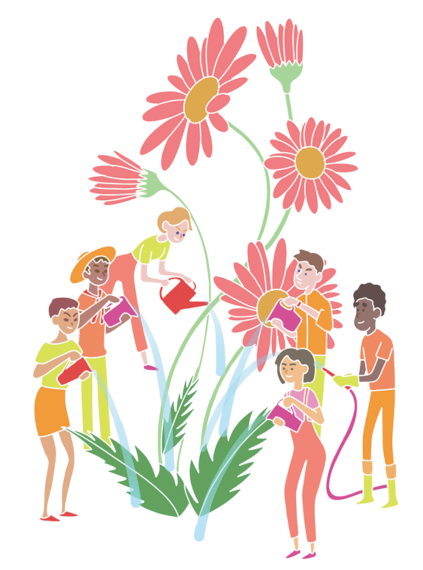
Democracy must not be viewed solely on the basis of a country's political system and by ignoring the diversity of civilizations. Asian societies display great diversity — ancient, culturally rich, colorful and diverse, like a beautiful garden deeply rooted in Asian civilizations and now blossoming due to the injections of new vitality. And the values of Asian societies cannot be understood or recognized without deeper understanding of Asia's unique civilizations.
The uniqueness of a civilization is not different from the uniqueness of democracy. The rich diversity and vibrancy of civilizations are reflected in the different forms of democracy. Democracy does not come in uniformity and singular configurations given the world's political and cultural diversity.
There are many ways that countries can practice democracy and there is no one-size-fits-all model for that. Countries with different histories, cultures, civilizations, traditions, customs and national conditions should develop a form of democracy that best suits their own characteristics and reality. No single country has the mandate to monopolize the definition of democracy, nor can it limit people's right to explore and choose a model of democracy that best suits a country.
As a Chinese saying goes, only the wearer of the shoes knows if they fit or not. Similarly, only the people of a country, not some small external circles and cliques, can tell whether the political system followed by their government is democratic or not.
Only democracy with human values at the core can foster, promote and consolidate regional and global peace and harmony, ensure people live with dignity, help people understand and respect civilizational diversity and further enhance inclusivity, which will prompt the global public to accept the differences in civilizations, so as to help build a community with a shared future for mankind that leaves no one behind on the road of development.
The views don't necessarily reflect those of China Daily.
If you have a specific expertise, or would like to share your thought about our stories, then send us your writings at opinion@chinadaily.com.cn, and comment@chinadaily.com.cn.





