



Taiwan students share impressions of mainland









Yung Po-kang: History should be remembered correctly
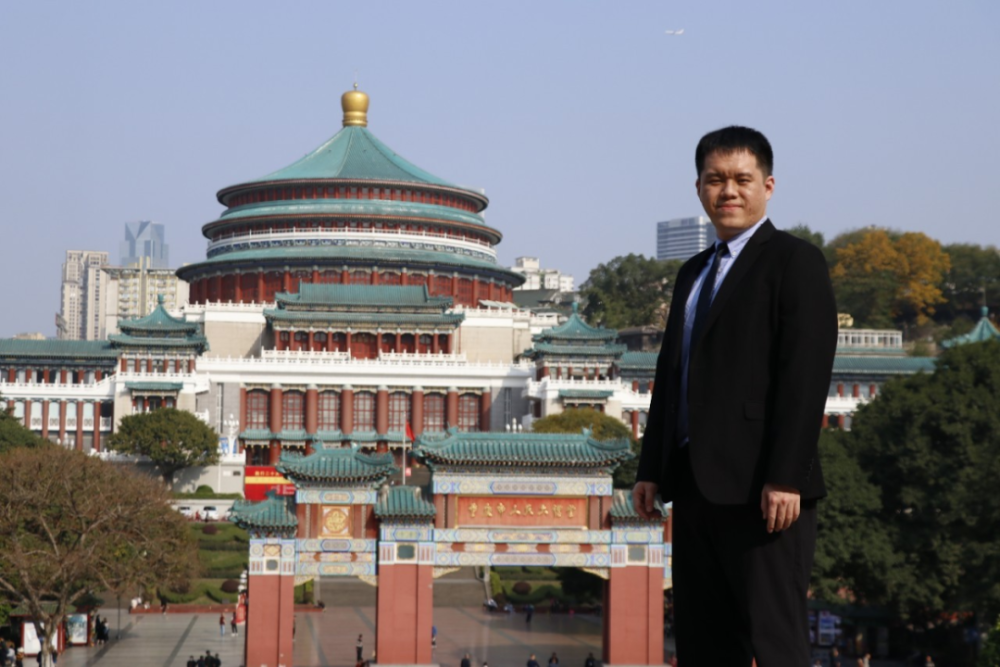
If I could use one word to describe my trip to the Chinese mainland, I would say it was "amazing".
This was the first time I had been to the mainland. The closest place to it I had been before was Hong Kong. I'd heard that the mainland developed rapidly, which later proved true during my visit and even went beyond my expectations.
One thing that stood out to me was the appropriate spacing between new buildings here, ensuring adequate sunlight and ventilation for each household, which is often overlooked in newly constructed buildings in Taiwan. Another thing that impressed me was the concept of "civilization" is vigorously promoted in all aspects of life on the mainland. I first saw this promotion at dining tables, with slogans advocating using serving chopsticks and spoons and not wasting food. There were also other signs on the streets such as encouraging travelers to exhibit civilized behavior and drivers to be courteous. Even public restrooms posted signs reminding people to avoid bad behavior.
During exchanges with mainland students at the meetings, their confident speeches touched me. But I didn't expect to find they were no different from my classmates in Taiwan: We all use smartphones and social media, look for delicious food on campus and engage in campus life in much the same way. Without exception, the students of our visiting delegation all cherished this opportunity for face-to-face communication. We hope to maintain contact with each other in the future to lay a good foundation for mutual understanding between the people on both sides of the Taiwan Strait.
The difference between what I learned during this trip about the Chinese People's War of Resistance Against Japanese Aggression (1931-45) and what I had learned in Taiwan before was that the latter was mostly theoretical. Almost all the battles in the war took place on the mainland. Through this trip, I was able to visit the sites and museums of the war and experience the historical environment firsthand, which helped deepen my understanding of history. I hope other young people in Taiwan can also come to the mainland to visit those sites and honor the martyrs.
I was born in 1996, and I didn't learn much history until sixth grade. The content in the schoolbooks was minimal. I studied liberal arts in high school, so I read quite a bit of history compared to other students. The six history textbooks in high school included two on Chinese history. When covering the Chinese People's War of Resistance against Japanese Aggression, key events were included, such as the September 18th Incident in 1931, the Lugou Bridge Incident, the Battle of Shanghai and the Battle at Sihang Warehouse in 1937, and the Nanjing Massacre, which took place between December 1937 and January 1938. It was also mentioned in the textbooks that General Zhang Xueliang forced Chiang Kai-shek (after failing to persuade him) to join hands with the Communist Party of China to resist the Japanese invaders. However, in the textbooks, the end of the war was attributed to the two atomic bombs dropped by the United States. My history teacher then added the front in the Chinese mainland trapped the Japanese army and cost them a significant amount of troops and materials, laying the foundation for final victory.
The Democratic Progressive Party authorities attempt to dilute and remove all Chinese elements from Taiwan in an effort to highlight the differences between Taiwan and the mainland. However, this approach is seen as unnecessary and a waste of administrative resources to most in Taiwan.
Due to the bitter sacrifices during the war against Japanese invasion, this part of history cannot be completely erased from Taiwan's curriculum. Nevertheless, it is increasingly understated and replaced with an emphasis on the contemporary history of Taiwan, along with its friendly relationship with Japan.
In recent years, the DPP has argued only the people on the mainland participated and suffered in the war, while Taiwan, under the "rule" of Japan at that time, was not a victim. This is a narrative that is disrespectful to historical facts. During the early stages of Japanese colonial rule, there were a series of activities against the occupation which gradually evolved into unarmed political resistance during the middle and later stages.
I agree we should not use historical events to foster hatred toward a nation or country. Still, the historical facts need to be recognized and remembered accurately.
The author is a fourth-year postgraduate student at Chengchi University's College of International Affairs. The views do not necessarily reflect those of China Daily.
Translated by Chen Ziyan


- Shanghai unites intl blood donors ahead of Children's Day
- Juvenile prosecution figures down year on year in China: white paper
- China Coast Guard conducts law enforcement patrols in waters east of Taiwan island
- Gansu makes pairing project social model
- FIFA licenses Ningxia's hemp-weave craft
- Caring cook serves elderly empty-nesters





