



Anji shines light on intangible heritage









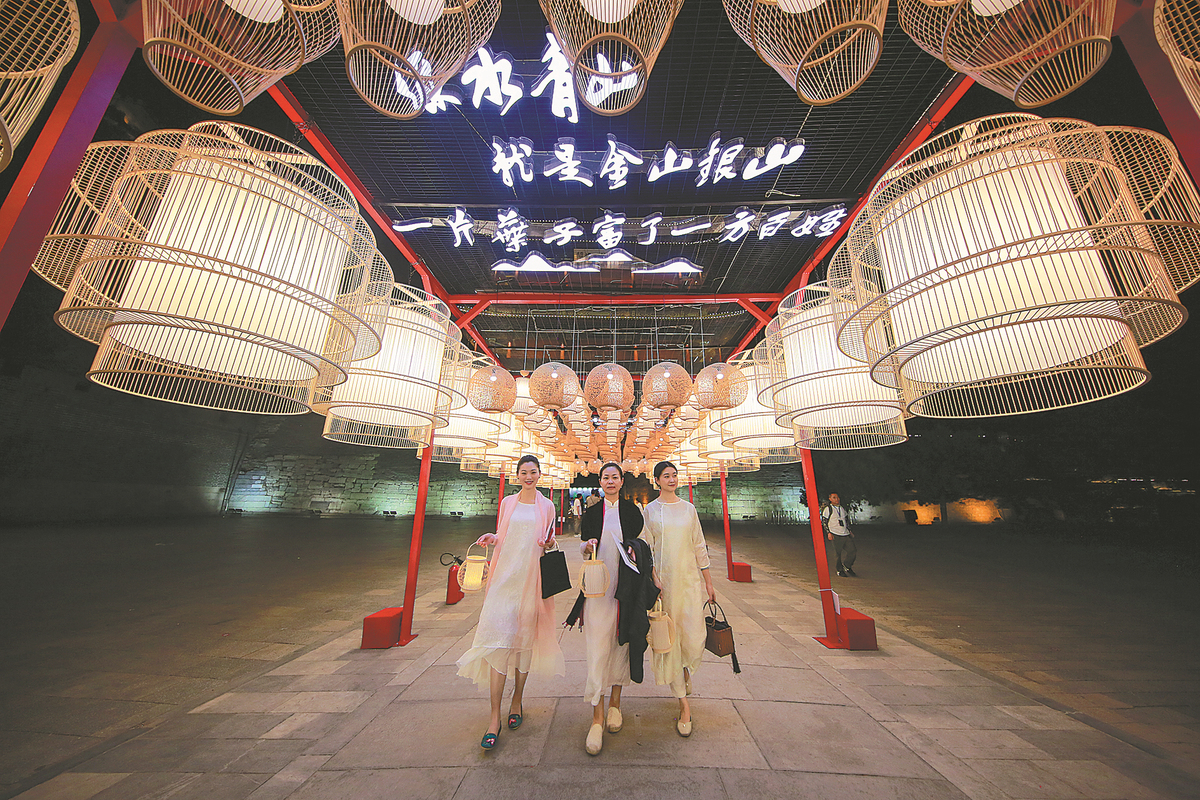
Known as the "first bamboo town in China", as well as the home of its own type of white tea, Anji is a major center of intangible cultural heritage in Zhejiang province. It is home to 200 examples of intangible cultural heritage registered at the county level and above, including one world-class, two national, and thirteen provincial items.
The majority are related to bamboo and white tea. On Nov 29 last year, traditional Chinese tea-making techniques and related customs, including the techniques for producing Anji white tea, were included on the UNESCO Representative List of the Intangible Cultural Heritage of Humanity.
Luo Fudi, the director of Anji's Bureau of Culture, Sports, and Tourism, said that the event is an opportunity for the county to introduce its culture to the world.
He added that in recent years, Anji has been exploring ways of harnessing the cultural power of intangible cultural heritage to rural vitalization and common prosperity. Last year, the county's GDP reached 58.24 billion yuan ($8.19 billion), with a total fiscal revenue of 10.97 billion yuan.
It forms a "4+3" industrial structure: the four major industries of chair-making, bamboo, tea, and tourism, and the three most prosperous future industries, including life and health, electronic information, and the digital economy.
Anji has ranked as the top tourist county in the country for four consecutive years, receiving 27.21 million visitors and earning tourism revenues of 39.33 billion yuan, Luo added.
Wang Sen, head of the Department of Membership Liaison and Rights Protection of the China Folk Literature and Art Association, said that the Great Wall is an icon of China, and intangible cultural heritage is a worthy part of traditional Chinese culture, adding that the combination of the Great Wall and intangible cultural heritage formed a good basis for cultural self-confidence.
yandongjie@chinadaily.com.cn


- Xi replies to letter from Chinese, US students participating in 'A Shared Voyage: China-US Youth Friendship Program'
- Xi, Surinamese president exchange congratulations over 50th anniversary of ties
- Xi, Austrian president exchange congratulations over 55th anniversary of ties
- Fudan University reveals top 10 scientific and technological advances of 2025
- Shenzhou XXI astronauts complete handover, ready for returning to Earth soon
- Weak safety may have led to mine blast





