



Chinese colleges wrestle with AI-generated research papers









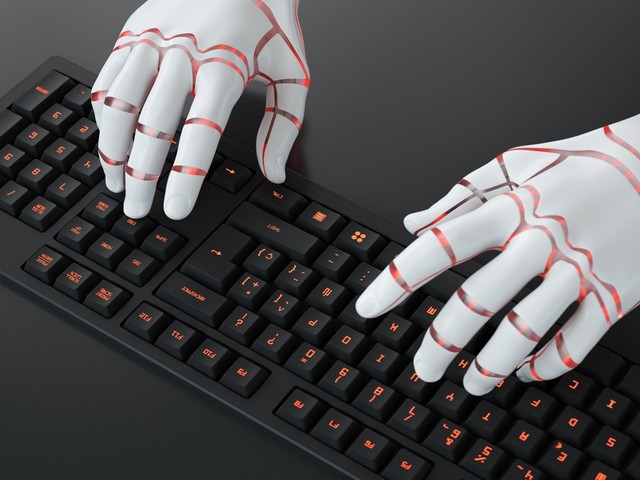
It was the night before deadline and all through the house, Cheng Guangyu, a Beijing college junior, was still four research papers away from meeting the academic requirements of the semester. However, as if by miracle, Cheng was able to submit all the papers the following day without delay.
Tech-savvy people may know this "miracle" by the name of ChatGPT.For students like Cheng, who didn't bother to look up source materials, add citations or even do their own typing, artificial intelligence chatbot ChatGPT is a thing of wonder.
"I just fed ChatGPT the general research directions and let it finish the papers all by itself," said Cheng. "It did a better job than I ever could."
Academic writing
Cheng was not the only college student in China who has taken advantage of AI technology. In colleges across the country, a growing number of students are resorting to AI-writing applications when doing homework or writing research papers, with some going as far as finishing their graduation theses with the help of AI.
On Chinese experience-sharing platforms like Zhihu, many netizens shared stories about how their AI-generated papers won the praise of tutors, further proving the popularity of this approach.
Fantastic as it may sound, though, AI-assisted academic writing has its limitations. One college student in Hunan felt that AI writing tools are only useful in polishing articles, for they are not competent enough in illustrating innovative ideas.
On the other hand, AI can sometimes be too "innovative".
"If looking closely at the citations of some AI-generated academic writings, one can spot that nearly all the critical information, including the names of authors and publications, are fabricated," said He Shiming, a professor at Changsha University of Science and Technology. "Even some of the historical events referenced in these papers are nonexistent."
Blessing and a curse
The popularity of AI-assisted academic writing has triggered a series of debates among experts, particularly college teachers. Currently, several Chinese higher education institutions have made their own stipulations regarding the matter. But people are still unable to agree on whether using AI-assisted writing is a novel research method or an act of academic dishonesty.
Some experts consider AI writing as just another handy tool brought by the advancement of technology. Yang Zhiping, a professor at Northeast Normal University, summarized his experience using AI writing, saying that conversations with an AI model fed with enough material helped him clarify his research approaches.
"It's like exchanging views with an expert who is extremely knowledgeable," said Yang. "The collision of thoughts can be helpful in developing new academic ideas."
However, some college teachers argue that the convenience of AI-assisted writing can cause students to become dependent on it when conducting academic research, which will lead to the deterioration of the academic atmosphere.
On this matter, Fu Weidong, a professor at Central China Normal University, said that any AI-generated thesis should be reviewed in accordance with existing academic standards as well.
According to Fu, AI writing is a technology based on collecting and processing existing knowledge, and therefore can't avoid repeating the thoughts or even exact texts from existing academic works.
"Once the repetition exceeds the allowed level, it should be considered plagiarism," Fu said.
Addressing issues
Facing the irreversible development of AI use in academic writing, experts believe that measures should be taken to standardize the application of advanced technology.
It is necessary to specify the scope and extent of AI use in writing, rather than just prohibit the tool, according to Xiong Bingqi, director of the 21st Century Education Research Institute in Beijing.
Xiong suggested that universities should introduce courses on the use of AI writing tools to inform students of the standards, methods and ethics of AI-aided academic writing.
In a bid to detect AI-assisted academic plagiarism, related software that can identify whether an essay is "written" by AI writing tools should be developed, he said.
The education sector should pay more attention to cultivating students' problem-solving skills and enhancing their capability of observing, understanding and analyzing nature and society, instead of making academic writing a matter of formality, said Xie Di, an associate professor with the School of Public Administration at Hubei University.
Xinhua


- Forging 'ironclad friendships' in an uncertain world
- Most Chinese provinces reach high level of human development: report
- Sun Yat-sen University researchers penalized
- Nankai University researchers disciplined following investigation
- Chinese premier stresses need to ensure workplace safety
- China steps up nationwide efforts to restore 'mother rivers'





