



Japan's 'value diplomacy' falls flat in Middle East









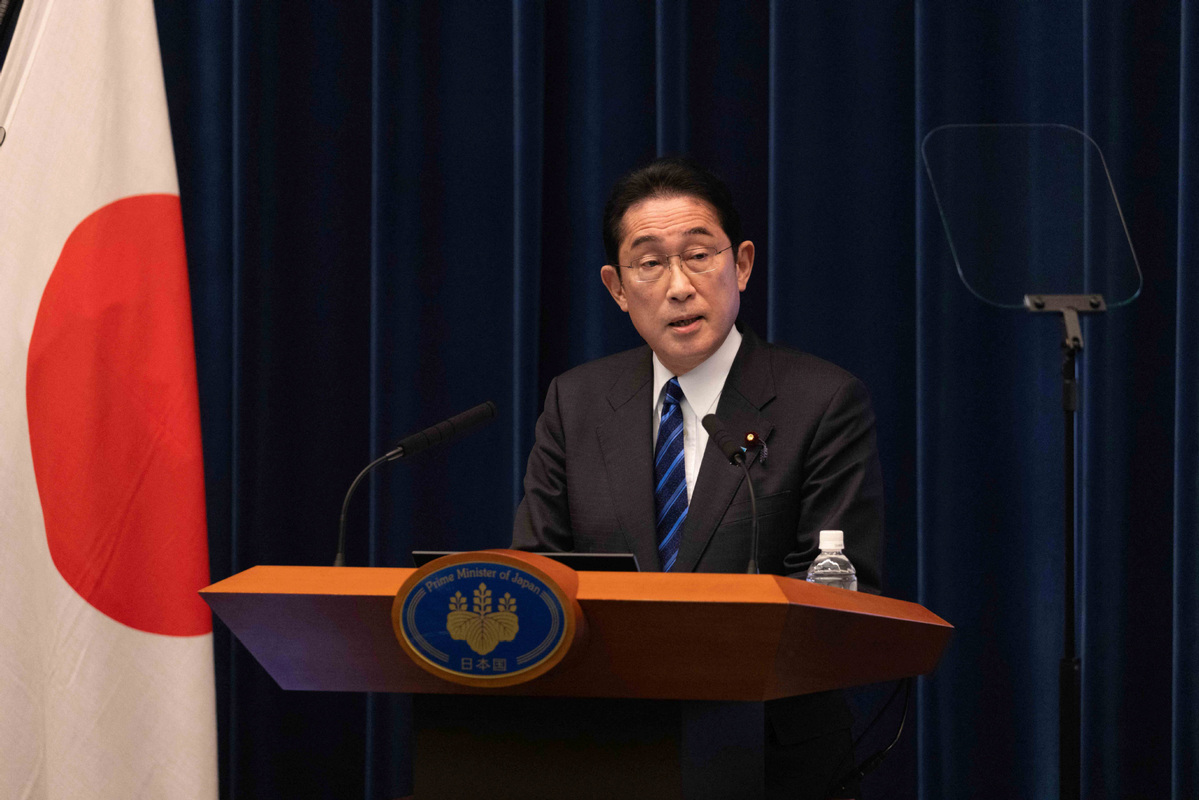
Japanese Prime Minister Fumio Kishida visited Saudi Arabia, the United Arab Emirates and Qatar from Sunday to Tuesday. Kishida's meetings with the leaders of these countries were on energy cooperation as well as regional and international affairs.
The fifth-largest oil consumer in the world, Japan relies on imports to meet around 97 percent of its demand. It imports more than 75 percent of its crude oil from Saudi Arabia and the UAE.
Although Japan has a large stake in Russia's Sakhalin 2 project and can obtain 6 million tons of liquefied natural gas from Russia per year, due to the sharp deterioration of relations between Japan and Russia in recent years, Tokyo has a sense of panic, fearing that Russia will "run out of gas", so Japan now relies more on the Middle East for its energy supplies.
It is natural that energy cooperation was high on Kishida's agenda. However, it is beyond the expectation of many that Kishida also made use of the trip to promote a "free and open international order based on the rule of law" in light of the outcome of the G7 Hiroshima Summit.
However, by parroting Washington's doctrines and offering nothing new, Kishida has not achieved what he wanted regarding his US-style "value diplomacy", as the Middle East countries' focus now is on pragmatic cooperation rather than toeing the US line together with Japan.
Although his gung-ho performance to peddle US values might have won him praise from Washington, Kishida will have been made aware that not all the US' allies are as willing or as active as Japan in gambling their future on Washington's geopolitical game.
It should not be forgotten both US President Joe Biden and Secretary of State Antony Blinken met with a cold shoulder during their visits to the region.
Notably, during Kishida's visit, as reported by Japanese media, Japan and Saudi Arabia reached an agreement on joint investment in rare earth mining projects, in which Japan will pay for technology to find and develop rare earth in Saudi Arabia and third countries, presumably in preparation for China restricting its rare earth exports to it in the future.
In other words, even if the Kishida government has been painstakingly doing the US' biddings in the Asia-Pacific and beyond, it has no parties but itself to rely on to find solutions to the problems that are being caused by its blind following of the US.





