



Chinese immersion program promotes biculturalism









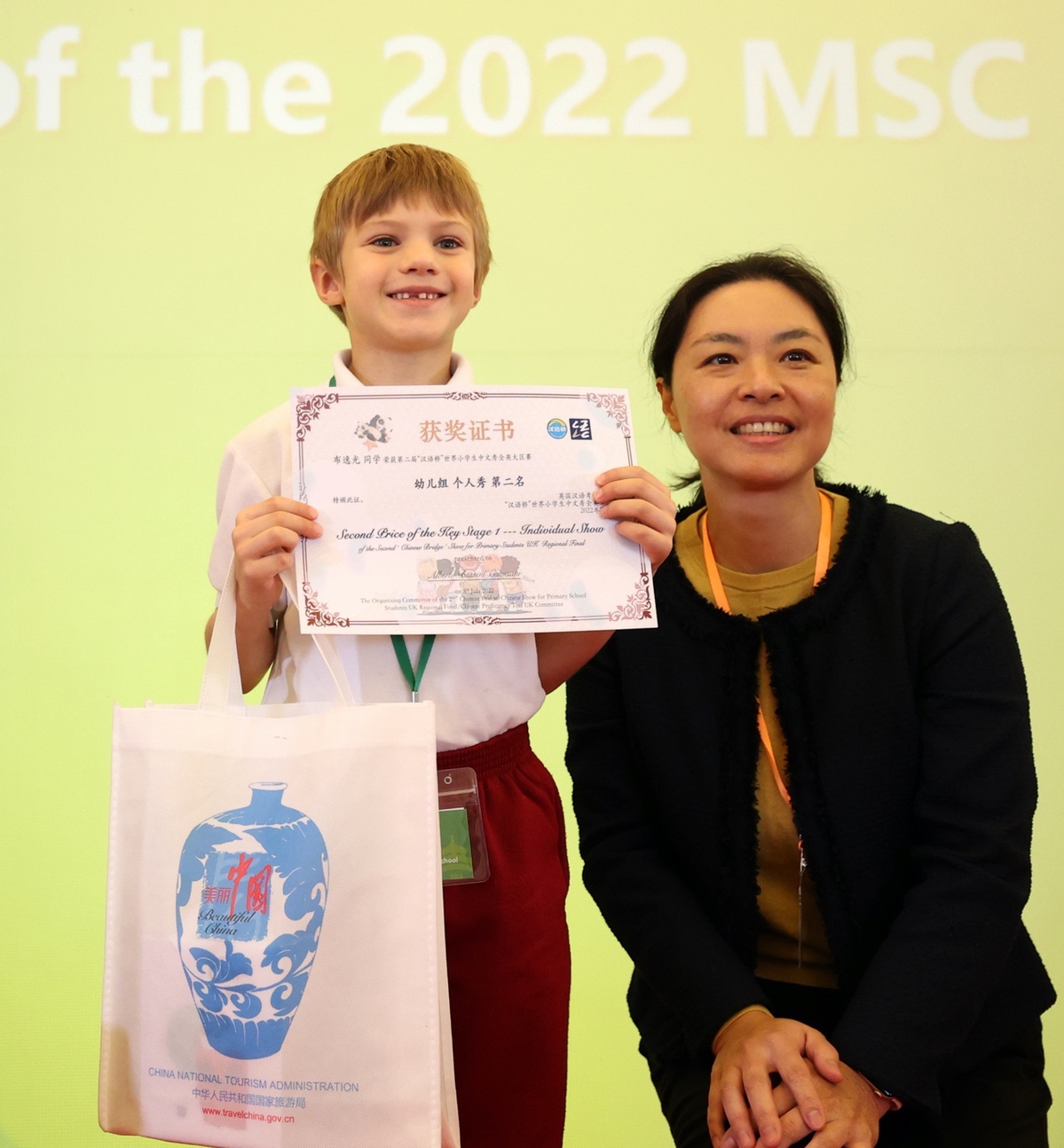
Students at Kensington Wade school in England speak English for half of their school days and Chinese for the other half; whether they are doing a language lesson or not.
On Chinese-speaking days, classes, including mathematics, science, art and humanities, are taught in Chinese by native Chinese-speaking teachers.
The "Half English, Half Chinese" formula makes Kensington Wade the first and only bilingual English- Chinese prep school in Europe.
Located in the Hammersmith district of West London, the school has attracted more than 100 students, aged between 3 and 11. They come from Chinese, British, French, Russian, German and Indian backgrounds.
The school has grown from humble origins. When it first opened in 2017, there were just 15 children on its books.
"The decision to start the first-ever English-Chinese bilingual prep school, not just in the UK but in Europe, was taken because we felt there was a huge need to give children of this country the ability to speak, live, and work in a world where China was a hugely, hugely important presence," said Jo Wallace, the school's principal and founding head teacher.
While Chinese is taught widely in the UK, mostly in secondary schools through the Mandarin Excellence Program, what makes Kensington Wade unique is its foreign language teaching method, immersion education, which is a "new, pioneering, and progressing" model, the school's Deputy Head and Head of Chinese Program Wang Jing said.
To immerse someone in Chinese learning is to apply the language to instruction in a variety of subjects, which converts Chinese into a "by-product of content teaching", said Wang.
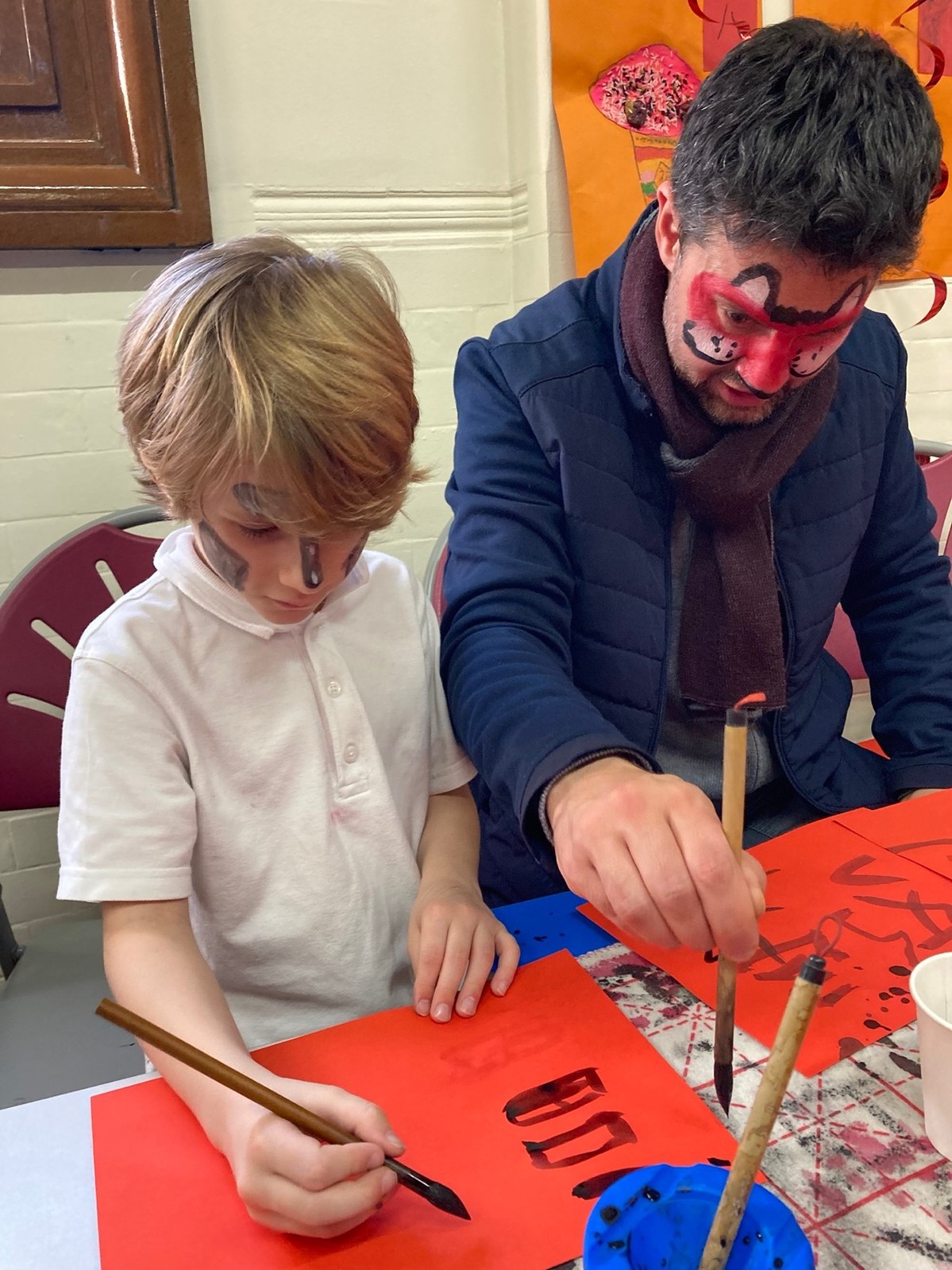
"Sometimes, a child is not really interested in learning how would I use Chinese characters to make a sentence, but they really want to figure out how would this science project go, or what's going to be the results. And if that lesson is delivered in Chinese, they will be learning the language without realizing, oh, I am actually learning a language."
An early immersion enables students to develop greater language comprehension and production abilities with a very natural accent, which count as a linguistically competent advantage, said Wang, while at the same time, biculturalism is embraced by the children at tender ages, as teachers use China as a context to teach history, geography, art, and so on.
In humanities classrooms, to illustrate the gender stereotyping ascribed to females and to talk about how some of them have broken the bias, Wang's English-teaching partner cites the world-renowned Florence Nightingale, the founder of modern nursing, and Wang talks about Hua Mulan, the Chinese folk heroine who took her aged father's place in the conscription for the army by disguising herself as a man.
In the geography unit, the Yangtze River, China's longest river, is compared with the Nile in Africa, which explains how rivers can be seen as the cradles of human civilization. "Children are always comparing. So, they do know the world is not a one-man story, they do know there are people who do things differently, and they will use that kind of skill to come to their own decisions. They have greater critical thinking skills to help them make good decisions," Wang said.
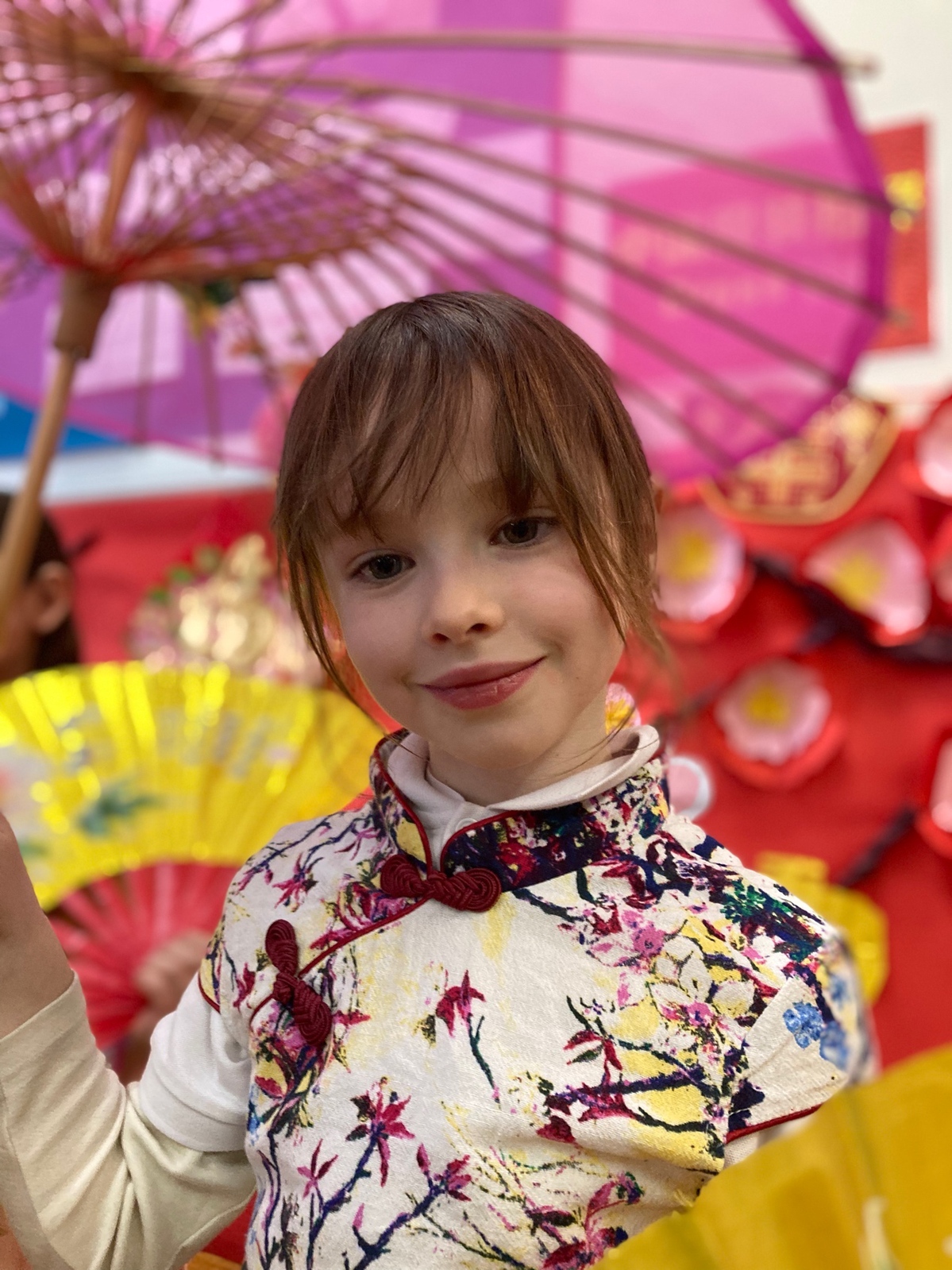
And students are taught to appreciate the beauty behind the differences, by learning the two languages that represent the East and the West, said Xiang Yang, assistant head of Chinese and coordinator of the art, design and technology department.
"For example, dragons in our Chinese culture signify auspiciousness, but in the West, are perceived as vicious and scary monsters. Our children are exposed to totally different cultural backgrounds, and they sweep those changes very quickly on a daily basis. In the end, they show more empathy toward different situations," Xiang said.
For Xiang, being exposed to differences at an age when students are far from realizing how the world runs, is a privilege, because accepting diversity is needed to foster global citizenship.
Wallace said she wants her school to keep sending out the message that empathy and understanding should be nurtured, and for people to increasingly realize that having a school like Kensington Wade, which nurtures students with bilingual and bicultural brains, is vital.
"Hopefully, one day, we won't be the only one," she said.
Zheng Wanyin in London contributed to this story.










