



Mutual funds to turn around after sluggish market in H1









Experts say risk appetite will recover despite liquidations, low income so far
While the mutual fund market was relatively sluggish in China in the first half of the year, both measured by issuance pace and trading activity, more vibrancy can be expected in the following months amid investors' rising risk appetite and more importantly, the country's economic recovery, said experts.
According to financial information service provider iFinD, the Chinese market saw a total of 613 new mutual fund products released in the first six months, down 17.94 percent from a year earlier. The total issuance value was also slashed by 22.05 percent year-on-year to 540.6 billion yuan ($75.27 billion).
While the average fundraising of one mutual fund product was 996 million yuan in the first half of 2022, the average reading contracted 10.84 percent on a yearly basis to 888 million yuan in the first six months of 2023.
Due to temporary difficulties with new product releases, up to 92 extended their fundraising period in the first half, the majority 60 percent of which were equity-focused mutual fund products.
At least six mutual fund products, including the photovoltaic-themed product issued by Gowin Asset Management in March and a fund-of-funds product that Minsheng Royal Fund released in June, faced fundraising weakness in the first half.
Over 30 fund managers, including Shenzhen-based Baoying Fund and Beijing-based China Post &Capital Fund Management, reported no income in the first six months.
Jiang Han, a senior analyst of market consultancy Pangoal, explained that global market uncertainties and A-share market volatility in the first half may have impaired the confidence of investors and fund managers.
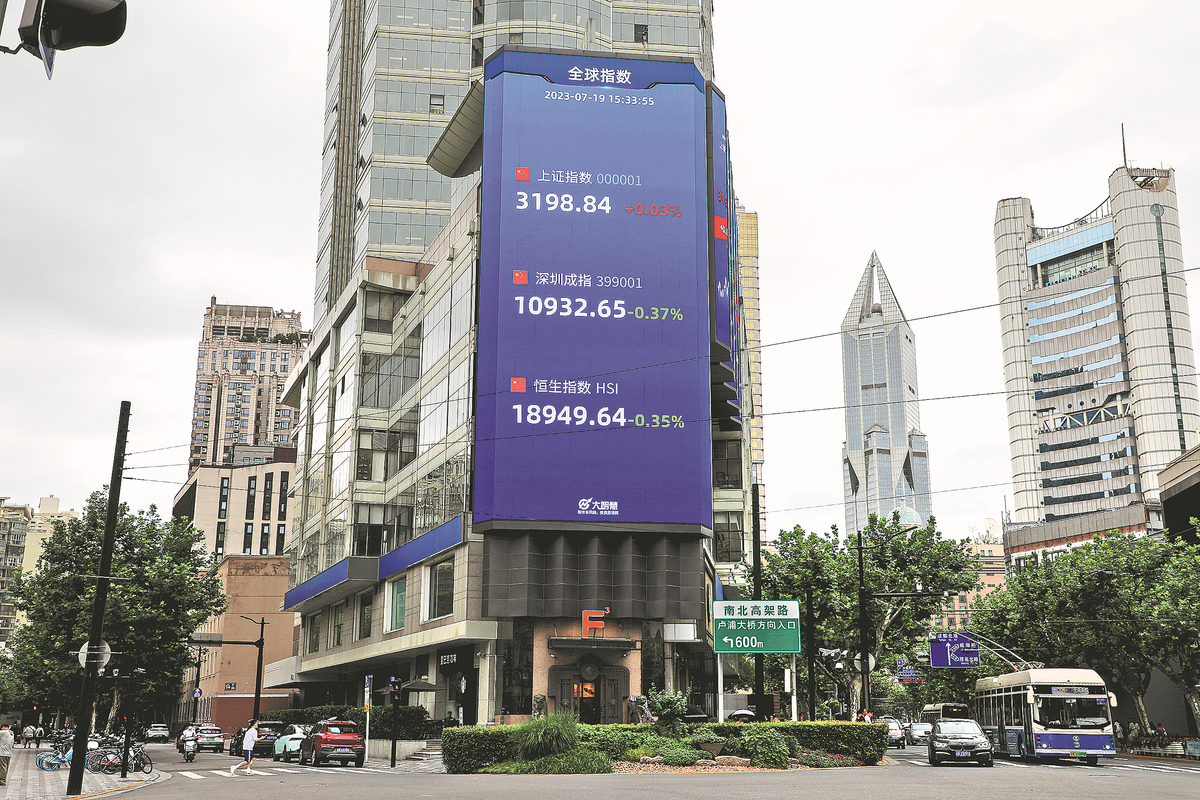
The benchmark Shanghai Composite Index gained 3.65 percent in the first six months while the Shenzhen Component Index only eked out a 0.1 percent increase in the period. The technology-focused ChiNext in Shenzhen, Guangdong province, slid 5.61 percent in the first half.
Due to the less satisfactory performance of the A-share market, a total of 105 mutual fund products ended up in liquidation in the first half, up 9.38 percent from a year earlier.
Mutual fund liquidation refers to the sale of all of a fund's assets and the distribution of the proceeds of fund shareholders. Poor performance, smaller scale and management difficulties are the major reasons for mutual fund liquidation.
Fu Lichun, founding partner of Beijing-based YTI Capital, admitted the strong correlation between a large number of mutual fund liquidations and the sluggish A-share market performance during the first six months.
Yang Delong, chief economist of Shenzhen-based First Seafront Fund, said that a large number of mutual funds have reported losses over the past few years. Some smaller-scale funds encountered redemption, and their net asset values have shrunk as a result.
When a mutual fund's net asset value decreases by about 10 million yuan to 20 million yuan, the maintenance fees will be extremely high. It is wiser to opt for liquidation under such circumstances, said Yang.
Such market volatility, combined with retail investors' less positive outlook on market performance, will hinder the issuance pace of mutual fund products, said Jiang.
As explained by Jiang, the issuance of mutual fund products hit a five-year low in May amid investors' shrinking risk appetite. Investors were eyeing more bond-based mutual fund products, thus affecting companies' issuance schedules.
Data from iFinD showed a total of 170 bond-based mutual fund products in the first half. The total issuance value of these products exceeded 334.4 billion yuan, taking up the majority 61.86 percent of the total fundraising of all mutual fund products. The four largest mutual fund products released in the first half were all bond-based.
The lower risks of bond-based products, as well as their rising yield, are the major reasons attracting retail investors' attention, which has triggered more releases of mutual fund products of this kind, said Jiang.
But Jiang said the mutual fund market will stabilize in the following months, as China's economic recovery is steadily advancing and the stimulus packages introduced earlier will make a bigger difference. Market sentiment is likely to pick up in the next few months.
Meng Lei, China equities strategist at UBS Securities, further explained that the issuance of new mutual fund products is a lagging indicator. Based on past experience, the release pace will pick up three months after the A-share market starts to show an upward trend.
As market sentiment has been more buoyant since July, more capital will be introduced into the stock market, facilitating the issuance of new mutual fund products in the next three months, he said.
- HKSAR gov't hails introduction of block trading under mutual access program between mainland, Hong Kong
- CSRC: Capital market to spur development
- Financial reform will help supervision system
- New Development Bank chief lauds HK's pivotal role
- Special zone connects mainland and Macao for TCM promotion











