


Diaocha yanjiu: a legacy and firm guide for policymakers










The solid and practical problem-solving ideology is seen as a common thread in Chinese political philosophy and a cornerstone of the DNA of the Communist Party of China. Jiao Jie and Nathan Williams report.
Editor's note: Potside Chats is the Edgar Snow Newsroom's video column, which aims to explore everything about China via table talk, with three China Daily journalists sharing their understanding and experiences. In the latest episode, they delve into the topic of diaocha yanjiu, or "investigation and research", which represents the CPC's commitment to governance.
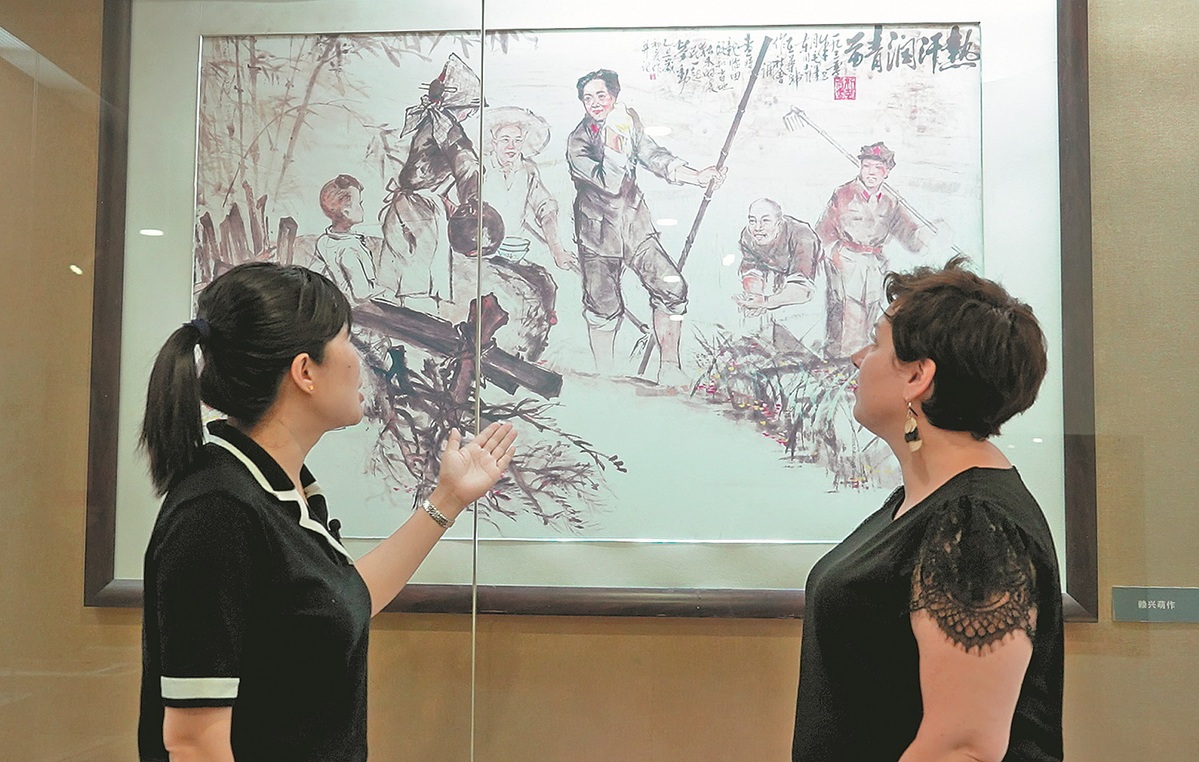
In 1930, Chairman Mao Zedong visited Xunwu county in Ganzhou, Jiangxi province. During his visit, he conducted meticulous research in the town to understand the economic situation in rural areas and small cities at that time, and later wrote the well-known 80,000 word-plus piece "Report from Xunwu."
The founding father of the People's Republic of China completed his survey based on the real situation by analyzing different sectors in Xunwu, including transportation, commerce and handicrafts.
That approach has become a significant part of China's governance, emphasizing the importance of thorough investigation and research before making decisions or formulating policies. Today, evidence-based decision-making remains the cornerstone of Chinese political philosophy, guiding the country's development and progress.
While Mao was conducting his research in Xunwu, it is said that he had an interesting conversation about tofu with his comrades.
"Of all the villagers doing business in Xunwu, which group is the largest?" Mao asked. His comrades answered "tofu makers."
"Which tofu in Xunwu is well-made and sells best?" Mao then asked.
The others failed to answer the question this time. However, Mao could not only name the village with the best tofu, but also the most successful families dealing in the food.
"Mao believed that assessing the quality of tofu in the town could provide insight into prosperity, living conditions, productivity and areas where socioeconomic improvements could be made," China Daily reporter Stephanie Stone said.
Mao's granular approach, focusing on collecting detailed and specific information before making a decision or drafting a policy, was later adopted as a commendable practice and tradition for Chinese officials.





