



Widodo's address spells out nation's 2045 goals









Key strategy for economic growth and international trust underscored
Indonesian President Joko Widodo said on Wednesday the "commodity downstreaming" policy is key to Indonesia's ambitions to becoming one of the world's biggest economies by 2045.
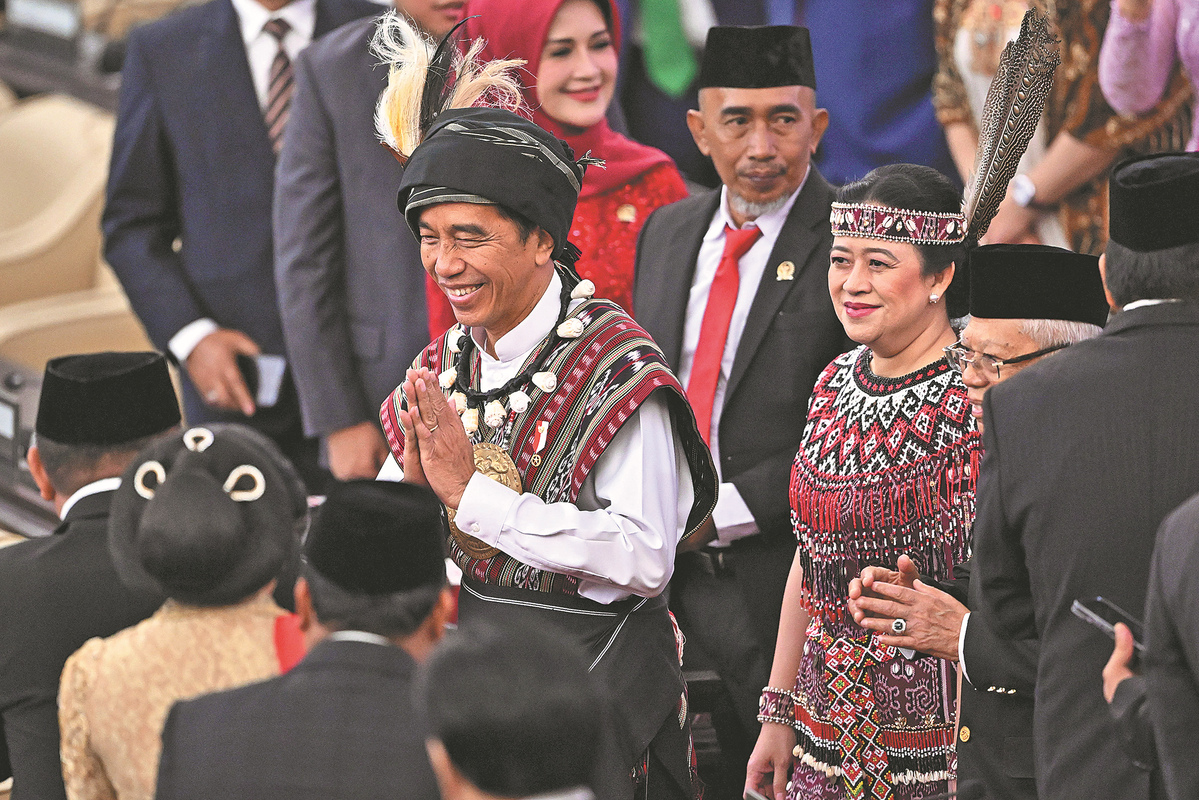
In his annual State of the Nation Address delivered ahead of Indonesia's Independence Day on Thursday, Widodo said that managing and processing the country's natural resources and raw materials will support the welfare of the people.
He told members of the People's Consultative Assembly, the House of Representatives and the Regional Representative Council that "commodity downstreaming", more known as "hilirisasi", will bear "sweet fruits" once the country develops adequate ecosystems for it.
Southeast Asia's biggest economy is also among the world's biggest commodity exporters. Under the hilirisasi policy, Indonesia is moving toward producing and exporting processed products. This is why the government banned the export of nickel ore and bauxite, while copper ore shipments will not be allowed in 2024.
The country aims to push its GDP per capita to well above $10,000 in a decade and $25,000 by 2045, when Indonesia celebrates its centenary of independence.
Widodo said the policy requires the transfer of technology and will not only cover mineral resources but also other commodities like palm oil and coconut. He said that the existing regulations, which prohibit exports of raw minerals, might harm exporters in the short term but this will be offset by long-term gains after the necessary ecosystems have been developed.
Widodo puts 2024 GDP's revenue target at 2,781.3 trillion rupiahs ($182 billion) and spending target at 3,304.1 trillion rupiahs, a 2.29 percent deficit. Economic growth for 2024 is targeted at 5.2 percent, inflation at 2.8 percent.
Demographic bonus
Widodo said the country's "demographic bonus" offers another big opportunity. He said Indonesia's demographic bonus will peak in the 2030s. This is the time when the number of Indonesians aged 15-64, which comprise the working-age population, exceeds the number of the nonworking-age population.
Widodo said that rising national productivity will boost international trust in Indonesia, enabling it to attain the goal of "Indonesia Vision 2045", and become one of the five biggest economies in the world.
Andreas Hugo Pareira, a member of parliament, said the demographic bonus and international trust will help Indonesia to achieve a "Golden Indonesia" in 2045. "We hope this can be achieved because the government already has a strategy for it to happen," he said.
Widodo said Indonesia has gained international trust, thanks to its successful presidency of the Group of 20 Summit in 2022 and this year's leadership of the Association of the Southeast Asian Nations Summit; its consistency in promoting human rights and equality; its resilience against a global economic crisis and the handling of the pandemic.
Widodo said that Indonesia has been able to create room for dialogue, serve as a meeting point, and bridge existing differences.
"Our credibility will be more recognized, and our sovereignty will be more respected. Indonesia's voice will be more listened to, and this makes it easier for us to negotiate," he said.
Aleksius Jemadu, lecturer in international relations at Indonesia's Pelita Harapan University, said Widodo's foreign policy is based on "mutually benefiting principles" and that he is strengthening Indonesia's economy to serve as a foundation to build international trust.
"This aim can be achieved only if Indonesia opens itself up and increases its competitive strengths through domestic industrial development … although it requires time and policy consistency," Jemadu said.
Leonardus Jegho is a freelance journalist for China Daily.










