



Quest for civilizational inclusivity









The Global Civilization Initiative serves as a timely awakening call for the world, notably the Global South which has long been denied much say in global governance
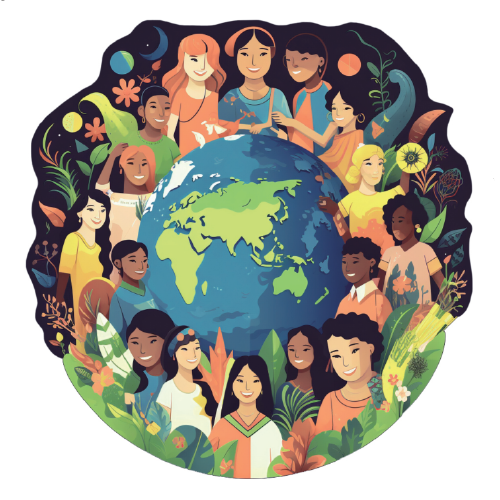
When the world is generally divided along the geopolitical rift, perhaps what matters most is the fundamental latitude for cultural tolerance that ultimately shapes the social order of a nation and the international order across the world.
The spirit of cultural inclusivity that allows for co-existence and harmonizing of diverse cultures is the prerequisite for inter-cultural tolerance, interaction, appreciation and mutual learning at different levels dictated by the social norms and governance of the nation.
Most if not all the nations across the Global South have attained their nationhood after World War II. Yet, very few of them managed to redeem their economic sovereignty and cultural confidence concurrently alongside their state sovereignty.
While the corporate proxies of their former colonial masters continue to milk their young nations dry through systemic plundering of resources, the myth that no economic success can ever be reaped without Western democracy is made the gospel truth and shoved down the throat of these young nations.
Parallel to this, perhaps, the least attention is focused on the cultural aspect of post-independence governance. Having undergone normative condescension by the colonialists for ages, cultural confidence can hardly find a breeding space on the new sovereign soil. Neither can the state governance veer from the stereotype Western dictates of democracy, human rights and modernization, which remain alien to the major bulk of the colonized people. The trajectory of the nation building is pre-determined with no regard to local aspirations and priorities.
The emergence of a more proactive China on the world stage with the rollout of public goods, ranging from the Belt and Road Initiative 10 years ago to the successive Chinese global initiatives in recent years, has reshaped the scenario. Indeed it helps catalyze the Global South's growing disillusionment with the current international order. An evolving alternative order in the world of multi-polarity is in the making. The BRICS expansion at the just concluded 15th summit in Johannesburg, South Africa, is a clear manifestation of such collective desire for global governance reform by the developing Global South, exclusive from the conventional Western powers.
For the first time, the combined economic clout of BRICS poses a counterweight to the leading Western economies in the G7. Dominance of the US currency in the global trading settlement system is put under scrutiny amid a rising wave of dethroning the greenbacks. Yet this is far from being sufficient to define the desired global governance holistically. Noting that the West has long been taking pride of their shared values in Western democracy and human rights, one may wonder if the new alternative order will be underpinned by a different set of shared values advocated by the non-West, notably China.
However, China has proven it otherwise. Time and again, China's narratives have made it clear that the model of democracy and upholding of human rights are grounded in the respective civilizational norms and societal priorities that vary across the world. There is no single model or benchmark that fits all. The coercive imposition of the Western model on others, particularly the vulnerable developing and least developed nations, irrespective of the local social conditions, is by itself hegemonic in nature.
Under the prevailing "might-is-right" rules-based order, weaponization of democracy and human rights has been granted the carte-blanche to legitimize "regime change" by the West, albeit at the heavy price of ensuing humanitarian disasters in many instances.
On the contrary, the rollout of Global Civilization Initiative provides the world with a refreshing alternative where the wisdom of "harmony in diversity" allows co-existence, harmonizing and mutual learning of diverse cultures. In other words, an all-embracing inclusivity with constructive engagement is now an emerging choice on the horizon of global governance.
In the present global perspective dominated by the West's supremacy, non-West groupings like the "BRICS+" are no more than a constellation of states with very diverse, or even diametrically opposed political systems and values.
The Global Civilization Initiative serves as a timely awakening call for the world, notably the Global South which has long been denied much say in global governance, though with over half the global population. It dawns upon us that a new inclusive paradigm that accommodates diverse civilization is possible in the globalized world. More so in the multi-polar world.
The pluralistic world is not destined to embark on a trajectory of "clash of civilizations" as was contended by the late Samuel Huntington. The theory would only become a self-fulfilling prophecy if the global hegemon is hellbent to stoke conflicts along the religious and cultural seams.

The author is president of the Belt and Road Initiative Caucus for the Asia-Pacific and a senior fellow of the Taihe Institute, China. The author contributed this article to China Watch, a think tank powered by China Daily.
Contact the editor at editor@chinawatch.cn.





