



Africans take Chinese agricultural skills home









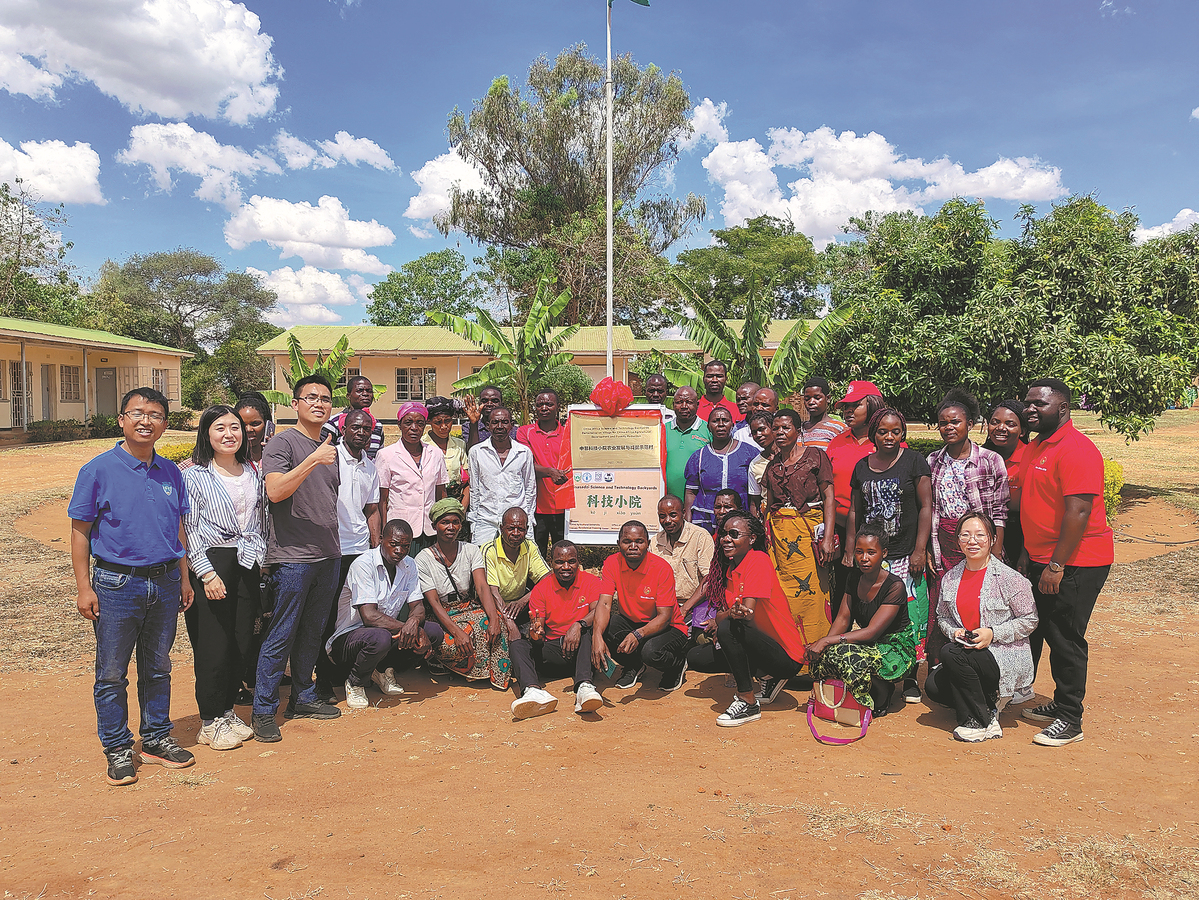
Malawians launching local version of Beijing university's 'backyard' program
African students who acquired knowledge through their participation in a Chinese agricultural development program have returned to their home countries, aiming to use what they've learned to help local farmers increase grain yields.
The students participated in the Science and Technology Backyard program, which was launched in 2009 at China Agricultural University in Beijing. During the program, they conducted research in experimental fields in rural areas while working with local farmers and using their acquired knowledge to help Chinese farmers solve agricultural problems.
One of the students, 28-year-old Augustine Talababi Phiri from Malawi, has recently been named head of an STB program in Lisasadzi, Kasungu district, in the central region of the Southeast African country.
"We are well on our way to establishing successful STBs that will empower the smallholder farmers of Malawi with the knowledge and tools they need to shape their agricultural futures," Phiri wrote in his work diary on Nov 6, one day after he went back to his home country.
As a graduate student at China Agricultural University, Phiri began studying for his master's degree in September last year and then joined a Sino-Africa Science and Technology Backyard project in Quzhou county in Handan, Hebei province.
Majoring in resource and environmental sciences and plant protection, he has witnessed or participated in every stage of wheat production in the villages in Quzhou, from land preparation and the sowing of wheat seeds to crop management and harvesting.
The first STB program in Malawi was launched in October last year. Early last month, Phiri and five other students went back to the country with a mission to launch and manage more programs in their homeland.
On Nov 7 and 8, three newly established STBs were unveiled in the country. The four programs have so far carried out some training sessions for local farmers and have promoted agricultural technologies such as organic compost, which can improve soil quality.
"In the initial stages, we are working with 30 farmers, helping them optimize farming technologies, including optimizing seeding," Phiri said, adding that the backyard model from China will be further promoted in Africa.
Phiri, who used to be an agronomist in Malawi's agricultural sector, said that about 80 percent of the country's 20 million people are smallholder farmers.
Due to poor soil quality, limited access to fertilizers and a lack of modern agricultural technologies, the yield for Malawi's main crop, maize, is relatively low. Many farmers are not growing enough food to sustain themselves, Phiri said in an interview with Hebei Daily.
In 2019, China Agricultural University launched the Sino-Africa Science and Technology Backyard project in Quzhou to cultivate young technology talent for African nations, targeting the pressing production issues faced by smallholder farmers.
In Quzhou, Phiri noticed that farmers often sought help from the program, and the teachers and students were always out in the fields, conducting research with the farmers to determine how to best improve yields.
Among them were Phiri and other African students, who often engaged in conversations with farmers in the fields.
Jiao Xiaoqiang, an associate professor in charge of the Sino-Africa project, said such engagement is very necessary.
"The core of the project lies in bringing technicians and farmers together. Only by truly participating in this process and understanding how to disseminate technology to farmers can they make a real impact when they return to Africa," Jiao told Hebei Daily.
To date, the Sino-Africa project has nurtured 72 graduate students in agricultural studies from more than 10 African countries, including Malawi, Ethiopia and Tanzania.
As one of these students, Phiri has already started using the Chinese agricultural development model in Africa.
"I believe the STB model will yield results here and help guarantee that more of our people will have enough to eat," he said.


- China, Pakistan pledge deeper military ties
- SPP to oversee handling of Shanxi mine explosion case
- Mine blast victims get mental health counseling
- China leads with ‘deep and real’ methane control efforts, expert says
- China calls for fair global ocean governance in Xiamen symposium
- Report notes increase in western Pacific military activities





