


Agricultural R&D key to food security










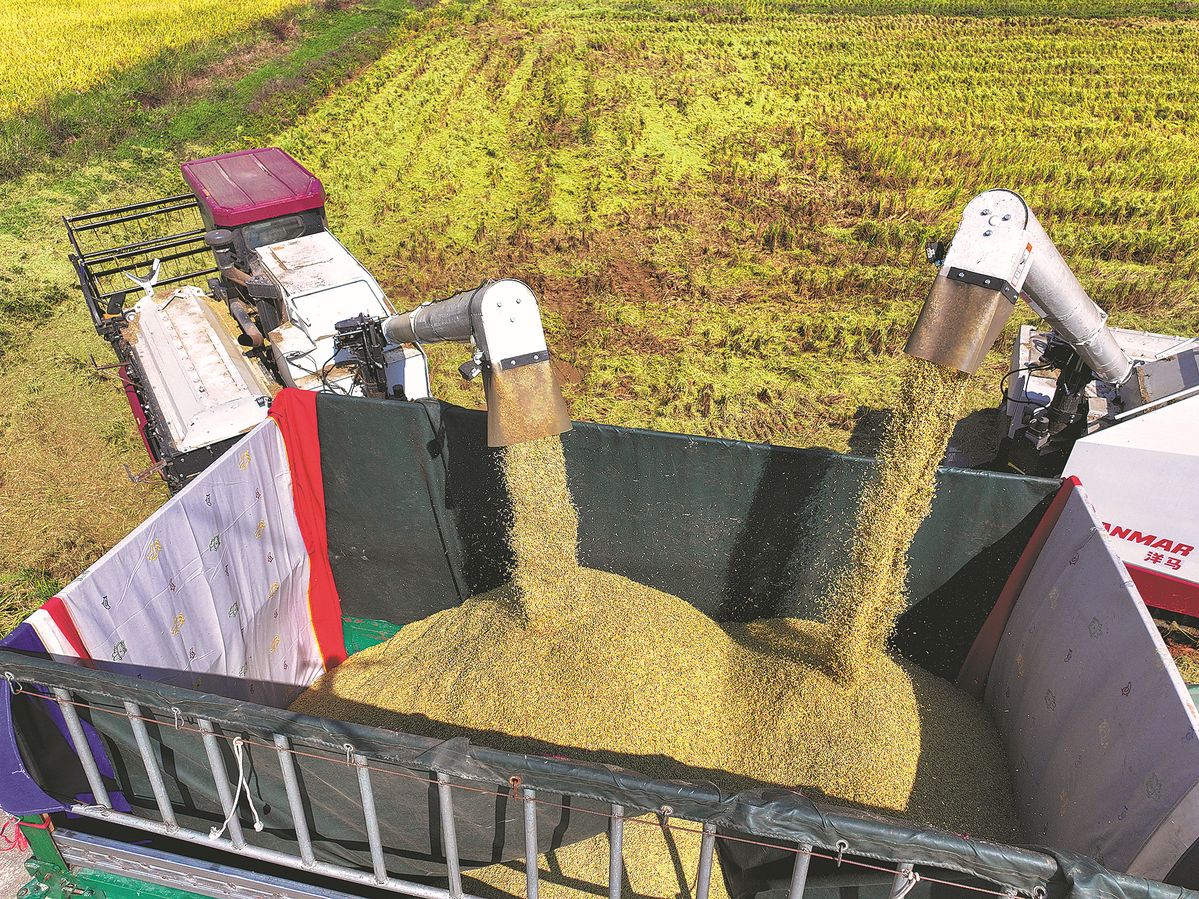
The harsh environment faced by farmers last year was noted at the annual Central Rural Work Conference in Beijing last month.
The high-level gathering reviews progress on rural-related work in the previous year — including food production — and decides priorities for the next.
It was agreed at the meeting that despite "multiple negative factors including severe natural disasters", national grain output had not suffered, rural incomes had grown more quickly, and the countryside was harmonious and stable, Xinhua News Agency reported.
The meeting also called for more breakthroughs this year using the "dual drivers of technology and reform".
China is racing to boost domestic food production and reduce its reliance on imported soybean and corn as geopolitical conflicts threaten to disrupt the global trade in food.
To shield the nation's food supply from external factors, authorities have ramped up a long-running mission to stabilize the area of farmland and have increased penalties for those repurposing it for nonagricultural use.
They also started a campaign more recently to vitalize China's sprawling but uninventive seed sector, urging plant researchers to focus on fields such as fundamental technologies, core germplasm resources and key machinery and equipment to increase agricultural efficiency.
Germplasm, the genetic resources found in things like seeds or animal tissue, is used by scientists to breed better crops or farm animals.
There have been growing calls among researchers for governments around the world to allow for unimpeded flows of such knowledge to slow the decline in crop biodiversity induced by climate change. It would also aid genetic research aimed at producing higher-yielding crop varieties able to cope with the harshest environments.
Felix Dapare Dakora, former president of the African Academy of Sciences, said during a visit to China in November that the increasing frequency of extreme weather events such as wildfires and flooding is putting the preservation of crop biodiversity under pressure, but the free exchange of germplasm could mitigate the impact.
"If we work together, we will not destroy," he said. "If we don't work together, we will destroy the planet."





