



Graying demographic ranks, health-savvy youth driving supplements sector









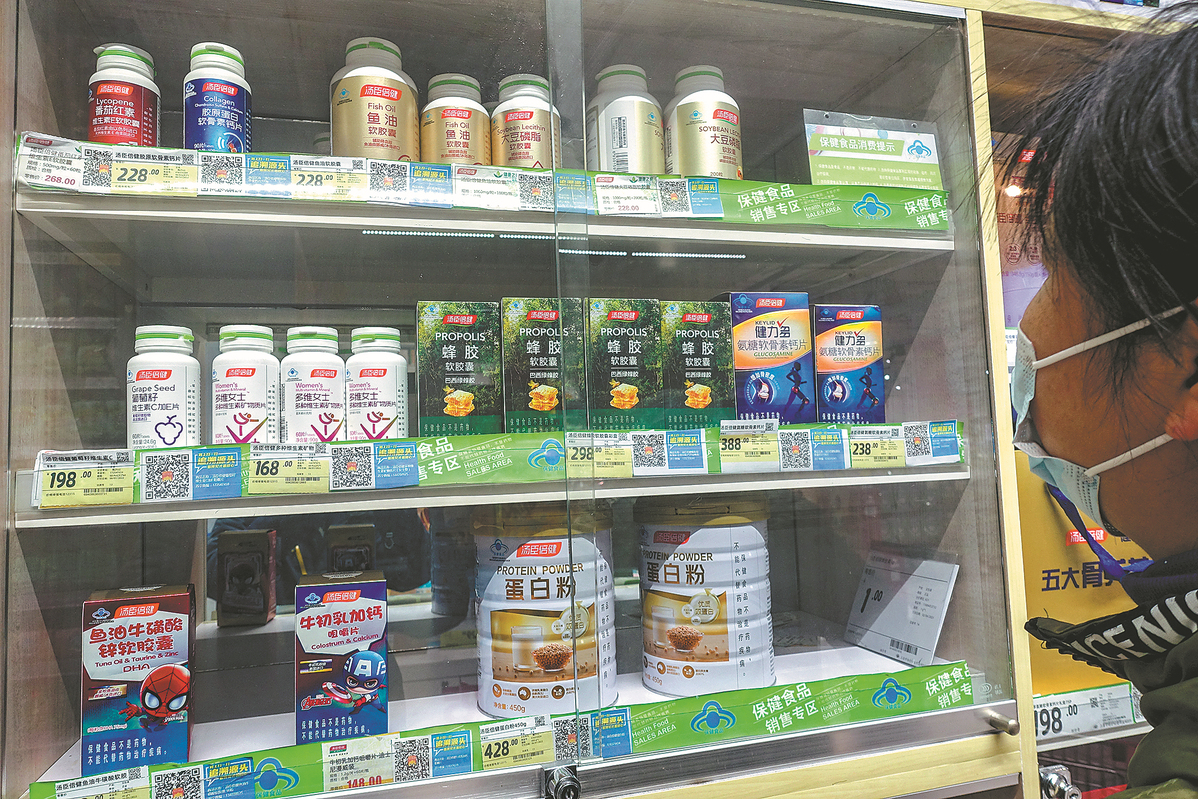
The dietary supplement industry is experiencing robust growth in China, fueled by factors such as an aging population and increasing attention paid to health and wellness among the younger generation, propelling rapid market expansion in various segments, experts and executives said.
Though China's dietary supplement market has long been dominated by established foreign brands, domestic manufacturers, with greater efforts to refine their products, are strengthening their distribution networks and building consumer trust, and are now poised to catch up and compete with their international counterparts, they added.
Due in large part to rising disposable incomes and a growing number of health-conscious consumers — both young and old — the dietary supplement business in China has grown significantly in recent years, said Zhang Yongjian, a food and drug research director with the Chinese Academy of Social Sciences.
China's health and dietary supplement market, as shown by statistics from e-commerce data software firm Moojing Market Intelligence, is expected to have been worth some 328.3 billion yuan ($45.6 billion) in 2023, and boasts substantial growth potential in the coming years, especially when compared to developed countries where the industry has already matured.
The COVID-19 pandemic undoubtedly reshaped Chinese people's priorities and prompted them to take a closer look at their overall health and well-being, and explore products that can potentially boost their immune systems, boding well for future market expansion, Zhang said.
Brands from the United States, Australia, Japan, New Zealand and elsewhere dominated the Chinese health supplements industry in 2022. About 70 percent of market revenue came from sales of such international brands, with domestic counterparts accounting for around 30 percent, Moojing said.
That said, the recognition and acceptance of domestically produced health supplements by consumers in China have been steadily rising, leading to a surge in demand and sales, said Chen Hao, general manager of Alibaba Health, a subsidiary of Alibaba Group.
Chinese companies are adopting a strategic approach to market segmentation, focusing on deepening their presence in niche markets through flagship products, said Liang Yunchao, president of By-Health, a producer of vitamins and dietary supplements in South China's Guangdong province.
By-Health has established a comprehensive and scientifically driven dietary supplement system. The company's product lineup includes probiotics, proteins, vitamins, minerals and other functional dietary supplements, catering to a wide range of consumer needs, Liang said.
Meanwhile, the company sources its raw materials from 23 countries and regions worldwide and has established five dedicated ingredient supply bases in locations such as Brazil and Australia, contributing to the quality and effectiveness of its products, Liang added.
In the first three quarters of 2023, the company achieved a total revenue of 7.782 billion yuan, marking a year-on-year growth of 26.34 percent. Furthermore, net profit of the Shenzhen-listed company reached 1.9 billion yuan, up 28.28 percent year-on-year, Liang added.
Domestic suppliers' commitment to scientific research, quality assurance and consumer trust has solidified its position as a trusted brand in the dietary supplement industry, said Chen with Alibaba Health.
In 2023, as many as 30 new Chinese brands have generated sales exceeding 10 million yuan each. Additionally, this thriving market has witnessed the emergence of 150 new Chinese health products, each achieving sales exceeding 1 million yuan, Alibaba Health said.
Moreover, a growing number of Chinese manufacturers are leveraging traditional Chinese medicine practices, herbal ingredients and traditional wellness concepts to create unique and appealing product offerings.
However, strict regulations over the ingredients in health supplements have resulted in a slower pace of formula innovation compared to developed countries such as the US. According to a research report by China Cinda Asset Management, Chinese health supplement brands face lengthy approval processes for new formulas, with an average approval time of nearly five years.











