Small town thrives with winter games
Global, regional ice and snow sporting events are improving the lives of many rural residents










For years, Yabuli, a small town in Northeast China's Heilongjiang province that was unknown to all but those who lived there, luxuriated in splendid isolation. That was the case until 1996, when fame hit and transformed the town.
The instant celebrity came about because that year's Asian Winter Games skiing events were held there. Now the town is preparing for a second brush with history, as it prepares to again stage skiing events for the 9th Asian Winter Games next year.
It is no overstatement to say that the 1996 Asian Winter Games changed the town forever, as Yabuli cashed in on its fame, with Yabuli Ski Resort generating the construction of transformational infrastructure, the improvement of transportation and the creation of jobs.
In fact, Yabuli locals, dragged quickly from geographical obscurity, claimed a key role for themselves in helping to build China's major winter sports industry.
"If we had no winter sports venues in Yabuli, such a remote village would not be linked to the high-speed railway lines," said Sun Jingjing, who, like many of her fellow villagers, saw her life being transformed by major sports events.
The first of those was the Asian Winter Games in 1996, followed by the National Winter Games 12 years later, the same year as the Summer Olympics in Beijing. In 2025, the Asian Games will return.
Sun, who lives at the foot of the Yabuli snowfields, now runs a homestay. The income from that is complemented by what she gets from agricultural work that consists of growing black fungus and picking mushrooms in the mountains. That work is done predominantly during the summer, and during the ski season in winter, Sun welcomes paying guests into her home, which is complete with a restaurant whose menu includes products from her farming.
Another homestay operator is Yu Zhenyou, who is in his 50s and has been in the business since 2019. The farmer from Qingshan village, which is adjacent to the resort, is another villager whose first business venture cashed in on Yabuli's winter tourism.
"The Asian Winter Games have completely changed the destiny of local villagers," Yu said. "Our lives and the work we do are closely linked to the boost in winter sports."
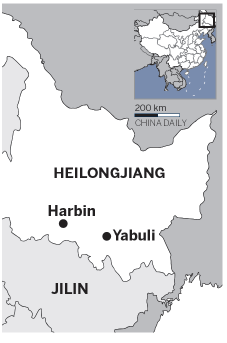
Yabuli, which is 177 kilometers southeast of Heilongjiang's capital, Harbin, is now regarded as one of the country's top ski resorts, and is particularly noted for its ski jumping facilities.
Many other Yabuli locals count the blessings that winter sports have given them.
"Soon after the Asian Winter Games in 1996, a highway was built near our village, and it is precisely because of the resort that the level of our local infrastructure now matches that of a city," Yu said.
Many young residents work as ski instructors around the country, having had an early start in the winter sports sector, Sun said.
Yabuli locals now play a key role in major ski resorts nationwide, providing valuable industry experience, such as operating snow-making machines and helping in the financial management of ski resorts in other provinces and regions.
Heilongjiang expertise has helped train more than 12,000 of the nation's ski and other snow sport instructors, with about 1,500 specialists trained annually, which accounts for one-fourth of the total number in China, said Dong Xiaodong, deputy director-general of the administration of sports of Heilongjiang.
When visiting Heilongjiang in September, President Xi Jinping said the winter economy should be fostered as a new source of growth, promoting the development of sports, culture, equipment and tourism related to ice and snow.
The hosting of the 2022 Winter Olympics has driven the growth of the winter sports industry and the ice and snow economy, and China's goal of involving 300 million people in ice and snow activities has come true, Xi said.
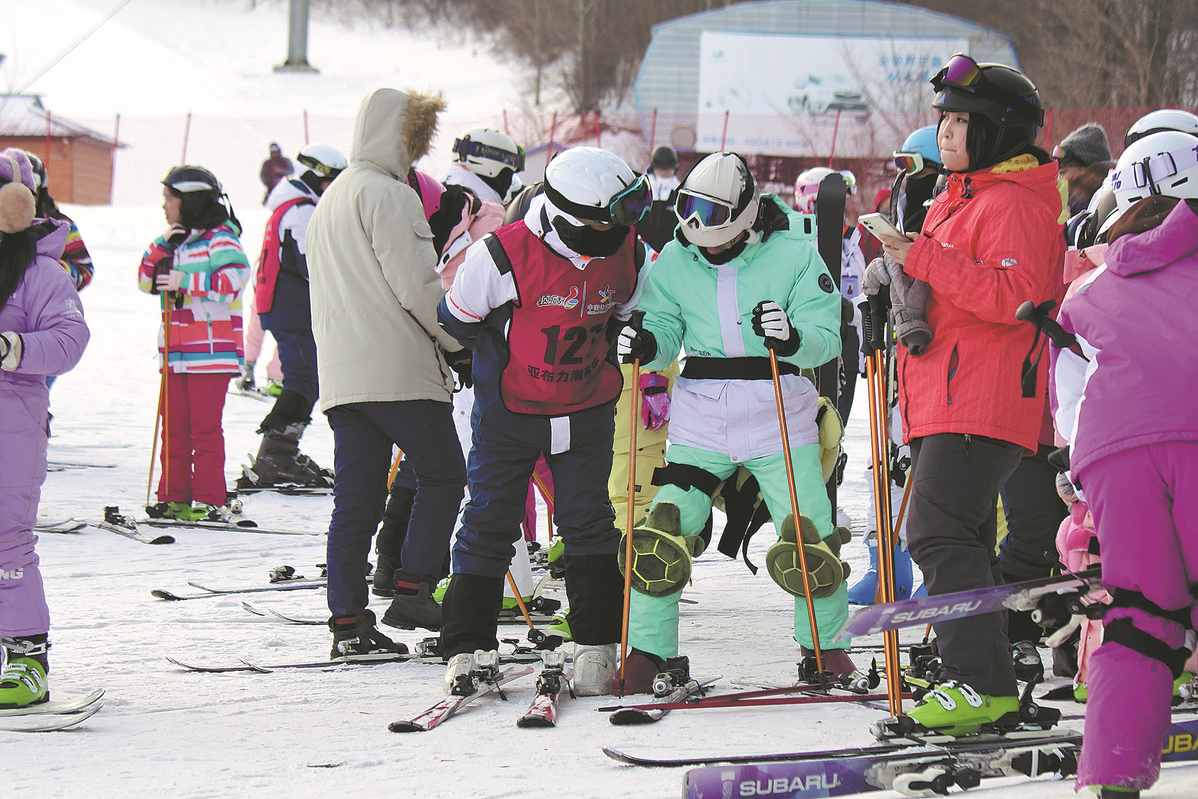
Chen Changpeng, office director of Yabuli Ski Resort, said the resort has hosted about 2,000 tourists a day this winter. Most visitors have come from the Pearl River and Yangtze River delta regions, accounting for about 70 percent of total tourist figures.
The annual report on China's ice and snow tourism development, released by the China Tourism Academy in January, projected that by the end of the 2024-25 ice and snow season, China's ice and snow leisure tourism sector is expected to receive more than 520 million visitors, with its revenue exceeding 720 billion yuan ($100 billion).
With the countdown to the second staging of the Asian Winter Games in Harbin next year, the province is proceeding with an infrastructure extension plan including a tourism railway extending to Yabuli. The extension is expected to be ready at the end of the year, said Shen Haitao, deputy secretary-general of the 9th Asian Winter Games executive committee, during a seminar on the Games and the high-quality development of the ice and snow economy.
"We have formulated a plan for urban infrastructure improvement, including upgrading 163 roads and enhancing the cityscape. We are accelerating the second-phase expansion project of Harbin Taiping International Airport and the expansion of the Yaxue Highway connecting Harbin and Yabuli," Shen said.
Li Ling, an official of the province's culture and tourism department, said the recent trend of tourists from southern China heading in huge numbers to Heilongjiang is unprecedented.
As excitement builds for the Asian Winter Games, Yabuli is also welcoming back many residents who had previously ventured out for work, as young villagers return from other provinces to their hometown to tap growing job opportunities.
"Five of my relatives who worked in the ski industry outside Yabuli in previous years have returned home, bitten by the ski fever," said Sun, the farmer and homestay operator.
Tang Miaofan and Jiang Duo contributed to this story.
Contact the writers at houchenchen@chinadaily.com.cn