



National standard set for hotpot cooks









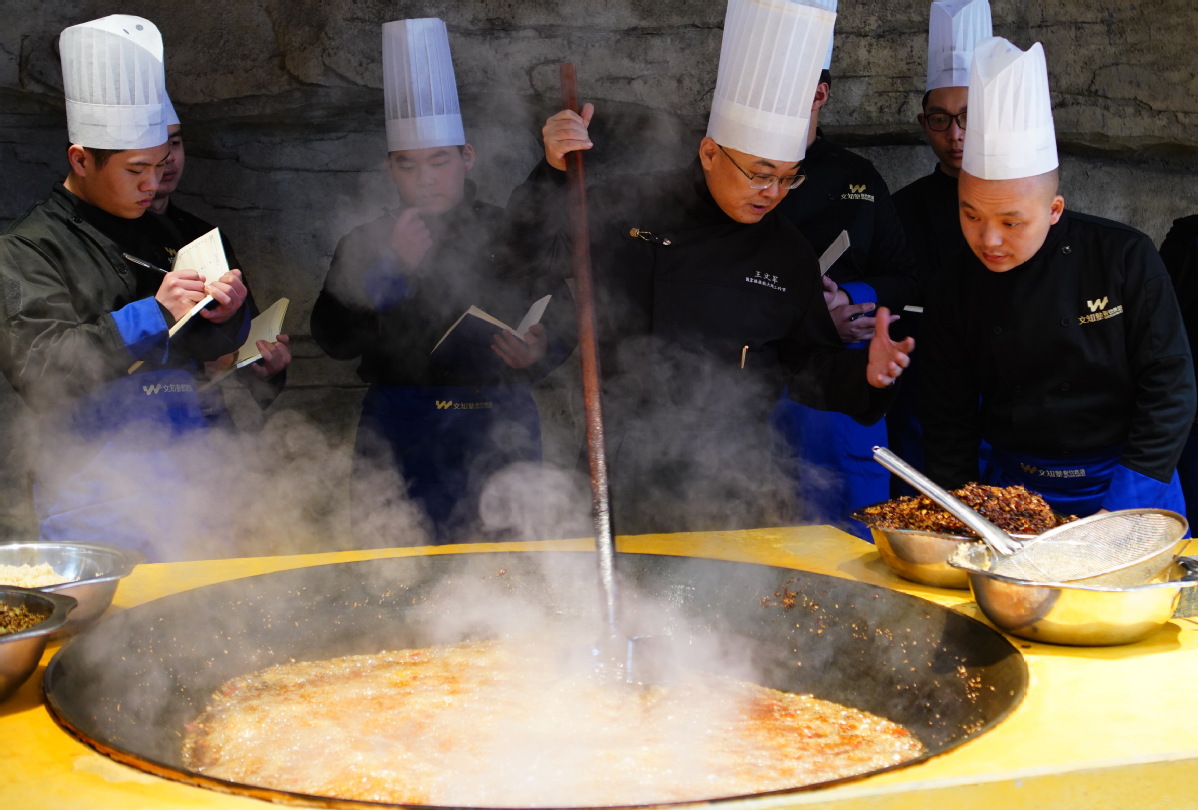
Hotpot cooks now have their own national working and evaluation standards, which will provide them a better opportunity to excel in their careers.
The State-level hotpot standard, released by the Ministry of Human Resources and Social Security and the Ministry of Commerce in February, set a five-level evaluation system for the profession.
At the entry level, hotpot cooks should know the proper way to clean ingredients such as vegetables and meats, while those at the highest level should be able to develop hotpot soup recipes and arrange and manage a hotpot banquet.
Designated as a national profession in 2022 by the human resources ministry, a hotpot cook is defined as a person who possesses the skills to make hotpot seasonings, soups and dipping sauces and to prepare meats and vegetables.
The ability to ensure food safety and awareness of the importance of environmental protection are also required of the cooks.
The standard sets rather general, well-balanced working and evaluation guidelines allowing for the diversity and differentiation of hotpot cooking methods, including spicy hotpot with stir-fried sauces and light-flavored hotpot with mushroom soup, experts said.
"Chinese hotpot has numerous flavors," said Wang Wenjun, the leader of the group of editors involved in setting the national hotpot cook standard, who is also a Chinese cuisine expert.
"The four main types — spicy, sauerkraut, tomato and mushroom — make up around 85 percent of the market share."
He said that the editors visited eight cities famous for their different hotpot flavors — including Chongqing for its spicy hotpot and Kunming, Yunnan province, for its mushroom hotpot — and sent questionnaires to 85 hotpot-related organizations and companies nationwide to solicit advice.
The State-level standard was revised 28 times over a period of six years before its official release in February.
Wang said that work ethic is the most important quality to consider when evaluating hotpot cooks, followed by their cooking theories and practical skills.
He said that in the future, the standard may add criteria on cooks' management, teaching and innovative abilities, as well as their craftsmanship.
Wang Huayuan, vice-director of Chongqing's vocational skills appraisal center, said that the release of the national standard can help cultivate future talent and put them on a path to progression in the industry.
"The nation has a large number of people working in the hotpot industry, and we didn't have a standardized identification for their profession before, which hampered their career development," she said.
"The hotpot cook profession is now a nationally approved profession and has its own working standard, offering systematic and professional evaluation to the cooks and giving them opportunities to grow from ordinary caterers to skilled workers, which can help ensure the industry achieves better, sustainable development."
Wang Wenjun, the standard's editing group leader, said that he hopes with national certification, hotpot cooks will see salary increases. He also wishes more cooks would participate in national or international cooking competitions.
In 2021, the China Cuisine Association released a report on the industry, saying that hotpot sales were responsible for roughly one-third of domestic catering revenue in 2020. E-commerce platform Meituan said that the number of hotpot restaurants in Sichuan province and Chongqing — two of the most famous hotpot destinations in the nation's southwest — made up nearly 60 percent of the nation's total in 2021.
The Chongqing municipal government said that it has over 20,000 hotpot companies and more than 30,000 restaurants as of October last year. The city has nearly 1 million people involved in the industry, with annual revenue reaching over 400 billion yuan ($55.7 billion) as of that month.


- Asia's second gene-edited pig kidney patient celebrates 52nd birthday
- Mainland spokesman criticizes DPP for 'never abandoning' its separatist agenda
- Chinese researchers design fresh strategy to boost solar cell performance
- China successfully launches new communication technology test satellite
- Plan to widen public services access
- Rights of over-age workers protected





