



Advanced solid-state batteries a mutual ambition of carmakers









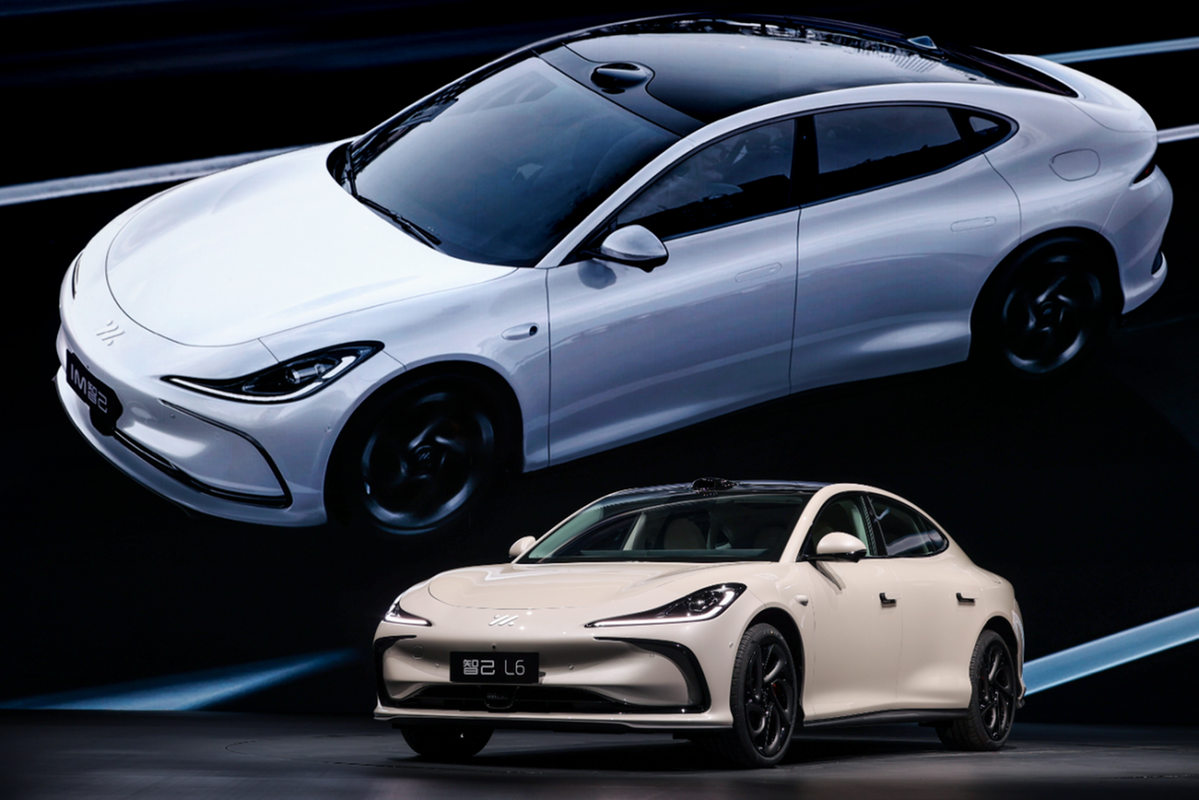
Chinese electric vehicle makers are rapidly adopting solid-state batteries in their latest models, with industry experts anticipating full use of this superior solution for the next generation of batteries by 2030.
SAIC's electric marque, IM Motors, started presales of the L6 sedan last week, highlighting its so-called super-fast charging solid-state battery. Sedans with the battery will be priced below 330,000 yuan ($45,600), the carmaker announced.
The battery in the L6 is technically a semi-solid-state one, integrating both liquid and solid electrolytes. Supplied by Qingtao Energy Development, a solid-state lithium battery provider backed by SAIC, the battery operates at a maximum of 900 volts, enabling the L6 to achieve a peak charging power of 400 kilowatts, enough for 400 kilometers in 12 minutes.
CITIC Securities commented after the launch that the L6 could potentially usher in an era of affordable semi-solid-state batteries. As semi-solid-state batteries become widely used, it is anticipated that top solid-state battery manufacturers and the industry chain will benefit.
Li Zheng, general manager of Qingtao Energy, outlined their solid-state battery's industrialization process in three steps. There is the first generation, termed the semisolid-state battery, which is currently installed and mass-produced on the IM L6. Following this is the second generation of solid-state battery, projected to be developed by 2025. The ultimate goal is to achieve the third generation, the fully solid-state battery, although Li did not specify a time frame.
Switching from liquid to solid-state electrolytes offer benefits like increased battery energy density, as solids have higher density and smaller volume compared to liquids; enhanced safety by reducing fire risks and improving puncture resistance; and extending battery life span by minimizing degradation during charge-discharge cycles.
Ouyang Minggao, an academician of the Chinese Academy of Sciences, forecasted at a solid-state battery conference in January that fully solid-state batteries will achieve industrialization by 2030.
Ouyang said that fully solid-state batteries are widely acknowledged as a preferred solution for the next generation of batteries and represent a crucial strategic advantage in the competition for next-generation battery technologies.
China Post Securities estimated that by 2030, China's solid-state battery shipments will reach 251.1 gigawatt-hours, with the market value expected to reach 20 billion yuan.
With such prospects, automakers continue to put efforts into the field. GAC Aion's premium marque, Hyper, launched a fully solid-state battery on Friday, saying that the battery utilizes 100 percent solid-state electrolytes, featuring ultrahigh energy density, inherent safety and a broad operating temperature range. The automaker said it has transitioned from laboratory testing to mass production.
Changan Automobile said some of its vehicles will start to feature solid-state batteries from 2025 before they come as standard across its lineup by 2030.
China's EV firms Nio and Seres have both launched EV models with semi-solid-state batteries. In late December, a Nio ET7, sporting a 150 kilowatt-hour battery pack of semi-solid-state cells codeveloped by Nio and Beijing Welion New Energy Technology, finished a 1,044 km trip on one charge with 36 km left on the range display.
International players also have plans for such batteries. Volkswagen anticipates using solid-state battery technology starting from 2025; Nissan plans to initiate a pilot plant for solid-state batteries in 2024, aiming for mass production by 2028; Toyota aims to start mass production of solid-state batteries by 2030, while BMW is pledging to produce EVs equipped with solid-state batteries before 2030.
Despite significant efforts, the journey ahead remains challenging. Chinese battery giant CATL Chairman Zeng Yuqun has voiced support for solid-state batteries, adding that the company has invested in the sector for over a decade. However, due to ongoing challenges in durability and safety, it will likely be several more years before commercialization of solid-state batteries for EVs, Zeng said.
caoyingying@chinadaily.com.cn
- Calls for policy to grow country's vehicle sales
- German firms vow to scale up investment in China
- GAC Group unveils new visual intelligence driving system
- Lithium battery factory to launch over 12th Energy Storage International Conference and Expo
- Xinjiang's railway ports handle over 4,000 China-Europe freight train trips











