


Sky's the limit in UAV autonomous push
Domestic tech giants see bright future prospects on rising use of pilotless flights










Apart from the convenience of food delivery services, these aircraft are increasingly being employed to provide aerial tours, showcasing scenic areas from a unique vantage point, offering tourists an immersive and unforgettable experience.
Luogang Park in Hefei, Anhui province, once an airport, has undergone transformation into the world's largest urban park. In addition to its scenic beauty, the park has become a prime location for the application of the low-altitude economy, particularly in the tourism and sightseeing sectors.
Chinese urban air mobility company EHang Holdings Ltd conducts daily flight tests of its passenger-carrying drones within the park, with plans underway for commercialization. Luogang Park aims to establish internal air routes and develop "aerial taxi" hubs, allowing visitors to purchase tickets and enjoy panoramic views of the park from above.
According to recent data released by the CAAC, approximately 480,000 visits related to aerial sightseeing were made in 2022. Moreover, the administration estimates that the low-altitude economy in the tourism sector is poised to exceed 200 billion yuan by 2030.
Exploring potential applications in sectors beyond tourism — such as logistics, agriculture, environmental monitoring and infrastructure inspections — is crucial for the growth and sustainability of the low-altitude economy, analysts said.
By diversifying the use of low-altitude technology, businesses can unlock new revenue streams and contribute to the growth of the overall industry, said Bai Wenxi, vice-chairman of the China Enterprise Capital Union.
Unmanned aerial vehicles can be effectively employed in various sectors such as maritime security, surveillance, fishery patrols, forest inspections and oil pipeline monitoring, which capitalizes on the unique capabilities of drones to gather and transmit data from elevated positions, Bai said.
In addition, UAVs are particularly relevant for applications that require rapid and efficient delivery, such as medical supplies, urgent cargo shipments and emergency response services, Bai added.
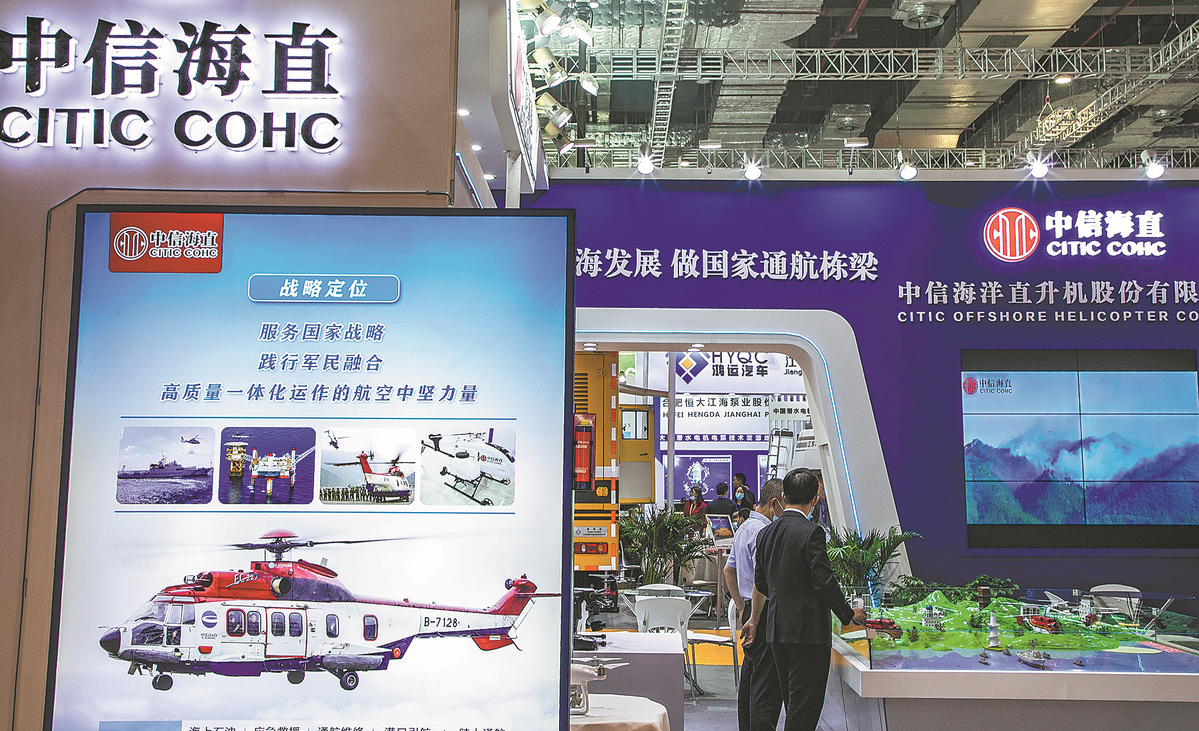
In May, CITIC Offshore Helicopter commenced operations on a helicopter route between Shenzhen and nearby Zhuhai. The new service offers passengers an efficient alternative to the traditional two-hour land journey, completing the trip in just 20 minutes. Priced at 999 yuan per ticket, the helicopter service has attracted a group of time-conscious travelers who prioritize speed over cost.
The development of the low-altitude economy relies heavily on advanced aerial vehicles and the support of information technology, network connectivity and communication systems.
The general aviation manufacturing industry plays a crucial role in providing the necessary equipment for growth of the low-altitude economy, said Shan Zhongde, China's vice-minister of industry and information technology.
China had more than 2,300 domestic companies engaged in civilian drone research and development by the end of 2023, with more than 1,000 drone models mass-produced, Shan said, adding that last year, China delivered more than 3.17 million civilian drones.
With a comprehensive supply chain encompassing R&D, component manufacturing, assembly and distribution, China has positioned itself as a global leader in drone production, said Tian Gangyin, founder and CEO of United Aircraft.
The vast network of suppliers, manufacturers and tech companies has contributed to the country's ability to deliver high-quality drones at competitive prices, Tian said, adding that China has played a pivotal role in shaping international standards for drone technology.
A future where multiple aerial vehicles, both manned and unmanned, operate in close proximity, requires precise coordination and communication to ensure safety and maximize airspace utilization, experts said.
The vision of achieving end-to-end and door-to-door services in the low-altitude economy requires the establishment of robust infrastructure capable of supporting high-precision operations, said Li Xiaohua, a researcher at the Institute of Industrial Economics, which is part of the Chinese Academy of Social Sciences.
This infrastructure includes a network of sensors, communication systems and intelligent devices that work together seamlessly to ensure smooth and efficient operations across the entire airspace, Li said.
The low-altitude traffic system will realize more intelligent operational management, real-time monitoring and intelligent scheduling of low-altitude economic activities, gradually improving operational efficiency and management standards, Li said, adding that with such a network in place, regulatory agencies can effectively monitor and control low-altitude flights, ensuring a safe and well-regulated airspace environment.





