


Green shift provides lifeline for Yunnan's lakes
Unbridled industrialization from 1980s onwards severely harmed local water quality










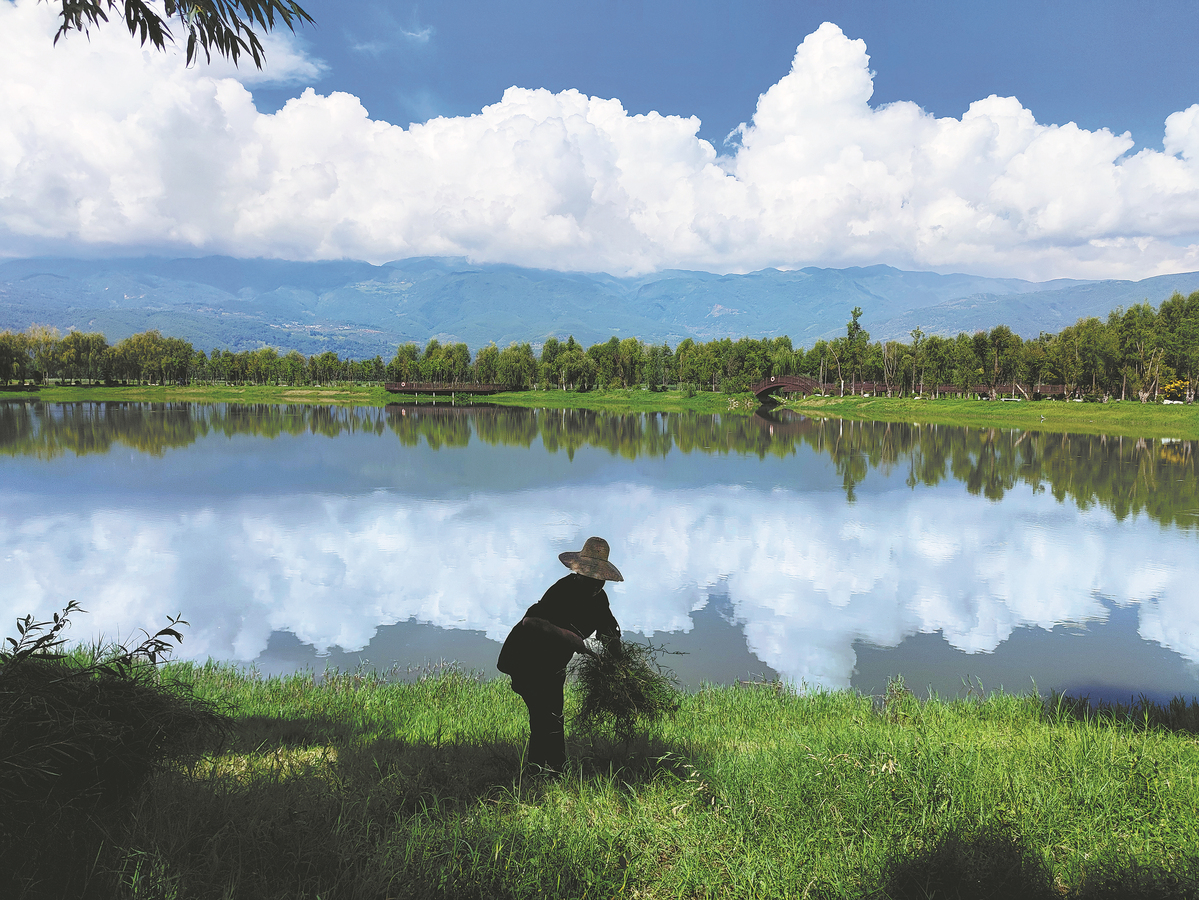
The nine lakes that dot the plateau in Yunnan province, Southwest China, that provide a crucial ecological barrier and water conservation area in the upper reaches of the Yangtze River, have been pulled back from the brink of environmental disaster due to years of rapid industrialization and urbanization.
For many of the lakes, each covering more than 30 square kilometers, they'd suffered from years of industrial and agriculture runoff, with even raw sewage making its way into their waters as China embraced high-speed economic development from the 1980s.
Dianchi Lake — the largest freshwater lake in Yunnan — became one of China's most polluted lakes in the 1990s with its water quality falling below Grade V, the lowest water quality in the national five-tier grading system for surface water.
"Various types of garbage and large quantities of blue-green algae were floating on the water surface. The water turned murky and gave off a strong foul smell. Many fish died," recalled Li Yunli, a 60-year-old local who grew up by the lake.
"This really broke our hearts since we had lived by the lake for generations," she said.
Erhai Lake, the second largest lake in Yunnan and a popular scenic spot, suffered a near-fatal blow to its ecosystem at that time with farms, real estate projects and hotels releasing too many pollutants into the water.
"The nine lakes are all located on the Yunnan-Guizhou Plateau. Compared with other water bodies, plateau lakes are relatively isolated and their water replacement period is longer, which means that they lack the ability for effective self-purification," said Liu Xiaoyong, deputy director of the development research center of the Ministry of Water Resources.
"Plateau lakes also have relatively fewer species and their ecosystems are fragile. Once damaged, it can be very difficult to restore them," he said.
In order to save these lakes, government departments, institutions and local residents have worked together and taken a series of actions, exploring a greener development path for harmonious coexistence between humans and nature.





