



EU's protectionist tariffs on Chinese EVs face backlash from industry, officials









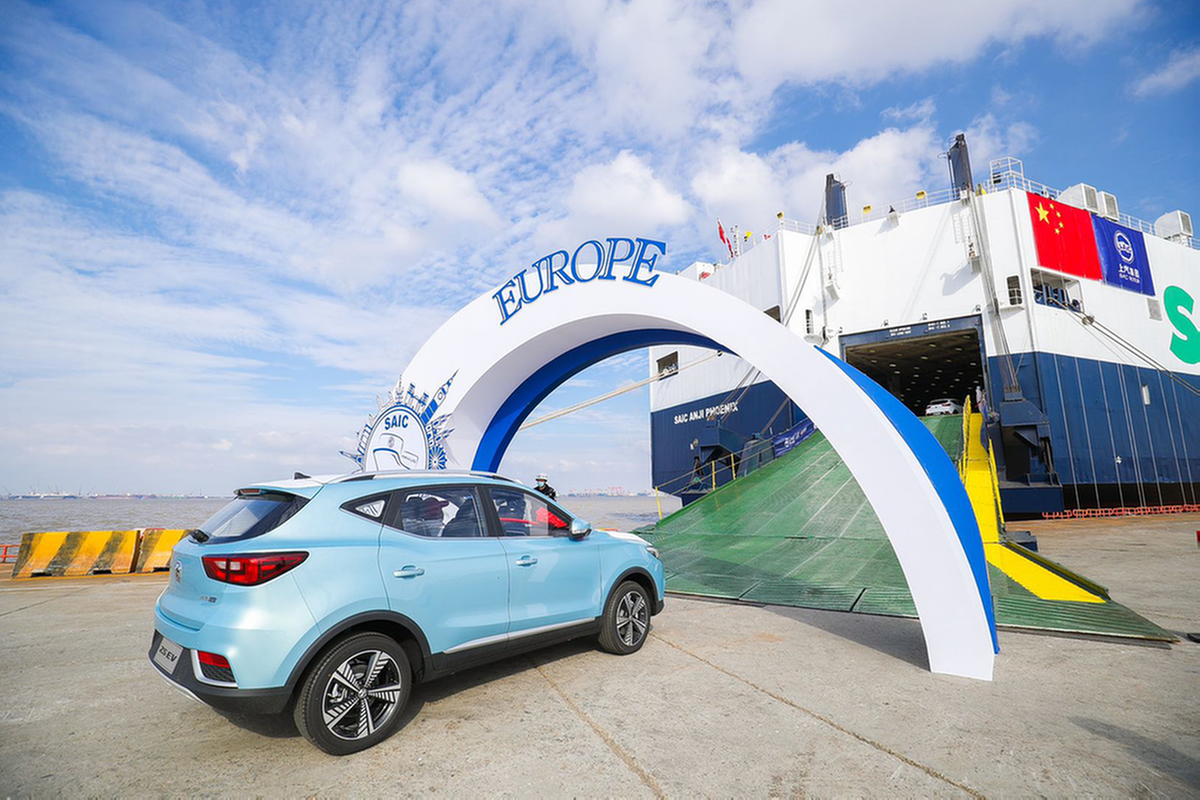
BRUSSELS - The European Commission on Tuesday announced the imposition of anti-subsidy tariffs on Chinese-made electric vehicles (EVs), a decision that has sparked strong opposition from within the EU and key industry stakeholders.
Starting Wednesday, these tariffs will remain in place for five years with varying rates: 17 percent for BYD, 18.8 percent for Geely, and 35.3 percent for SAIC, among China's leading automakers.
Additional firms that cooperated in the investigation will be subject to a 20.7-percent duty, while non-cooperative companies will incur the maximum 35.3-percent rate, according to the commission's statement.
Despite this decision, the European Commission noted that the EU and China are still exploring alternative measures within WTO guidelines to address trade concerns.
The decision has sparked widespread discontent among EU member states and industry stakeholders alike. Critics argue that such tariffs could burden European consumers, strain EU-China trade and investment ties, hinder Europe's transition to a greener automotive sector, and ultimately undermine global efforts to mitigate climate change.
Germany's economy ministry reaffirmed its commitment to "open markets," underscoring the country's reliance on global trade networks and calling for continued negotiations with China to ease tensions while protecting EU industries.
Slovakia, a dissenting voice in the October vote, opposed the tariff increase. Prime Minister Robert Fico noted that China is "20 years ahead of us when it comes to EVs," cautioning that heightened trade barriers could ultimately harm Europe more than China.
Industry leaders in the automotive sector echoed these concerns. Hildegard Muller, president of the German Association of the Automotive Industry, criticized the tariffs as a "step backwards for global free trade," warning of potential job losses, stunted economic growth, and weakened market prosperity, along with further trade disputes.
"The door for negotiations remains open. This is the only positive news today," she said, urging sustained efforts toward open negotiations.
Major European automakers, including Volkswagen, BMW, and Mercedes-Benz, voiced a unified stance against the tariffs, advocating for open markets that support fair competition.
BMW CEO Oliver Zipse warned that the tariffs could "harm the business model of globally active companies, limit the supply of electric cars to European customers and thus slow down decarbonization in the transport sector."
Michael Schumann, chairman of the Board of the German Federal Association for Economic Development and Foreign Trade, criticized the tariffs as counterproductive, arguing that they contradict Europe's objectives of promoting electric mobility and advancing climate protection.
"The transition to electric mobility is a cornerstone of climate protection, and we need to support and advance that transition," Schumann told Xinhua.
Experts have also weighed in, highlighting broader geopolitical influences. Boyan Chukov, a former foreign policy advisor to Bulgaria's Prime Minister, argued that the United States is leveraging the EU in its economic competition with China.
"China is one of the countries most compliant with environmental regulations. In this regard, it stands as an example for other countries to follow," he said, adding that the additional tariffs are driven by "political imperatives."
Liang Guoyong, a senior economist with the United Nations Conference on Trade and Development, described the EU tariffs as "counterproductive."
He noted that protective and restrictive trade measures on green products, such as EVs, conflict with global efforts to reduce carbon emissions and could increase costs for European consumers.
"Imposing these tariffs would only undermine the economic interests of both importers and exporters and threaten global climate change progress," Liang warned.











