



China and Peru unite to save endangered plant









In the herbarium of the South China Botanical Garden of the Chinese Academy of Sciences is a specimen of a leaf from the Queen of the Andes from Peru.
The specimen is considered an important part of joint research on endangered species and increased efforts on biodiversity conservation between China and Peru.
The Queen of the Andes is considered one of the Latin American country's national treasures. There are also small populations of the plant near the Peruvian border in Bolivia, mainly inhabiting the Andes Mountains at altitudes ranging from 3,000 to 4,800 meters.
The Queen of the Andes can grow to over 10 meters in height, making it the tallest plant in the Bromeliaceae family, according to Ge Xuejun, a researcher at the South China Botanical Garden of the Chinese Academy of Sciences.
"It only blooms once in its lifetime, between 40 and 100 years of age, before dying," said Ge.
Peru is the native land of many endangered and unique plants. The Cinchona tree, the source of the early malaria treatment drug quinine, is engraved on Peru's coins and coat of arms.
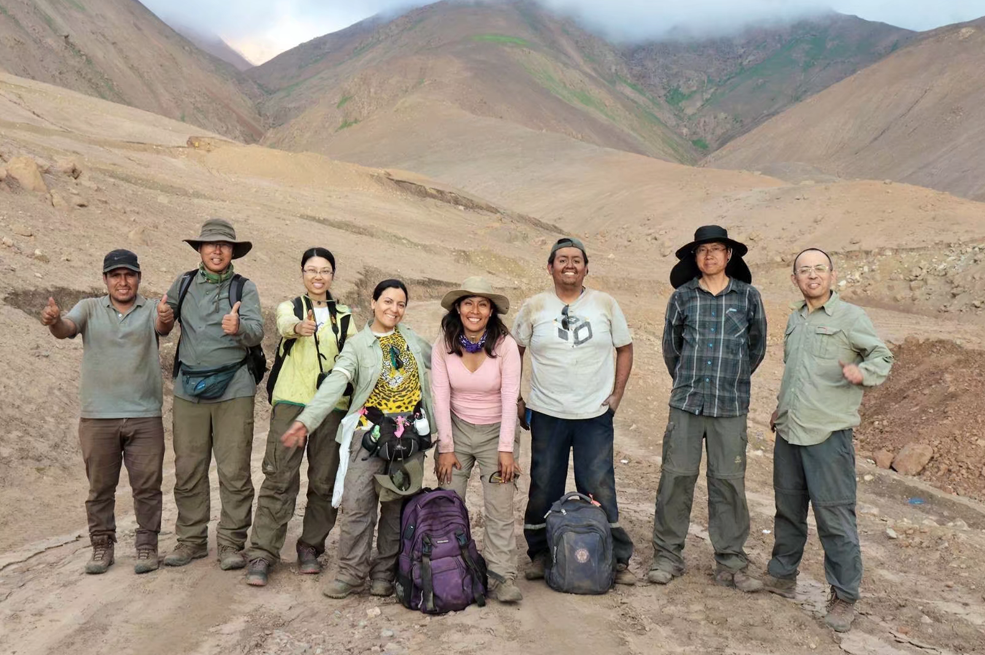
In 2009, Ge and two other Chinese researchers first saw this plant during a field survey. "In the dry and cold Andean highlands, where vegetation is sparse and low, this pineapple stands out prominently, with its widespread distribution like a forest," Ge said.
They also saw a pineapple that had just died during the survey, with seeds resembling millet, estimated to number in the millions.
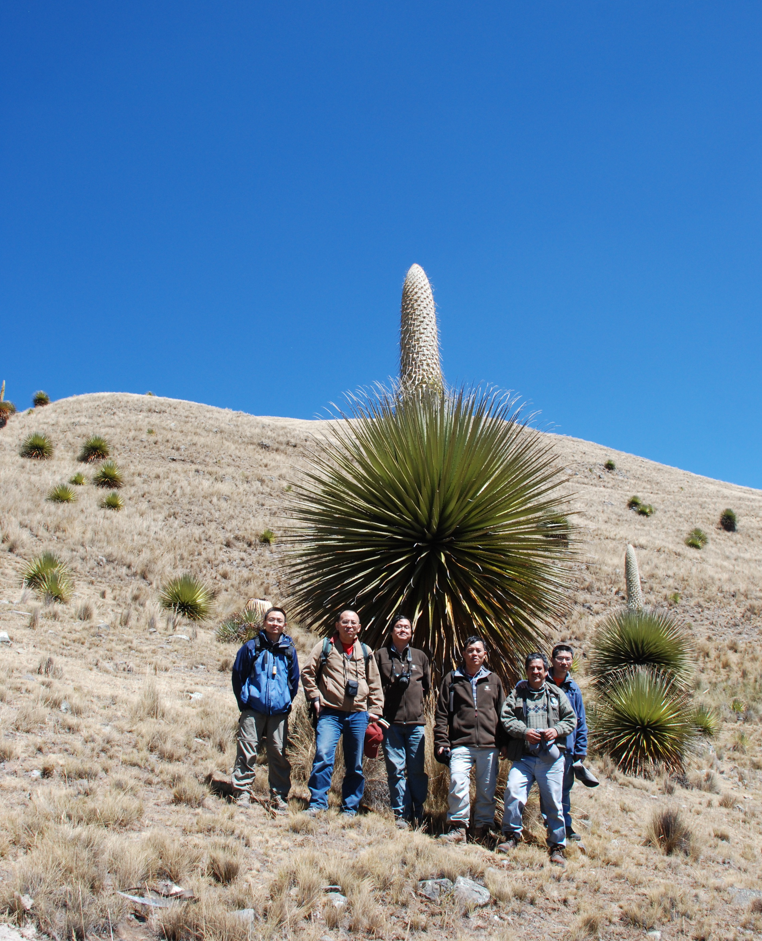
Due to its low genetic diversity and threats such as local firewood collection and clearing for pastureland, the survival of the Queen of the Andes is at risk, leading to its inclusion in the Red List of Endangered Species of the International Union for Conservation of Nature.
Chinese and Peruvian researchers began collaborating on conservation biology research on the plant in 2010.
Since then, researchers from the two countries have jointly published several papers involving studies on the genome and population genomics of the Queen of the Andes, according to Ge.
"This work is of theoretical value, and the scientific knowledge accumulated from this is beneficial for local conservation efforts for this species," Ge said.
Starting from the Queen of the Andes, scientific cooperation between China and Latin American countries like Peru is becoming increasingly frequent.
In May 2015, the South China Botanical Garden of the Chinese Academy of Sciences and the National University of San Marcos in Peru signed an agreement to establish a molecular systematics and evolution laboratory to enhance the biodiversity conservation capabilities of both countries.


- State-owned egg producer cited for excessive drug residues
- Chinese universities launch alliance for rural field survey
- New rail regulations target rule-breakers, add passenger-friendly policies
- Scholars and research achievements honored at event in Xinjiang
- Lujiazui coffee festival debuts East-West fusion in Shanghai
- Pediatric services now available at major public TCM hospitals





