



Shanghai sees latest drug innovation in intestinal rehab









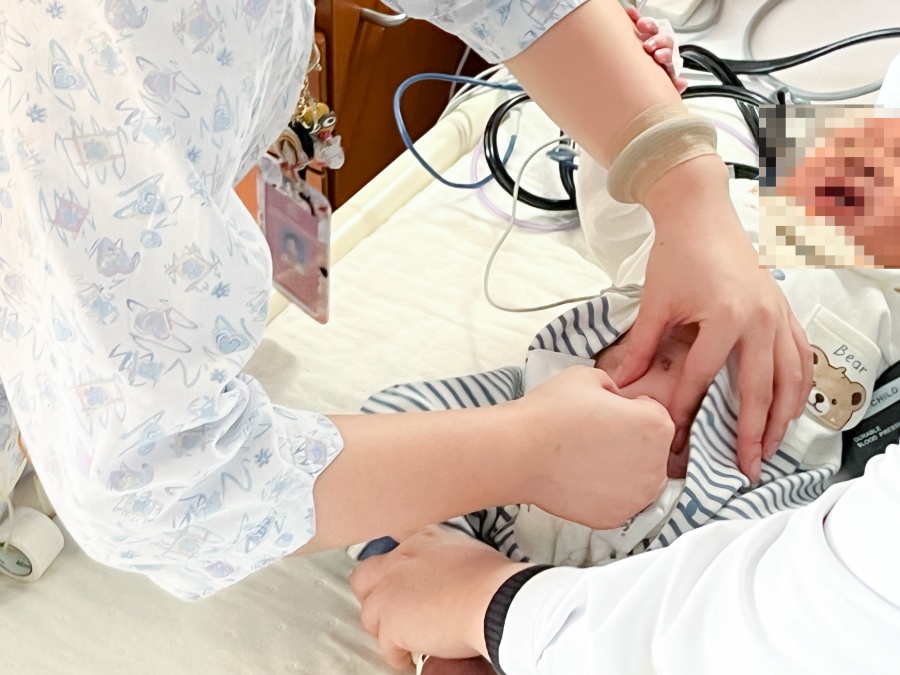
Doctors at Shanghai Xinhua Hospital issued the first prescription in China for Takeda's digestive field product, injectable Teduglutide, on Monday, marking the official entry of this innovative medicine into clinical application.
This innovative medication was approved in China in February, filling a long-standing gap in the field of intestinal rehabilitation therapy for short bowel syndrome.
According to the family of the 1-year-old patient who received the treatment, the baby was born in August 2023 and underwent two surgeries within two months after birth, leaving his small intestine at only 35 centimeters. Since birth, the boy has been hospitalized for over 330 days to receive intestinal nutritional support.
Dr Wang Ying, who is in charge of the patient and director of pediatric digestive nutrition at Xinhua Hospital, which is affiliated with Shanghai Jiao Tong University School of Medicine, said that the boy was an extremely premature infant, weighing only 830 grams at birth, and suffered from diarrhea, dehydration, fever, infections, and severe malnutrition.
"Based on the therapy's earlier successful use in the Boao pilot zone, we hope it will help the baby break free from prolonged intravenous feeding, and even realize being discharged from the hospital and resuming a normal life," she said.
Cai Wei, a professor from the pediatric surgery department at Xinhua Hospital, said that the doctors look forward to seeing more short bowel syndrome patients benefit from such innovative medicines, reducing or even eliminating their reliance on parenteral nutrition and enabling them to lead a high-quality life.
Short bowel syndrome refers to a condition where extensive small intestine resection or dysfunction leads to a significant reduction in the effective absorptive surface area of the intestines, making it difficult for the remaining functional intestines to meet the patient's nutritional or growth needs, according to experts.
While the small intestine of a healthy adult is between 3 and 8.5 meters long, short bowel syndrome patients often have small intestine lengths of less than 2 m, sometimes even less than 1 m. Currently, after intestinal surgery, almost all short bowel syndrome patients require parenteral nutrition support to maintain and improve their nutritional needs.


- Xi replies to letter from Chinese, US students participating in 'A Shared Voyage: China-US Youth Friendship Program'
- Xi, Surinamese president exchange congratulations over 50th anniversary of ties
- Xi, Austrian president exchange congratulations over 55th anniversary of ties
- Fudan University reveals top 10 scientific and technological advances of 2025
- Shenzhou XXI astronauts complete handover, ready for returning to Earth soon
- Weak safety may have led to mine blast





