


Water diversion efforts hydrate parched north
Middle route of 1,432-km megaproject celebrates a decade since taps opened










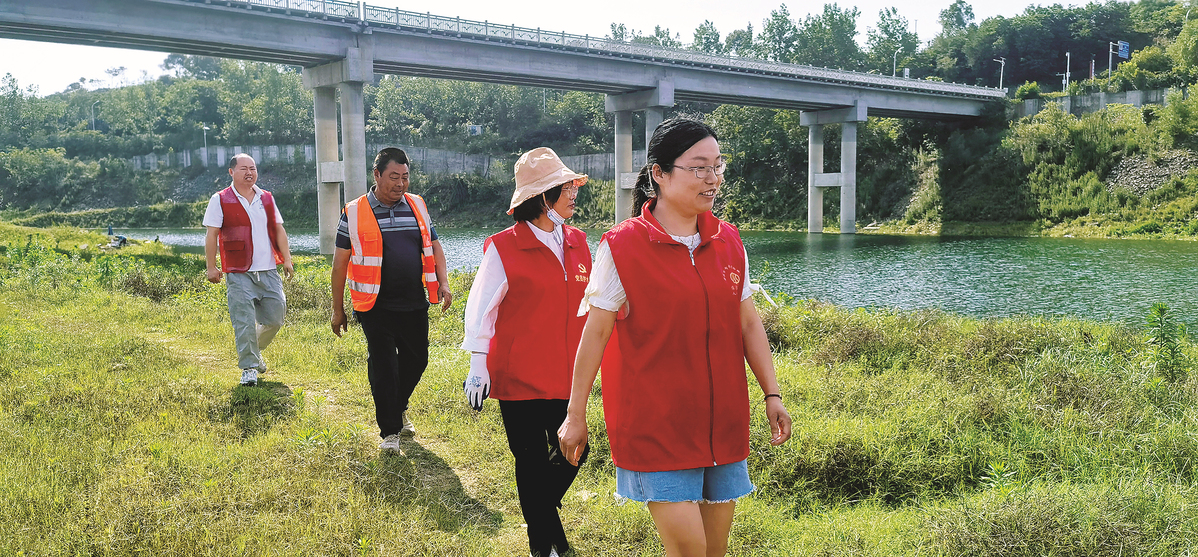
For Jin, being a relocated resident to becoming a dispatcher for the project, his life has become deeply intertwined with its development. "I feel fortunate and honored to contribute as both a builder and an operator of this project," Jin said.
Thanks to dedicated efforts in water protection and precise gate control, clean water flows safely into Beijing through the channel. A 100-meter natural geographic drop enables the water to flow the entire almost 1,500-km length from the Danjiangkou Reservoir to Beijing without any additional energy inputs. From end to end, it takes 15 days for the water to travel this distance.
Since 2014, 10.6 billion cubic meters of water have been supplied to Beijing, accounting for nearly 80 percent of the water usage of the capital's residents. The introduction of southern water has increased Beijing's per capita water resources from 100 to 150 cubic meters, according to Zhang Guoyu, deputy director at the Tuanchenghu management office of the South-to-North Water Diversion Project in Beijing.
Despite the increase in water per capita, China's capital still remains fiercely scarce of water by global standards.
With 18 years of experience in water conservancy project construction and management, Zhang has witnessed the project's development and its transformative impact on Beijing's water supply.
"A 150-km-long underground water network is operating in Beijing to deliver southern water to residents' homes," Zhang said at the Tuanchenghu Regulating Reservoir, the Beijing terminus of the project. "Many residents found that the water even tasted better after the channel began supplying water to Beijing."
As a recipient city, Beijing has made significant efforts to conserve and manage its water resources, including implementing water-saving regulations and a tiered pricing system for water usage. The Miyun Reservoir in Beijing started to receive water from the project in 2015, helping Beijing store the southern water. Its water storage now exceeds 3.5 billion cubic meters.
"The reservoir construction in Beijing has been crucial for enhancing water storage capacity and ensuring diversified water sources for the capital," Zhang said.
Once faced with depleted groundwater, Beijing has seen its underground water levels rise by 13.41 meters, thanks to the project.
"People are usually unaware of the invisible cost behind the endless water supply. It is important to use water responsibly," Zhang said.
Li Shangyi contributed to this story.





