



Energy Law starts long journey to green development









China's first Energy Law came into force on Wednesday as a fundamental law in the energy sector.
China's energy management has been fragmented for decades. The management systems of different kinds of energy vary greatly. It took nearly 20 years for the law to be materialized in a bid to address the relevant issues so as to pave the way for the energy transition of the country.
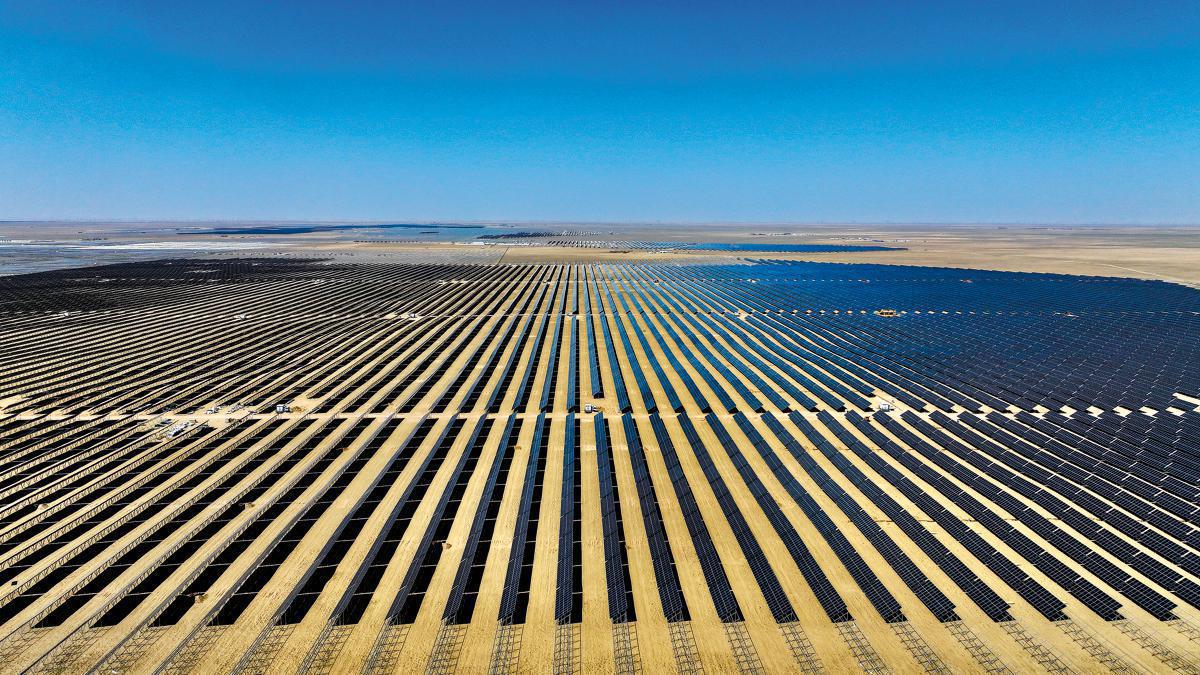
By the end of October 2024, China's installed capacity of new energy power generation accounted for 41.48 percent of the country's total installed capacity, exceeding coal-fired power generation by 4.5 percentage points. New technologies in new energy generation and energy storage are emerging, and a legal framework is urgently needed to support their development.
In addition, new market players and business models are emerging, and how to better coordinate the relationship between them has also become an issue that legislation and policies must respond to. The law therefore aims to provide a fair and sustainable market environment for promoting the country's energy transition.
It actively supports new energy development and the establishment of an energy reserve system, and clarifies the responsibilities of enterprises in this regard. Even if some new energy fields may not be profitable at present, investors can still clearly see from this law the country's long-term support for them. The law makes clear that the country will continuously encourage research and development of alternatives to traditional fossil fuels.
This law meets the expectations of all parties, fits the actual situation of China's needs to upgrade its energy structure, and has enhanced the confidence of the new energy industry.
Besides, it is different from the Western energy legal system, including the European Green Deal and the Inflation Reduction Act of the United States that have clearer short-term goals and implementation details, and many targeted measures are oriented toward specific years. The Energy Law of China is more like a long-term institutional declaration. It provides a framework and leaves it to subsequent policies, regulations and implementation details to gradually supplement and improve it.
That means the law is only a starting point in its field, and almost every clause of it faces complex challenges to be implemented, which, for example, include how to coordinate the regulatory functions of various bodies and the roles of the market supervision and management departments, and how to form an effective oversight mechanism integrating pre-operational, operational and post-operational supervision.
The future policymaking and the amendment of the legal framework should adapt to the actual situations of the energy sector so as to better address the practical concerns of the industry. For instance, it is an urgent task for policymakers and legislators to form a supporting market environment to establish a renewable energy utilization guarantee mechanism so that the surplus new energy that has been generated in the high season can be transferred to the needy regions, or properly stored for future use.
JIEMIAN.COM





