


Once upon a time in Liyang
Exhibition of scrolls depicting ancient life celebrates Hunan's archaeological wealth, Lin Qi reports.










The collection of scrolls, Echoing Through the Ages: An Archaeological Scroll of Prehistoric Civilization in Hunan, made its debut in December 2023 at the Hunan Art Museum in Changsha.
It is now on display at the National Museum of China in Beijing, in an ongoing exhibition with the same title that runs through February.
"The painters have used far-reaching lines and expanses of colors to take the audience on a painterly journey to the past, and to engage them in the search for answers to the questions: Who are we, where did we come from, and where will we go?" says Zhu Xunde, artist and former chairman of Hunan Provincial Artists Association.
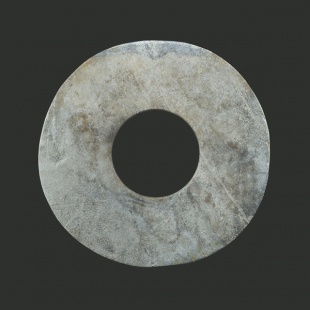
Each of the scrolls is shown alongside artifacts — stone tools, bone objects, pottery and jade — found at archaeological sites from the different prehistoric periods depicted in the paintings.

The juxtaposition of paintings and artifacts is designed to give visitors a vivid picture of life at the time.
"Hunan is one of the early locations of civilization of China. The Liyang Plain on the northwestern bank of the Dongting Lake nurtured many prehistoric cultures," says Zhang Xingguo, director of the public archaeology center of the Hunan Provincial Institute of Cultural Relics and Archaeology.
Zhang says the plain is like a chessboard of prehistoric sites, and hundreds of them, dated from the Paleolithic to Neolithic ages, have been found so far.
"The exhibition includes firsthand material from these findings, which span a period from about 500,000 to 4,000 years ago," he adds.

Zhang says that among the examples of the earliest objects found at the Jigongdang site, which dates to the Middle Paleolithic, there are two stone tools. One is a ball believed to have been used for hunting and the other, which has a sharpened end, was used to dig up plants and seeds.
Human development in Hunan took a leap forward, as excavation of the Neolithic Pengtoushan site suggests the beginnings of rice domestication.
The exhibition includes objects found at the site — finely trimmed tools and well-shaped pottery — meaning that people were settled.
"The utensils were better polished. The objects became smaller and smaller. This means that humans grew smarter, and their hands became more dexterous," Zhang says.