



Transatlantic rift is not a temporary blip: China Daily editorial









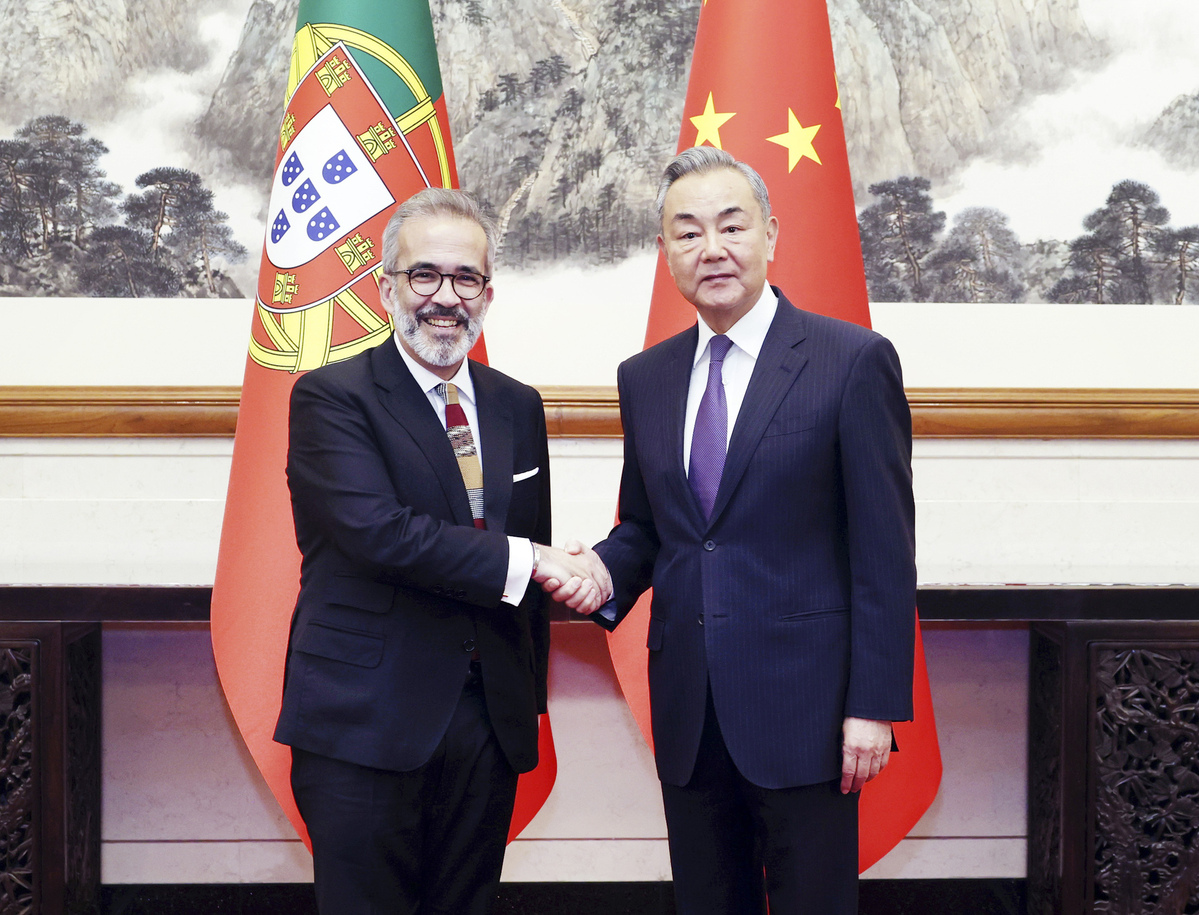
Speaking on Tuesday with visiting Portuguese Foreign Minister Paulo Rangel, who is now in Beijing for the second China-Portugal strategic dialogue at the foreign ministers' level, Foreign Minister Wang Yi stressed that "China regards Europe as an important pole in a multipolar world".
China-European Union relations, which had been strained in recent years mainly due to Brussels embracing the previous US administration's hawkish stance on Beijing to curry favor with the United States, are seeing signs of warming-up lately — with high-level European officials either speaking positively about the mutually beneficial relationship or visiting the country to seek closer ties.
Apart from Rangel, the French foreign minister and Italy's Senate president are also scheduled to visit China and meet with top Chinese officials this week.
The renewed efforts by China and Europe to strengthen political trust and boost their pragmatic cooperation have been given greater impetus by the change of administration in the United States.
The recent revelation of a Signal group chat among top officials of the Donald Trump administration, which inadvertently included a journalist, has laid bare the arrogant and contemptuous dynamics driving US foreign policy. While discussing military strikes on the Houthis in Yemen, Vice-President JD Vance and Defense Secretary Pete Hegseth derided Europe as a "pathetic" free-rider, framing Washington's actions not as collective security measures but as reluctant favors to an ungrateful ally.
The US leader has previously described the EU as "abusive" and "hostile" for allegedly taking advantage of the US. This is emblematic of the transactional and divisive ethos of the Trump administration and underscores a harsh reality: Europe's reliance on US security guarantees is a liability in an age when the US' unilateralism and zero-sum geopolitics are not a temporary aberration but a structural realignment.
For Europe, long accustomed to sheltering under the US' security umbrella, strategic autonomy is no longer a theoretical debate but a practical necessity. This changed reality was evident at the World Economic Forum in Davos, Switzerland, early this year, when European Commission President Ursula von der Leyen exhibited a marked change of stance, calling for the 27-nation bloc to "deepen" ties with China. The challenge for Europe is not recognizing the need for autonomy, which has long been mooted, but in executing it, as its realization has been hindered by internal EU divisions.
But Trump's tariff attacks and demand for higher EU defense spending prove that any US support will come at a steeper cost and the erosion of European agency, with members of Trump's coterie such as Vance and Elon Musk openly meddling in European politics, amplifying far-right narratives to fracture Europe into subservient "partners".
China's investments during Europe's sovereign debt crisis — purchasing bonds in Greece, Portugal, and Spain, and funding infrastructure in Central and Eastern Europe — have demonstrated its commitment to upholding the bloc's stability, not exploiting its divisions.
The Belt and Road Initiative, often misrepresented as a divisive tool, in fact complements EU integration by bridging infrastructure gaps and reducing core-periphery disparities. A cohesive Europe, capable of independent action, strengthens global multipolarity — a vision China actively supports. In contrast, Washington's pressure on Europe to adopt a confrontational stance toward China reveals its aim: to subordinate European interests to the US' agenda to curtail China's development.
The path to European autonomy no doubt appears daunting to Europeans, as it means a break with the familiarity of playing second fiddle to the US. But partnership with China offers a pragmatic way to reduce the risks. While the US sows discord, China invests in connectivity; while Washington demands alignment against Beijing, Beijing advocates dialogue and development.
The choice for Europe is clear: cling to the US, which views it with disdain, or embrace a future of sovereign agency through cooperation with a trustworthy partner on the basis of mutual respect.
This year marks the 50th anniversary of the establishment of diplomatic relations between the EU and China, it marks an ideal time for the EU to chart its own course rather than letting Washington dictate the heading. China stands ready to support Europe's journey toward strategic autonomy — not as a patron, but as a collaborator in building a stable, multipolar world.





