


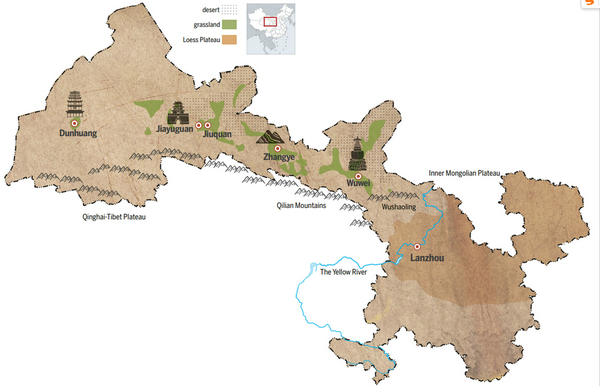
Today, major archaeological finds from the Hexi region fill the galleries of the provincial museum, including a wooden spotted dove that once adorned a cane, a symbol of privilege reserved by the Han Dynasty law for those over 70. These privileges, recorded on wooden slips also displayed in the museum, included exemptions from taxes and the right to remain standing before a court official. Their discovery in the region attests to Han Dynasty's firm control over Hexi.
There are also many miniature wooden farm animals and tools once used as funerary objects — evidence of the thriving agriculture and livestock farming in the corridor's oasis towns. One of these towns was Wuwei, a major political center of the region between the early 4th century and mid-5th century.
Remember to visit the Wuwei Museum, whose collection ranks among the finest in the country. One of its prized artifacts is a massive bronze wok, standing at 118 cm in height and weighing 230 kilograms. Excavated locally, it is believed to have been used by Xiongnu troops for stewing beef and mutton — dishes a modern traveler to Hexi must try, as the region still boasts some of the finest beef and mutton in China.
Both museums have dedicated large sections of their spaces to Silk Road artifacts — fabric specimens and silverware adorned with grapevines and the image of the Greek wine god Dionysus, for example. The Sogdian people, whose control over Silk Road trade peaked from the 4th to the 8th centuries, are represented by pottery figurines wearing big beards and the equivalent of modern-day windbreakers. Wall texts tell the invention in the silk-buying regions of a primitive drying device, to make the fabrics drier, lighter, and therefore cheaper to purchase since it was sold on milligrams, very much like gold.
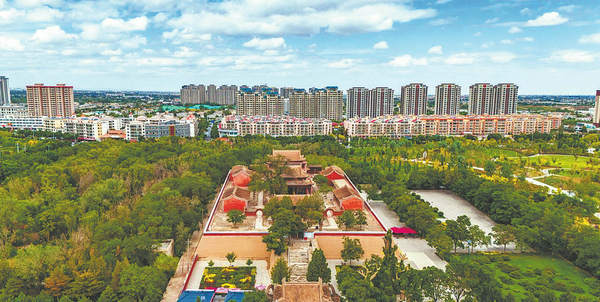
Then there are the horses — wooden, ceramic, and, of course, bronze — all on display in the museums. But one must visit the Leitai Han Tomb in Wuwei, not only because it is the very site where the famed bronze horse, so fast as to outpace a flying bird, was discovered, but also because in a side chamber of the tomb lay an entire bronze chariot procession: 39 horses, 45 human figures and 14 chariots, including the aforementioned one.
The tomb's vaulted main chamber, soaring 4.5 meters high, is built entirely of baked bricks — without cement, concrete, or any binding material. Yet, it has endured for 1,800 years, even withstanding the devastating 1927 earthquake that leveled much of Gansu's aboveground architecture. Inside, intricate branch-shaped lanterns were discovered, designed to consume all oxygen in the chamber, preventing oxidation and preserving its content.





