


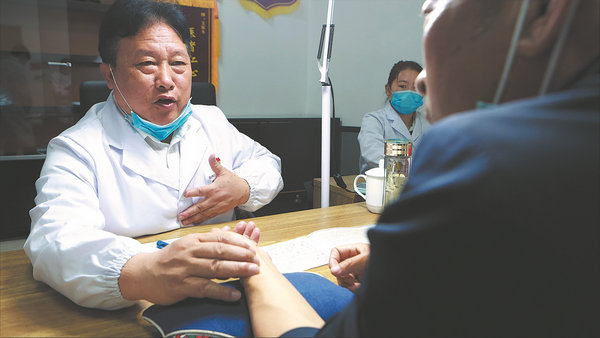
The practice of Miao medicine is believed to date back at least 3,000 years. Historically, it had shamanic elements. It is traditionally passed down orally, due to the loss of a written language, and even today, it is mainly taught through master-apprentice relationships.
While Miao folk doctors can still be found in many parts of Guizhou, their numbers are declining as modernization and an aging practitioner base take their toll.
According to Wang, the effectiveness of Miao medicine lies in its precision. Treatments often make use of seasonal fresh herbs. He says that he always limits the number of herbs he uses, often choosing an odd number in keeping with tradition.
Each year, Wang takes his apprentices into the mountains to identify herbs and preserve specimens. "For any practitioner of traditional medicine, the inability to accurately identify various medicinal herbs means they cannot practice. But it's not just about recognition, it's about mastering the properties and therapeutic benefits of the herbs."
In addition to prescriptions, another popular method is acupuncture therapy targeting the navel. According to Wang's bio on the hospital's website, stimulating the point around navel can help alleviate issues like back and leg pain and a stiff neck, with patients experiencing no soreness, numbness or swelling. This unique approach has earned Wang a large following.
A staunch believer in simple living, he tells China Daily that many modern ailments stem from unhealthy lifestyles.
"Diseases like diabetes are increasingly affecting younger people. It is something that was rare in the past," he says. "In our tradition, treatment is secondary to preserving health. I advocate a modest diet and lifestyle that emphasizes preventive healthcare that empowers individuals to take charge of their health before illness strikes. Modern society isn't short on nutrition; cutting back on rich foods and embracing whole grains and vegetables can only be beneficial."
The emergence of new illnesses also challenges traditional medicine. Diseases with no preexisting protocols have prompted Wang to explore ways of integrating traditional and modern practices.
He acknowledges that as a form of alternative medicine, Miao prescriptions need further standardization. "Historically, there were no written records, which has resulted in considerable uncertainty."
Wang says that he is now compiling an outline of Miao medicine along with a selection of proven prescriptions to help standardize and preserve this legacy. Eventually, he hopes that proper standardization will make it easier for Miao practitioners to get medical licenses.
Liu Boqian contributed to this story.





