



EU's rational response to tariff attack should be to look eastward









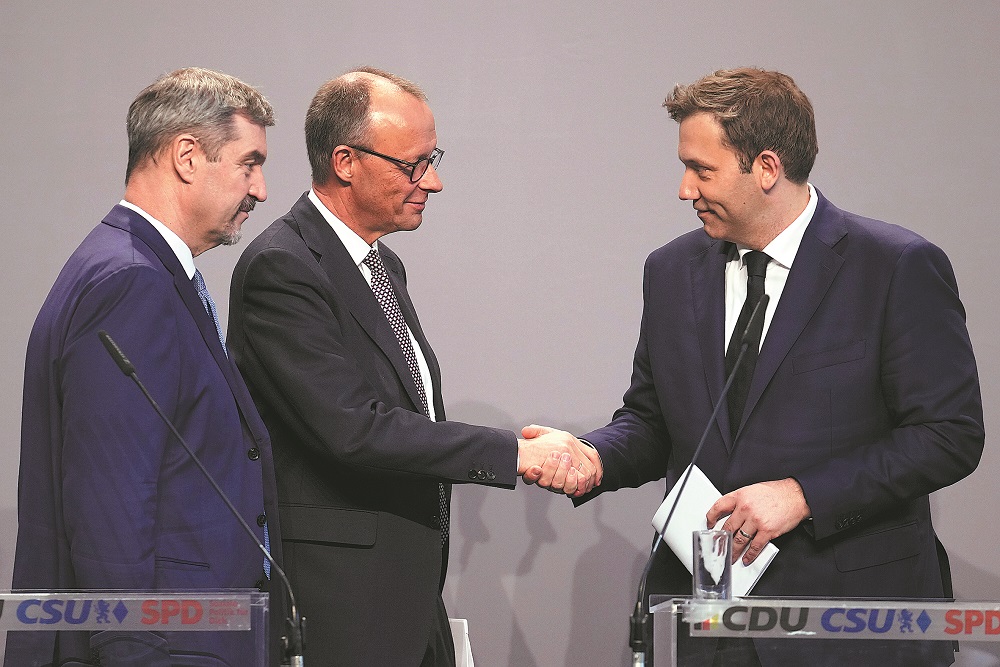
Incoming German chancellor Friedrich Merz has expressed concern over the protectionist trade policies of US President Donald Trump. In a revealing interview published by Handelsblatt on Saturday, Merz suggested that Trump's aggressive tariff strategies could trigger a financial crisis.
The Christian Democratic Union leader who is poised to become Germany's next chancellor in early May expressed alarm at the global economic situation, something that is both timely and warranted. Earlier this month, Trump signed two executive orders invoking "reciprocal tariffs", under which all steel and aluminum imports faced a baseline tariff of 25 percent, with an additional 20 percent for European products. In response, the European Union slapped 25 percent retaliatory tariffs on €21 billion ($23.94 billion) worth of goods from the United States. Although the EU suspended these countermeasures after Trump agreed to delay some of his tariffs, this temporary pause does little to restore confidence.
The US administration's track record is defined by unpredictability — unilateral decisions, erratic reversals, inflammatory announcements, and a tendency to weaponize uncertainty, a pattern of behavior that erodes the foundations of trust and stability the global economy relies on.
This is precisely why Merz's concern is not out of place. While the tariffs themselves are damaging, the greater danger lies in the climate of uncertainty they create. The administration's repeated threats and impulsive policy shifts hang over the global economy like a sword of Damocles, and even when partially lifted, the specter of their return lingers, casting a long shadow over markets, investment decisions, and international relations.
Merz's warning should not be Germany's alone to heed — it is a call for vigilance that must resonate throughout the EU. According to Handelsblatt, Merz is acutely aware that there will be no grace period for his government. With pressing domestic reforms on the horizon and external threats growing, his readiness to act decisively could serve as a model for European leadership.
At an informal gathering on Friday, EU finance ministers and central bank governors arrived at a consensus that Europe must pursue a dual-track strategy, combining trade defense mechanisms with diplomatic engagement. It would be wise for Europe to look eastward for solidarity, for economic opportunity, and for a shared stance against protectionism. China, like Europe, has found itself in the cross-hair of the administration's tariff crusade. By April 10, tariffs on Chinese goods imposed by the US had soared to an average of 145 percent, despite some temporary exemptions. China has responded with a 125 percent tariff increase on US products. Such extreme rates threaten to render US exports to China effectively unmarketable.
While tensions grow between both economies and the US, trade between China and the EU has not only endured but grown. Bilateral trade reached 1.3 trillion yuan ($178.06 billion) in the first quarter of the year, a 1.4 percent increase year-on-year, according to a news conference held by the Information Office of the State Council on Monday. This figure underscores the deep economic interdependence and complementarity between the two sides.
The US administration's abusive use of tariffs has, in many ways, isolated the US from the collaborative spirit of global trade. For China and Europe, two economies whose strength lies in openness and cooperation, the rational response is deeper integration and mutual support. If the global economy is split between advocates of free trade and champions of protectionist walls, it is clear which side China and Europe must stand on.





