



Sino-Brazilian partnership paradigm for modern relations









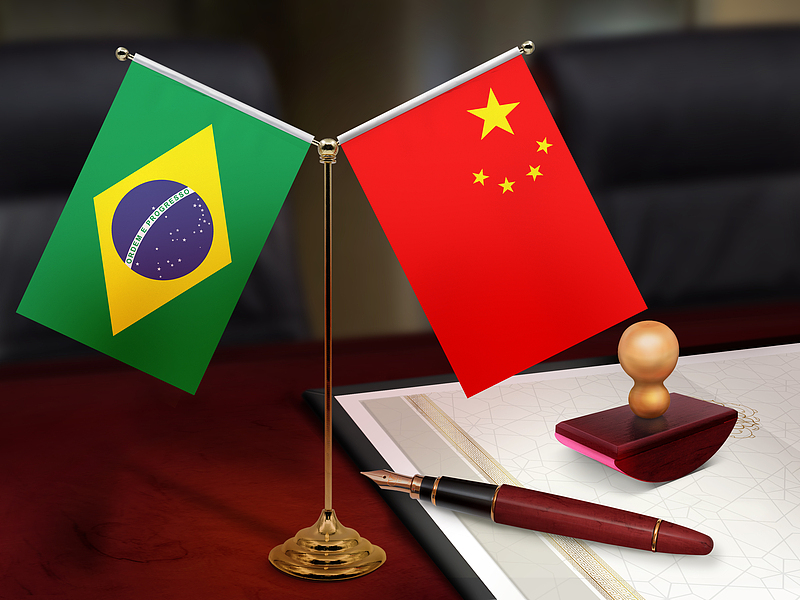
Brazilian President Luiz Inacio Lula da Silva's state visit to China from Saturday to Wednesday marks a significant milestone in the relations between the two largest developing nations of the Eastern and Western hemispheres. Against the backdrop of global turbulence marked by geopolitical tensions, economic uncertainties and rising protectionism, the two countries have demonstrated how their strategic partnership serves as both an anchor of stability and an engine for sustainable development.
The China-Brazil relationship stands as a textbook example of economic complementarity. Brazil supplies China with critical imports including soybeans, beef, poultry and iron ore, commodities essential for China's food security and industrial growth. In return, China provides Brazil with manufactured goods ranging from mechanical equipment and chemical products to cutting-edge computers and telecommunications technology.
This symbiotic relationship has produced remarkable results. China has been Brazil's biggest trade partner for 16 consecutive years and Brazil is the first Latin American country to hit a trading volume of over $100 billion with China. According to statistics from China's General Administration of Customs, the bilateral trade volume between China and Brazil reached $188.17 billion in 2024, marking a year-on-year increase of 3.56 percent.
The political foundation of this relationship is equally robust. Brazil holds the distinction of being the first country to establish a strategic partnership with China, and the first Latin American nation to upgrade relations to a comprehensive strategic partnership. The frequent high-level exchanges between the two nations in recent years have transformed this relationship into a reliable friendship with a shared future.
The partnership between the two countries has evolved beyond bilateral benefits to become what analysts describe as a "positive force for peace" in international relations. In an era where great power competition is frequently disrupting global stability, China-Brazil relations offer an alternative model based on mutual respect and shared development.
As leading voices of emerging economies, China and Brazil share a fundamental commitment to reforming the international order to make it more equitable and inclusive. Their coordinated positions in multilateral forums including BRICS, the G20 and the United Nations amplify the concerns of developing nations on critical issues ranging from climate finance to trade justice.
The climate partnership between the two nations deserves particular attention. Brazil, as custodian of the Amazon rainforest, plays an irreplaceable role in global carbon sequestration. China, meanwhile, has emerged as the world's largest investor in renewable energy. Together, they are pioneering innovative approaches to sustainable development that balance economic growth with environmental protection.
China's investments in Latin American sustainability projects align perfectly with Brazil's climate goals, including its pledge to reduce net greenhouse gas emissions by 67 percent by 2035. Their joint initiatives in reforestation and clean energy demonstrate how developing nations can lead the global green transition.
In contrast to Western-led models that often attach political conditions to economic engagement, the China-Brazil partnership demonstrates the power of pragmatic, nonideological cooperation. Their collaboration in sensitive technology sectors, including Brazil's participation in China's satellite program and its independent decision to include Huawei in its 5G rollout despite external pressure, underscores the strategic autonomy at the heart of their relationship.
The partnership has matured into what analysts describe as a "new paradigm" for South-South cooperation. From infrastructure development to technological innovation, China and Brazil are writing a playbook for how developing nations can collaborate on equal footing to achieve mutual prosperity.
The strengthened China-Brazil partnership has emerged as more than just a bilateral success story. In an increasingly fractured world, it stands as a powerful testament to the potential of cooperation over confrontation and shared development over zero-sum competition.
The implications extend far beyond their national borders. By demonstrating how major developing nations can work together to address global challenges, China and Brazil are lighting the path for the entire Global South. Their partnership offers a compelling vision for a more balanced, inclusive international order, one where developing nations have greater voice and agency in shaping their collective future.
As both nations continue to deepen their ties across all sectors, the world would do well to study this model of South-South cooperation. In the China-Brazil partnership, we may be witnessing the emergence of a new architecture for international relations in the 21st century, one built on mutual respect, shared prosperity and common development.





