



Qu Yuan's cultural legacy powers Dragon Boat Festival economic boom









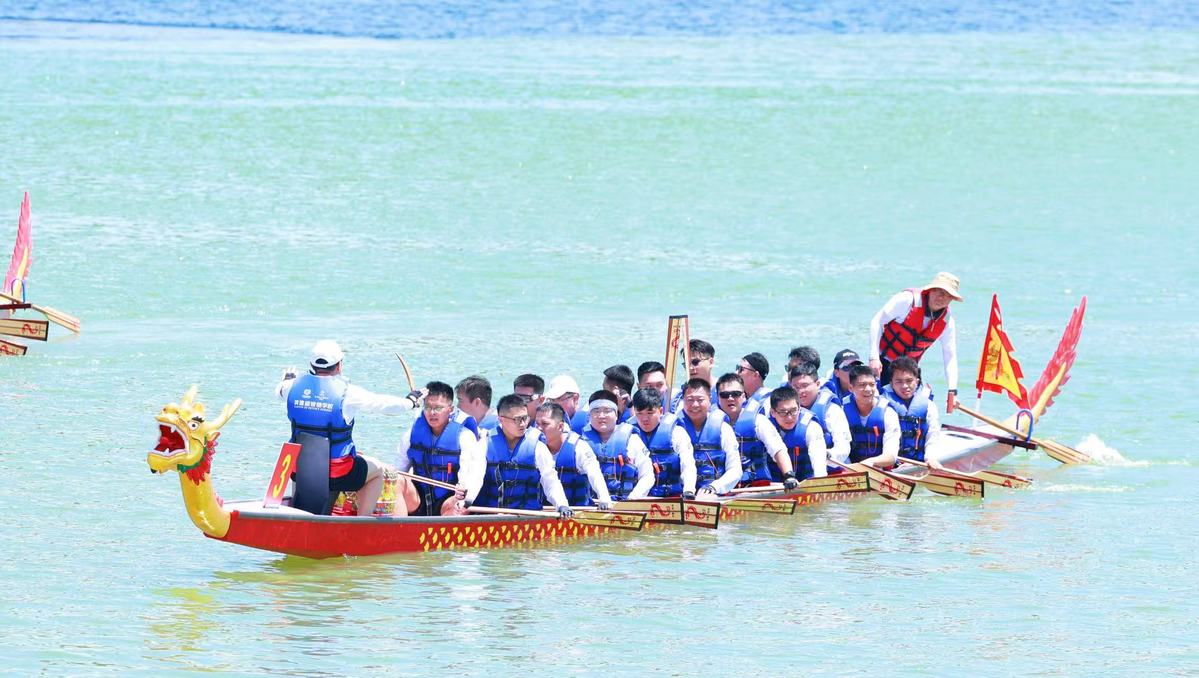
The Dragon Boat Festival is not just about honoring Qu Yuan, although the patriotic poet would probably have been thrilled to see how his legacy has evolved. What began as a solemn remembrance has transformed into a vibrant celebration that is sending people's heartbeats and cash registers racing. The 2,000-year-old tradition just proved that even in 2025 it remains one of China's most dynamic economic engines, blending cultural heritage with modern consumer power.
Over three sun-drenched days from May 31 to June 2, altogether 657 million trips were undertaken by road, rail or waterways in China. That means almost half of China's population was on the move simultaneously. The numbers tell the story: driven by the dragon boat fever, passenger trips increased 3 percent year-on-year.
Data from travel services provider Qunar showed that, as of Monday, searches with keywords such as dragon boat and zongzi more than doubled compared with the same period a month ago, and bookings for destinations offering folk culture experience rose by more than 40 percent as travelers scrambled to secure their bookings.
And what an action it was. Foshan, Guangdong province, the beating heart of the dragon boat culture, received more than 2 million visitors, marking a 46.11 percent year-on-year increase, said the local government. Tourism revenue is estimated to have surged to 1.015 billion yuan ($141.05 million), up 49.26 percent year-on-year, during the three-day holiday.
But the real magic happened when tradition met innovation. Haikou in Hainan province turned its waterways into a global stage, with teams from Malaysia to the Philippines competing before about 219,000 roaring fans during the three-day holiday, a cultural exchange with serious economic muscle.
Meanwhile, Fujian's Fangzhuang village, one of China's largest dragon boat manufacturing hubs, received over 200 orders for dragon boats this year, setting a record.
The festival's economic ripple extended beyond the riverbanks. Cinemas enjoyed a 457 million-yuan box office bonanza, as 13 new films vied for attention, proving that modern entertainment thrives alongside ancient rituals. Online marketplaces buzzed with a 130 percent monthly sales surge for seasonal goods, from artisanal zongzi to dragon boat souvenirs.
Behind these dizzying stats lies a simple truth: China's economic growth got a serious boost from an upgrading festival experience. Businesses related to the Dragon Boat Festival have mastered the ultimate balancing act, keeping one foot firmly in tradition while letting the other one pursue economic modernity.
Although many places have been upgrading their tourism services and products to attract more travelers, the cultural tourism industry is still battling unprecedented challenges.
On the one hand, the market is experiencing explosive growth, with innovative formats like intangible cultural heritage workshops, urban walking tours and rural homestays emerging almost simultaneously. On the other hand, issues such as homogeneous competition and service deficiencies are becoming increasingly apparent.
The future development of the cultural tourism industry requires the establishment of a virtuous cycle of "demand insight, product innovation and service upgrade", as travelers no longer seek mere check-in experiences, but rather memorable life experiences worth savoring. Only by continuously deepening supply-side reform can the holiday economy boom sustain its momentum for high-quality development of industries, enabling people to attain both material and spiritual fulfillment through travel.
As the last of the boat races came to an end and festival-revelers headed home, one thing became clear: Qu Yuan's legacy is not just preserved in history books, it is alive in every yuan spent, every ticket booked and every cheer that echoes across China's revived waterways.
That is something worth celebrating.





