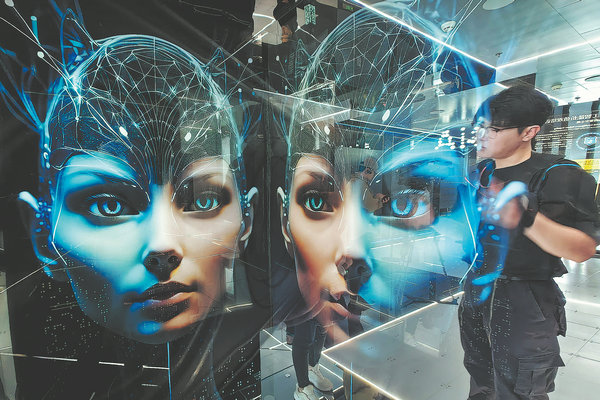
She borrowed German philosopher Walter Benjamin's concept of "aura", which, she explained, emerges in the contemplative encounter between human and object — a reciprocal gaze that creates an ephemeral atmosphere, crystallizes a mode of being, creating a fleeting but meaningful presence.
"AI is great for research," she acknowledged, "but it can't replace the human ability to truly see — to gaze at a speck of dust, a plant, or a patch of sunlight — and infuse it with the kind of presence only literature can create.
"In this sense, as a writer in the AI era, I don't feel an overwhelming sense of crisis," she said.
"The trend of literature in the AI era is precisely about literature itself."
Just as Nobel Prize laureate Mo Yan once said, every scientific advancement is an opportunity for literature to renew itself. Contemporary writers are at such a critical juncture, where they need to rekindle their inspiration, reexamine society, and reassess the characteristics of human nature and reading habits in the context of AI, as well as the overall state of literature, she said.
"I feel a desire to challenge myself, to push the limits of my spirit and explore my relationship with society," Liang said.
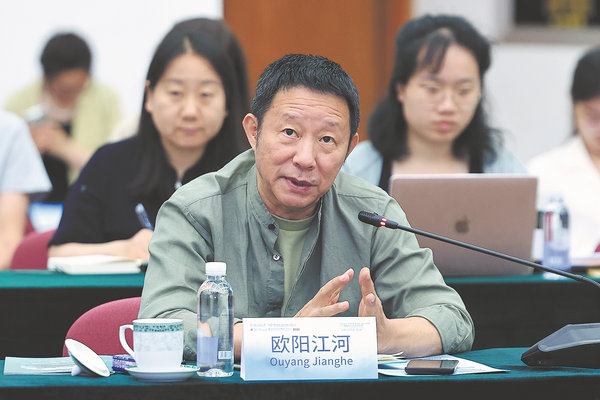
For Chinese poet Ouyang Jianghe, it is better to examine the impact of AI on literature within a deeper and broader framework of literary, intellectual, and historical context, rather than merely at the superficial level of human-machine interaction.
"It's too early to call this a 'paradigm shift'," he said.
Ouyang examined the several paradigm shifts in history, including Dante's The Divine Comedy, which revolutionized literature by establishing Italian, rather than Latin, as the preferred language for writing. This shift made literature more accessible and played a crucial role in unifying and elevating the Italian language and identity.
Even if AI were to trigger a new paradigm shift, Ouyang said, it is debatable whether it could give rise to truly great writers, since after Dante, there was no masterpiece as great as The Divine Comedy.
"We must acknowledge that AI is incredibly powerful. But the challenge for literature isn't about competing with something so advanced; it's about confronting the self. You may not be as intelligent as it is, but literature often springs from something relatively slow, a little foolish, and far from all-knowing. We don't need to know everything," he said.
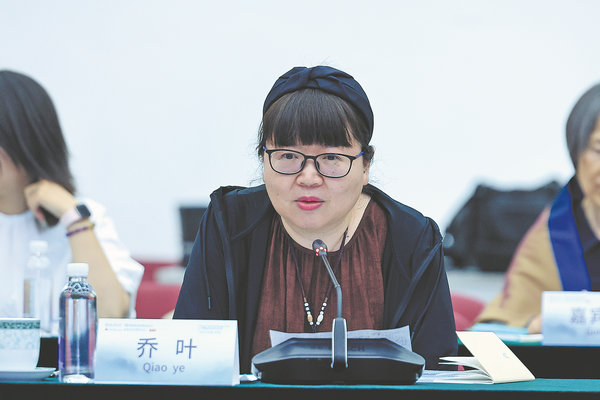
Even if AI knows everything and can simulate human emotions and feelings, it still "lives" the secondhand life based on human's "firsthand" experience, said Chinese writer Qiao Ye.
The underlying logic and fundamental confidence in human writing is human beings' limited infinity, which AI does not own, Qiao Ye said.
Wang Nan, professor from the School of Foreign Languages and Literature at Beijing Normal University, interpreted the confidence in human writing by examining that fundamental shift of Western art and literature that occurred alongside industrial revolutions since the 18th century.
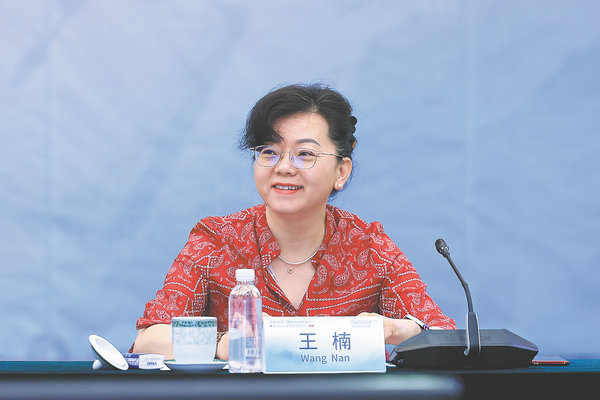
At the heart of this shift is confidence in humanity, she said. The purpose of art has gradually transitioned from imitating timeless beauty and expressing universal truths to conveying personal emotions and capturing fleeting moments.
Now that AI can simulate and copy human feelings, instinct, and emotions with algorithm, even creating better work, what will become of the rationality, imagination, creativity, and even free will that humanity possesses?
Quoting Aristotle, Wang answered that, "The duty of a poet is not to depict what has already happened, but to portray what could happen. Imagining a future and using it to inspire or alert people in reality is precisely the responsibility of writers or literary critics."
Therefore, depicting the many possibilities of a not-too-distant future through the full force of human creativity is a mission contemporary literature should not shy away from, Wang said.