



Yangtze River sees recovery in aquatic biodiversity









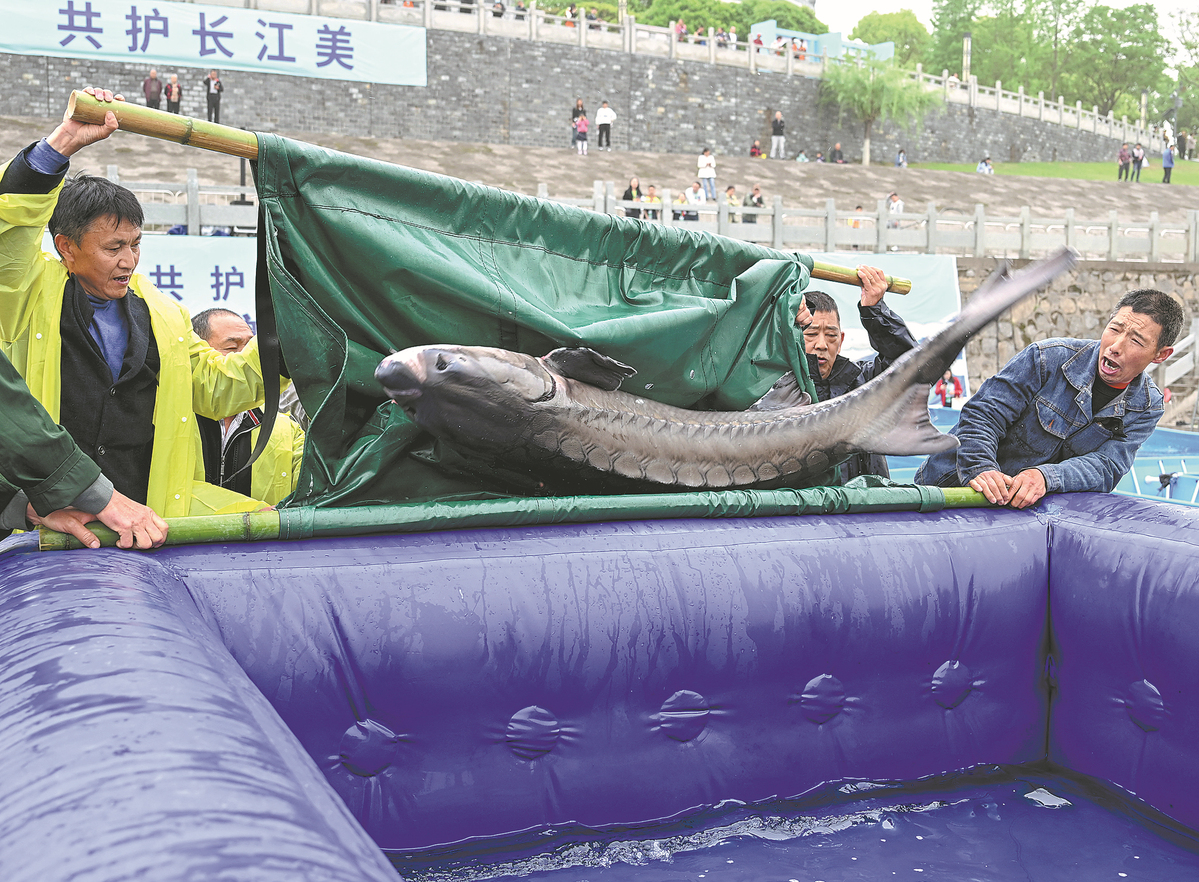
Two new nationally protected species were identified and the natural breeding of the Chinese high-fin banded shark was observed for the first time in nearly 30 years in the Yangtze River Basin, signaling an overall recovery of aquatic biological resources and habitats, according to a new report.
The Communique on Aquatic Biological Resources and Habitat Status in the Yangtze River Basin (2024) was jointly released by the Ministry of Agriculture and Rural Affairs, the Ministry of Water Resources, the Ministry of Ecology and Environment, and the Ministry of Transport. It highlights an improving trend in the basin's aquatic biodiversity.
Between 2021 and 2024, 344 indigenous fish species were monitored — an increase of 36 species compared with the period before the 10-year fishing ban began in 2021. In 2024, 230 species were observed, including 15 key protected species, 43 economically significant species and 172 other varieties.
The two newly identified national second-class protected species are the long-fin rhino gudgeon and the vermilion botia. The natural reproduction of the Chinese high-fin banded shark — a rare event last recorded nearly three decades ago — was also documented, according to an official with the Ministry of Agriculture and Rural Affairs.
Resources of commercially important species, such as the four major Chinese carps, are steadily recovering. The volume of carp larvae in a section of the river's middle reaches is now 6.2 times higher than in 2020, before the fishing ban. The Chinese tapertail anchovy population at the Yangtze estuary is 8.5 times higher than five years ago.
In the Chishui River, an upper tributary of the Yangtze, the number of released Yangtze sturgeon — listed as a national first-class protected species — rose from 110 in 2023 to 399 in 2024. Eels were also recorded for the first time in over 20 years in the Chishui city section of the Chishui River.
Despite the overall positive trend, conservation of critically endangered species remains a challenge. All Yangtze sturgeon found in the wild were released through artificial stocking programs, the ministry said. Meanwhile, Chinese sturgeon have not been observed reproducing naturally for eight consecutive years. In 2024, only 10 adult Chinese sturgeon were found to have reached the critical spawning grounds below the Gezhouba Dam.
To strengthen protection of endangered species in the Yangtze, the ministry said it plans to upgrade its rare species rescue action plan, including intensified conservation measures and expanded artificial breeding programs. So far this year, 970,000 Chinese sturgeon have been released into the river.


- Xi replies to letter from Chinese, US students participating in 'A Shared Voyage: China-US Youth Friendship Program'
- Xi, Austrian president exchange congratulations over 55th anniversary of ties
- Fudan University reveals top 10 scientific and technological advances of 2025
- Shenzhou XXI astronauts complete handover, ready for returning to Earth soon
- Weak safety may have led to mine blast
- 7 scientists win Shaw Prize in 2026





