


Beef production hits its prime on grasslands
Eco-sensitive methods in Inner Mongolia protecting environment, providing higher-quality meat










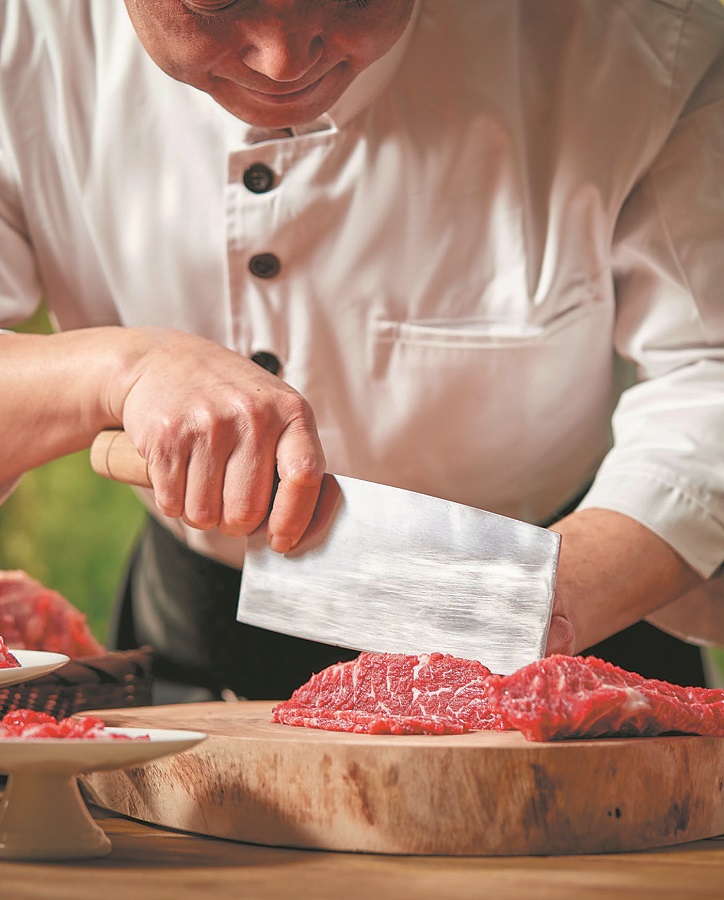
Supply chain needs
It didn't take long before Zhang's vision of restoring the steppe's natural vitality and taking high-quality Chinese beef to dinner tables nationwide attracted other key players across the supply chain.
Zheng Jian, founder of Zuoting Youyuan, one of China's fresh beef hotpot chains, came on the scene about five years ago. "Most people think raising cattle is just the herdsmen's business, but behind every cow is a long, intricate supply chain," Zheng said.
For over a decade, Zheng worked to bring fresh beef hotpot, once a niche regional cuisine in Chaozhou, Guangdong province, to diners across the country. But as his brand expanded to more than 80 restaurants nationwide, he came to a sobering realization that winning over health-conscious Chinese consumers required uncompromising freshness and quality at every step, from pasture to plate.
"Our customers equate freshness with health. They want to see for themselves that the beef is freshly raised and locally sourced," Zheng said.
To achieve this, his hotpot business has built a vertically integrated system with Zhang's operations, featuring company-owned pastures, in-house slaughterhouses, dedicated cold-chain logistics, and strict quality standards.
For Zheng, Zhang's Angus cattle are not just a supply source but a cornerstone for branding premium fresh beef as China's answer to imported frozen cuts.
"Fresh beef is the only way for Chinese cattle farming to break out," Zheng said.
Cold storage puts local producers in direct competition with imported meat — a battle they're unlikely to win. But freshness, he believes, is an advantage that appeals to culinary tradition of valuing just-slaughtered, just-cooked food.
Liu Jinhuan, secretary-general of the beef and sheep industry branch of the China Meat Association, noted that tender, juicy, freshly cut beef has become a favorite on millions of Chinese dining tables and is reshaping the entire supply chain. In 2024, China's beef production reached 7.79 million metric tons, up 16 percent from 2020.Imports surged to 2.87 million tons, a 35 percent increase.
"Behind these figures lies not only an upgrade in consumer tastes, but also a critical opportunity for the beef industry," Liu said.
At the foundation of this transformation is a combination of supportive policies and technological breakthroughs, he added. In recent years, the government has rolled out subsidies and breeding incentives to promote large-scale modern livestock farming. This has enhanced efficiency and stabilized beef supply and quality.
At the same time, technological innovations are changing the game. Advanced processing techniques are producing finer, more tender beef textures, while rapid cold-chain logistics ensure that beef stays fresh even after traveling thousands of kilometers, he said.





