



More HK residents eye retirement in mainland









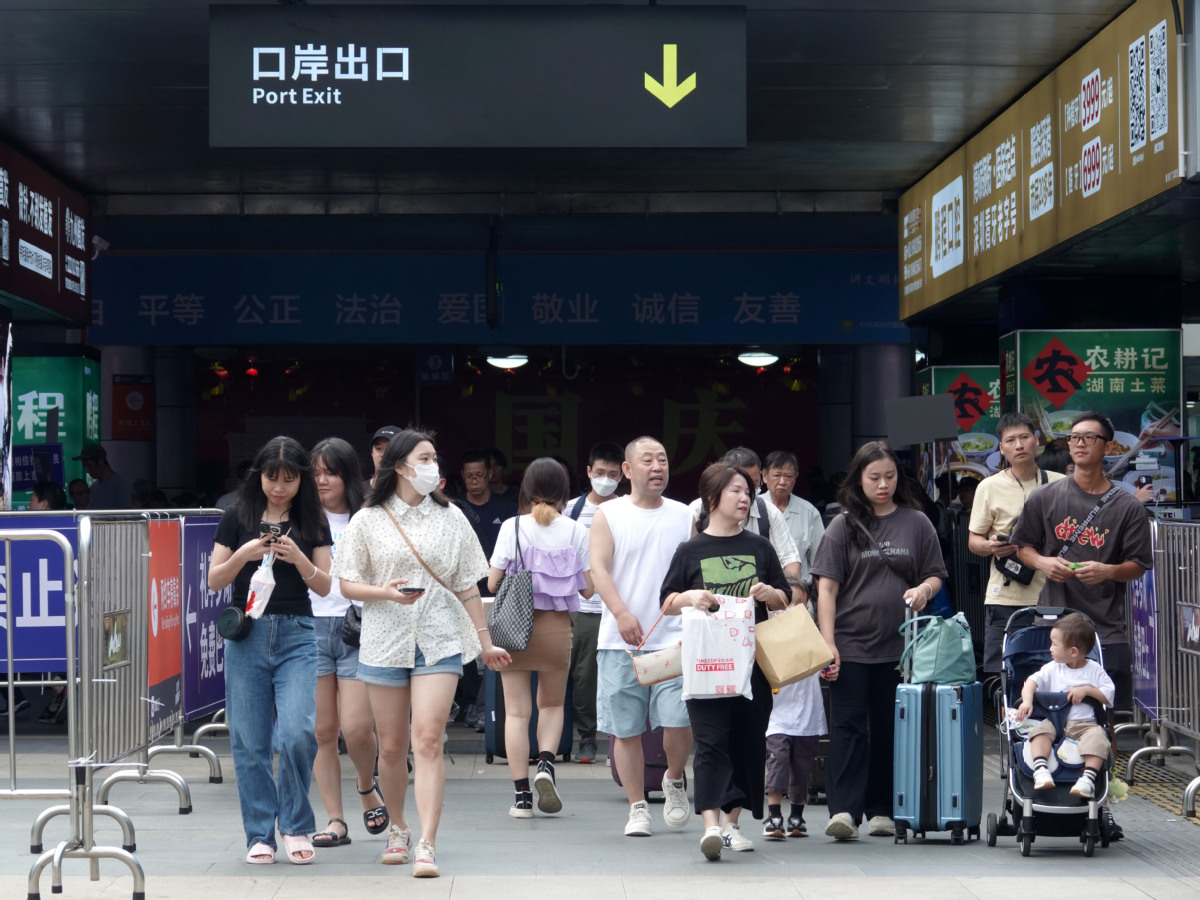
Under the current context of accelerated integrated development of the Guangdong-Hong Kong-Macao Greater Bay Area, more and more senior Hong Kong residents are choosing to live out their golden years in retirement on the Chinese mainland, triggering reflection on cross-border healthcare.
Data from the Legislative Council of the Hong Kong Special Administrative Region show that in 2024, nearly 100,000 Hong Kong residents 65 years old or above chose to settle down in Guangdong province for their retirement, a 40.5 percent increase compared to that of 10 years ago.
"The price of commodities in the Chinese mainland is cheaper, the subsidy for a Hong Kong citizen is enough to spend through retirement there," a Hong Kong citizen who works in finance said.
Judging from Hong Kong residents who choose to spend retirement on the Chinese mainland, the group mainly includes senior residents who share emotional connections with people in the Chinese mainland (those who were born and raised or had worked on the Chinese mainland), and those who feel pressure about spending their retirement in Hong Kong.
Yu Ningqiao, an 82-year-old Hong Kong citizen, lives on the Old Age Living Allowance, which is issued by the HKSAR government and is over HK$4,000 ($514.74) per month. "Renting an apartment with one living room and one bedroom in the suburb of Shenzhen, Guangdong province, costs merely HK$2,000, while this price is unimaginable in Hong Kong," Yu said.
"The price of commodities is also much lower, and I could catch up with old mates to drink tea or something," he said.
Song Lee, a 29-year-old office clerk in Hong Kong, who was born and raised in Shenzhen, said that he is already considering spending his retirement back in Shenzhen, with the good cost performance of commodities and because he has friends there.
However, bottlenecks still exist. Although since January 2020, Hong Kong, Macao and Taiwan residents are able to participate in the public health insurance of the Chinese mainland, since there are differences in the payment system, data interoperability remains a challenge. Currently, the healthcare insurance system of Hong Kong is not docked with that of the Chinese mainland, and healthcare records between the two sides are also not interconnected. Meanwhile, senior citizens need to travel between the two places for revisiting and getting medicine, which is highly time-consuming and costly.
"For Hong Kong citizens, there is nearly zero payment to see a doctor in a public healthcare institution in Hong Kong, which means that living out their life in retirement in the Chinese mainland means giving up the nearly-free healthcare services in Hong Kong. Even if they participate in the public healthcare insurance in the Chinese mainland, there is usually a limited quota to reimburse inpatient expenses," said Shi Cheng, associate professor of the Institute of Policy Studies at Lingnan University of Hong Kong.
Research on cross-border retirement of the Greater Bay Area showed that senior Hong Kong citizens who intend to spend their retirement on the Chinese mainland tend to consider questions including "How to see a doctor in the Chinese mainland", "Is there a reimbursement or fee reduction", "Are medicines provided in the Chinese mainland consistent with that in the Hong Kong drug catalogue", "Is the healthcare record interconnected".
Zhan Junhao, founder of Fujian Huace Brand Positioning Consulting, said: "Solving the bottlenecks of cross-border healthcare requires a combination of measures. At the policy level, the integration of medical systems in Guangdong, Hong Kong and Macao should be promoted, and a cross-border system to serve the aged should be built, to realize the mutual recognition of pension and healthcare insurance."
"At the technical level, laws and regulations on cross-border data sharing should be optimized to promote the safe connection of data between Shenzhen and Hong Kong, so that healthcare records between the two places can be safely shared. At the service level, cross-border healthcare service points should be expanded, and the cross-border direct payment of commercial insurance should be introduced, to enhance the cross-border medical convenience," he added.
Wang Peng, associate research fellow at the Beijing Academy of Social Sciences, added that the process of cross-border healthcare should be simplified and improved, such as offering Cantonese language service and personalized healthcare record management, so as to enhance the sense of belonging of senior Hong Kong citizens.
zhengyiran@chinadaily.com.cn











