



Consumer electronics firms building ecosystem-driven growth worldwide









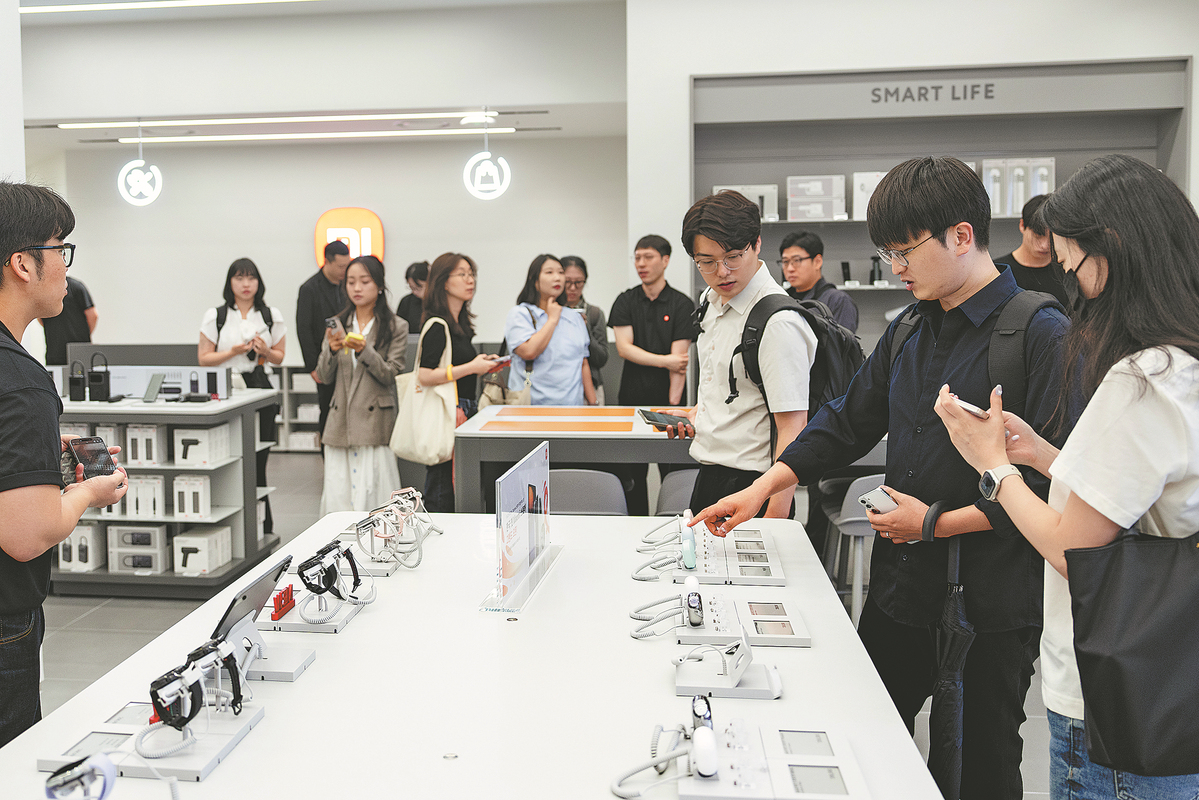
Chinese consumer electronics brands are shifting from battling for market share to building ecosystem-driven growth worldwide, with diversified product categories and emerging technologies reshaping their global expansion, according to experts.
"Chinese consumer electronics brands are steadily increasing their market share, particularly with strong performances in emerging markets," said Evan Kirchheimer, chief research officer of Omdia, a company specializing in data analysis and industry research.
Omdia's data show that the overseas market share for Chinese smartphone brands rose from 43 percent in the second quarter of 2020 to 55 percent in the same period of 2025.
More specifically, in the second quarter of 2025, Xiaomi ranked second and third in Latin America and Africa, respectively, while Transsion secured fifth place globally and commanded more than half of the African smartphone market.
Beyond smartphones, Chinese consumer electronics makers have expanded into a wider range of categories, from smart home devices and wearables to AI-powered hardware.
"In the smart home sector, Chinese devices account for between 20 and 30 percent of the global market, with rapid growth. From small appliances to security systems, their high level of AI integration is supporting further overseas expansion," Kirchheimer said in an interview with China Daily.
He added that Chinese companies in segments such as wearables and smart homes are also able to adapt product pricing and functions flexibly to meet the varying demands of global markets.
In May, Xiaomi launched an upgraded smart ecosystem, aimed at seamlessly integrating smartphones, tablets and smart home devices. "The wearables market itself is shifting from being hardware-driven to ecosystem-driven," Kirchheimer noted.
Firms such as Xiaomi and Huawei are also enhancing device collaboration through self-developed operating systems like HyperOS and platforms such as health apps.
"In this process, AI empowerment and ecosystem-based development have become among the key trends in global expansion," Kirchheimer said.
Omdia data reveal that Chinese brands are showing strong performance in AI-enabled smartphones and PCs, with overseas shipments of AI smartphones surging 197 percent year-on-year in the second quarter, while Lenovo's AI PCs accounted for 21 percent of the global market.
Chinese brands are consistently advancing in areas such as AI, system integration and intelligent sensing, and are capable of offering a full spectrum of products from entry-level models to high-end flagships, Kirchheimer added.
"Backed by a strong manufacturing and supply chain infrastructure, Chinese brands have been able to respond rapidly to global demand, cut production costs and improve delivery efficiency," he said.
Yet despite these advances, challenges remain. AI-enabled devices are still new and lack global standards, said Zhou Mi, a senior researcher at the Chinese Academy of International Trade and Economic Cooperation, urging Chinese firms to develop their own rules aligned with international norms.
"For brand enterprises, global resources are being leveraged alongside domestic innovation," said Zhou, adding that combining China's strengths with other countries' advantages could provide stronger momentum and resilience for growth.
This would boost brand value through greater consumer recognition and support the building of more complete brand ecosystems, he added.
However, competition in mature hardware markets is intense, with shifting US tariffs and geopolitical uncertainties adding to supply chain and investment risks.
"The way forward lies in strengthening R&D, securing core technologies and enhancing product value," said Zhu Keli, founding director of the China Institute of New Economy.
He added that building a global after-sales network is also key to user loyalty.
"Through pursuing both premiumization and service-driven growth, Chinese brands can elevate their global presence, shifting from scale-driven expansion to value-oriented growth and securing long-term competitive advantages," Zhu said.
Zhou said global breakthroughs will require not only a high-end focus, but also distinctive technologies that deliver unique value. This, he added, would allow companies to refine marketing strategies while deepening international cooperation.
yinmingyue@chinadaily.com.cn











