


Farmers diversify field work to double rewards
Side-by-side cultivation of rice and crayfish creates sustainable, profitable model










Editor's note: This year marks the 20th anniversary of President Xi Jinping's proposal of the concept that "lucid waters and lush mountains are invaluable assets". To mark the occasion, China Daily is publishing a series of stories on how resources such as mountains, rivers, lakes, forests and farms are being transformed into priceless gifts.
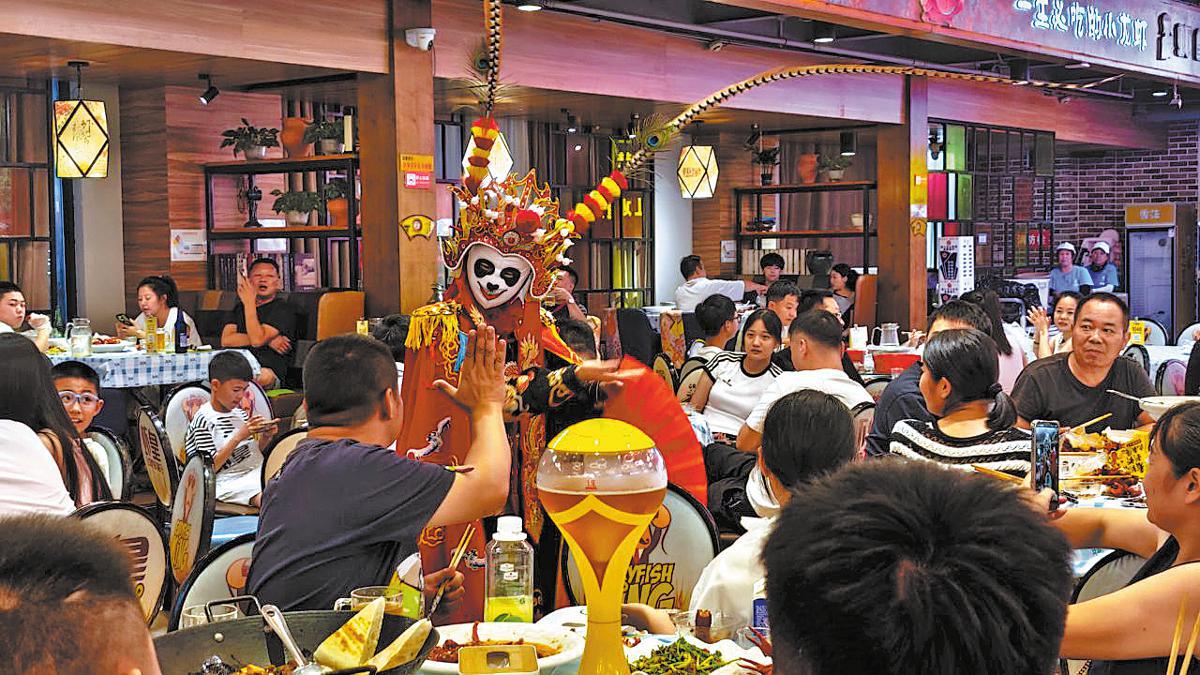
In late August, crowds gather around tables in the night markets of Qianjiang, Hubei province, to gorge on plates of steaming crayfish liberally doused in chili oil and garlic. Shells are cracked, fingers licked, and beer bottles clinked in toasts to the feast.
This scene plays out all across summer dining tables in China, but it's no more special than in Qianjiang — the birthplace of the Qianjiang Model — an agricultural process whereby crayfish are co-cultivated alongside rice.
Though many diners are unaware of this process as they tuck in, since 2001, this circular ecological practice has been in place in the city, enabling farmers to use one field and one pond for dual harvests, creating a model for how agriculture can be profitable and environmentally sustainable at the same time.
Dai Hua, head of the Qianjiang Agricultural and Rural Affairs Bureau, said the innovative cultivation model ensures two harvests — grain above and crayfish below — while protecting the ecosystem and increasing farmers' income. "It's not just farming, it's a subtle cycle," Dai said.
The co-cultivation of rice and crayfish involves rice plants growing in shallow paddies while crayfish thrive in the muddy waters beneath. Insects and microbes attracted to the rice stalks become natural feed for the crustaceans. Their waste, in turn, nourishes the rice. After harvest, rice straw is left in the fields, decomposing to enrich the soil rather than being burned to pollute the air.
The nature-based biological chain involves lower chemical use, cleaner water and two lucrative harvests from the same plot, Dai said.
The model not only doubles output, but also creates a natural balance that farmers and the environment both benefit from, he added.
According to the bureau, more than 95 percent of Qianjiang's 63,133 hectares of rice paddies now practice co-cultivation. Last year, the city produced 157,200 metric tons of crayfish, up 17 percent from the year prior, along with a bumper crop of rice. In the first half of this year, 122,500 tons of crayfish were harvested, a 4.6 percent year-on-year increase.





