



Confucian wisdom bonds neighbors in changing world









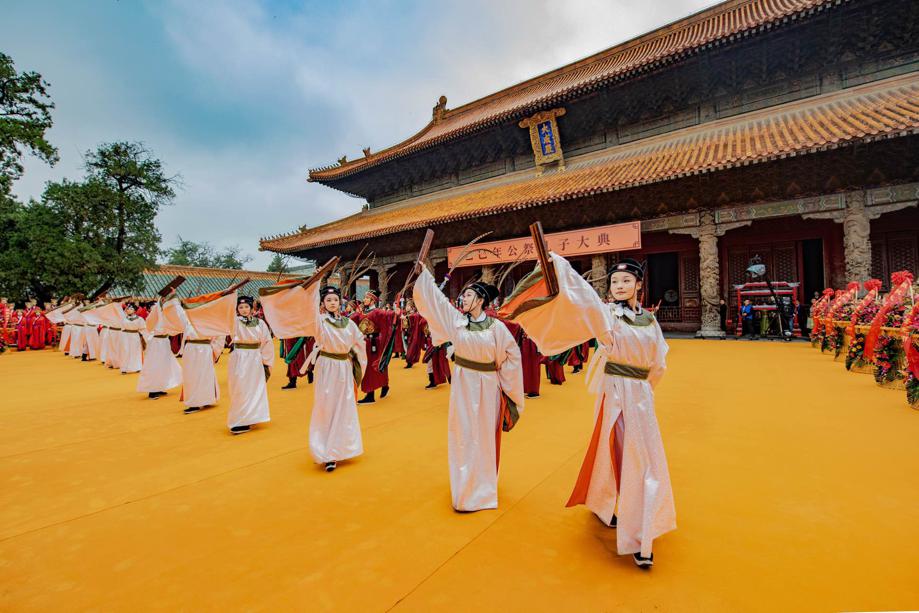
China and the Republic of Korea share a history steeped in Confucianism, a legacy that continues to serve as a valuable foundation for cultural and intellectual exchanges today. From the Korean Peninsula's adoption, during earlier dynasties, of the Gwageo examination system, modeled on China's imperial exams, Confucianism has historically structured governance, scholarship, family life and social ethics on the Korean Peninsula. Historical records suggest officials were trained and morally shaped through a rigorous study of Confucian classics, embedding China's intellectual and ethical frameworks into ancient Korea's political and social institutions. Even artistic expression and social customs were guided by the Confucian ethos.
The shared Confucian heritage continues to offer a rich platform for dialogue, collaboration and cultural exchange in the modern era. Scholars on both sides have studied the influence of Confucian values on East Asia's economic development. The ROK's rapid growth in the post-1970s period has become an important case study for Chinese scholars who argue that Confucianism is not inherently opposed to modernization. It can, in fact, coexist with dynamic economic and social change.
This dialogue actually extends far beyond economics. Confucian ethics — with its emphasis on filial piety, sincerity and trust — provide a moral framework for modern civic responsibility and corporate ethics. Similarly, Confucian perspectives on family and rituals are being reexamined in light of contemporary challenges, such as the declining birth rates in both countries. Meanwhile, Confucian thought emphasizes the unity of humanity and nature, which offers philosophical guidance for tackling today's environmental crises.
During Korea's Goryeo (918-1392) and Joseon (1392-1897) dynasties, hyanggyo (local Confucian schools) educated students in Confucian classics and prepared them for the Gwageo (keju in Chinese) civil service examinations. Today, many hyanggyo in the ROK have been preserved for tourism and Confucian rituals, while some others hold programs to sustain Confucian traditions. They increasingly collaborate with Chinese Confucian temples to explore ways for Confucianism to remain a lived philosophy in contemporary society and to continue supporting community life and local governance, particularly in rural areas.
ROK period dramas and films, often reflecting Confucian values such as loyalty, righteousness and filial piety, have a sizable following among young people in China and the ROK, who may otherwise not be well-versed in Confucian thought.
However, commercializing Confucian heritage risks diluting its moral core. According to Lim Tae-seung, professor at the Academy of East Asian Studies at Sungkyunkwan University in Seoul, Sejong, a Joseon king who reigned from 1418 to 1450, was responsible for creating the Korean alphabet and establishing uniquely Korean court music alongside Confucian ritual music. Nevertheless, scholars in China and the ROK increasingly see a shared mission: leveraging Confucian thought as a source of Eastern wisdom to confront global ethical dilemmas, spiritual crises and civilizational challenges.
Confucianism's influence is all-encompassing — moral, social and political — offering a shared belief in justice and a collective will toward goodness. Today, scholars are reengaging with its legacy not as dogma but as dialogue. In doing so, the two countries are not only revisiting a shared past but also exploring how this ancient philosophy might once again serve as common ground for mutual understanding and cooperation in a changing world.





