


After the end of the Qing Dynasty (1644-1911), the Imperial Workshops, located in the western part of the Forbidden City in Beijing, also known as Zaobanchu, fell into disrepair and were a mere shadow of their former glory. Until 1924, the last emperor, Puyi, was allowed to reside in the inner court of the Forbidden City, but even then the abandoned workshop complex was used to grow vegetables.
The following year, though, the Palace Museum was established in the former imperial palace. Zaobanchu gradually became a mesmerizing place, documenting the numerous royal artifacts found in the palace and telling the stories of imperial times and legends.
The Imperial Workshops were first relocated to the site in 1691 on the orders of Emperor Kangxi of Qing, who had them built southeast of the Palace of Compassion and Tranquility (Cining Gong). In the 200-plus years that followed, more than 60 workshops were set up for the production and restoration of a huge range of royal objects, including mechanical clocks, wood pieces, paintings, porcelain, sculptures and enamels.
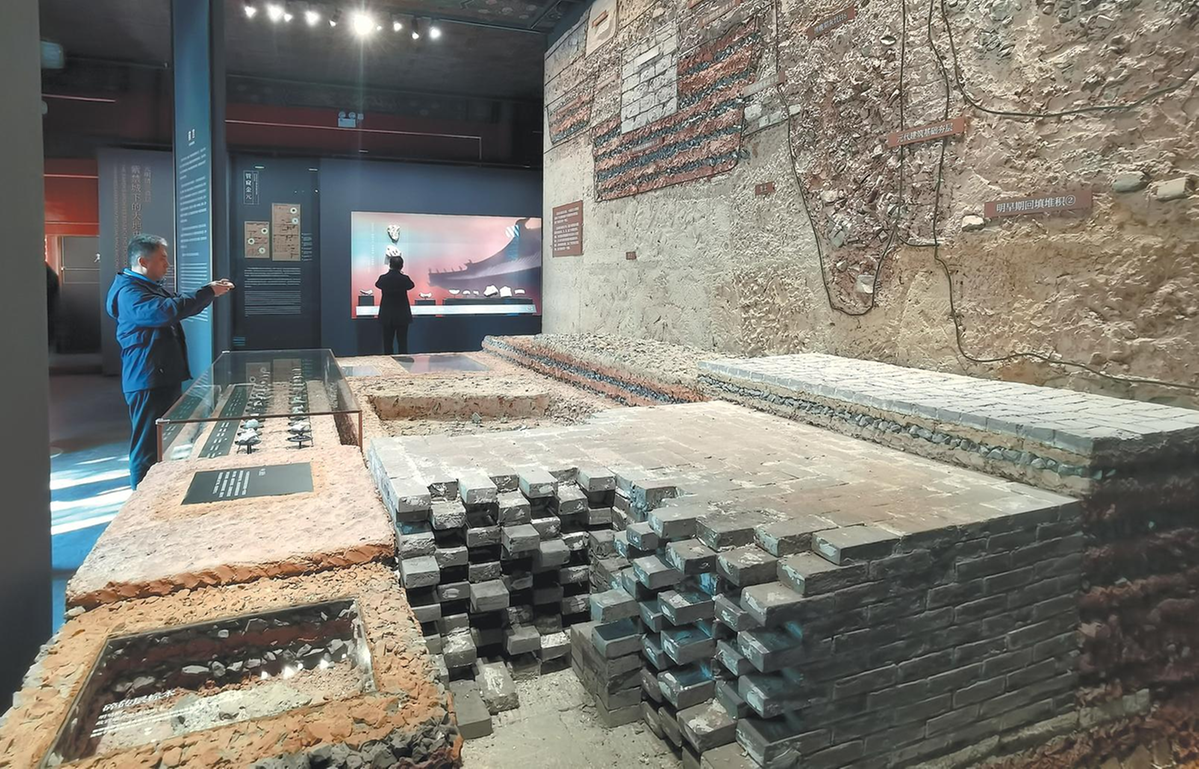
People today can hardly imagine the prosperity and industriousness of these facilities from above ground. But thanks to archaeological excavations that began in October 2020, researchers can not only picture the past of the workshop, but also gain a rare glimpse into the centuries-long lineage of the Forbidden City from the artifacts that have been unearthed.
A three-month-long exhibition, Beneath the Nine-Fold Walls: Archaeological Discoveries From the Imperial Workshops Site in the Forbidden City, opened last week in the Yongshou Gong (Palace of Eternal Longevity) Gallery at the Palace Museum and showcases the items that have been uncovered.
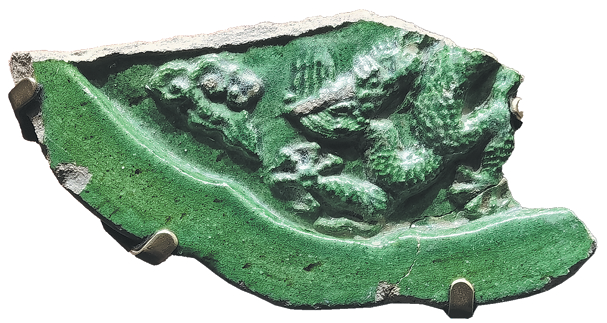
The 166 exhibits, most of which come from archaeological work undertaken in the past five years, jointly tell of a timeline full of stories.
"Top-tier artisans from home and abroad gathered in the Forbidden City and the Imperial Workshops became a key place for them to exchange skills and display their outstanding craftsmanship," says Lou Wei, deputy director of the Palace Museum.
"Every ceramic shard, brick or rammed earth piece that was unearthed from the site is a crucial testimony to the splendor of the Forbidden City," he says.
The production
Emperor Kangxi and his successors Yongzheng and Qianlong, for example, particularly favored Western-style mechanical clocks. Between them, they left about 1,500 antique timepieces that are now in the collection of the Palace Museum and are among the finest of their kind in the world.
The emperors were not satisfied with ordering such clocks from Europe. They also wanted to make their own. Clock components unearthed from the site of the Imperial Workshops — including some with decorations in the shape of European figures and dials with Roman numerals — remind people that this was an exceptional era of cultural exchange.
"The workshops operated a nationwide production network," explains Xu Haifeng, a leading archaeologist working on the site and a curator of the exhibition. "In addition to the main site in the Forbidden City, subsidiary workshops were also located in places such as Jingshan, to the north of the Forbidden City, and the Old Summer Palace.
For certain specialized crafts, designs and models created by the Imperial Workshops were sent to weaving and clock-making facilities across the country, like Suzhou in Jiangsu province, Hangzhou in Zhejiang province, and Guangzhou in Guangdong province.





