



Archives throw light on Japan's dark history









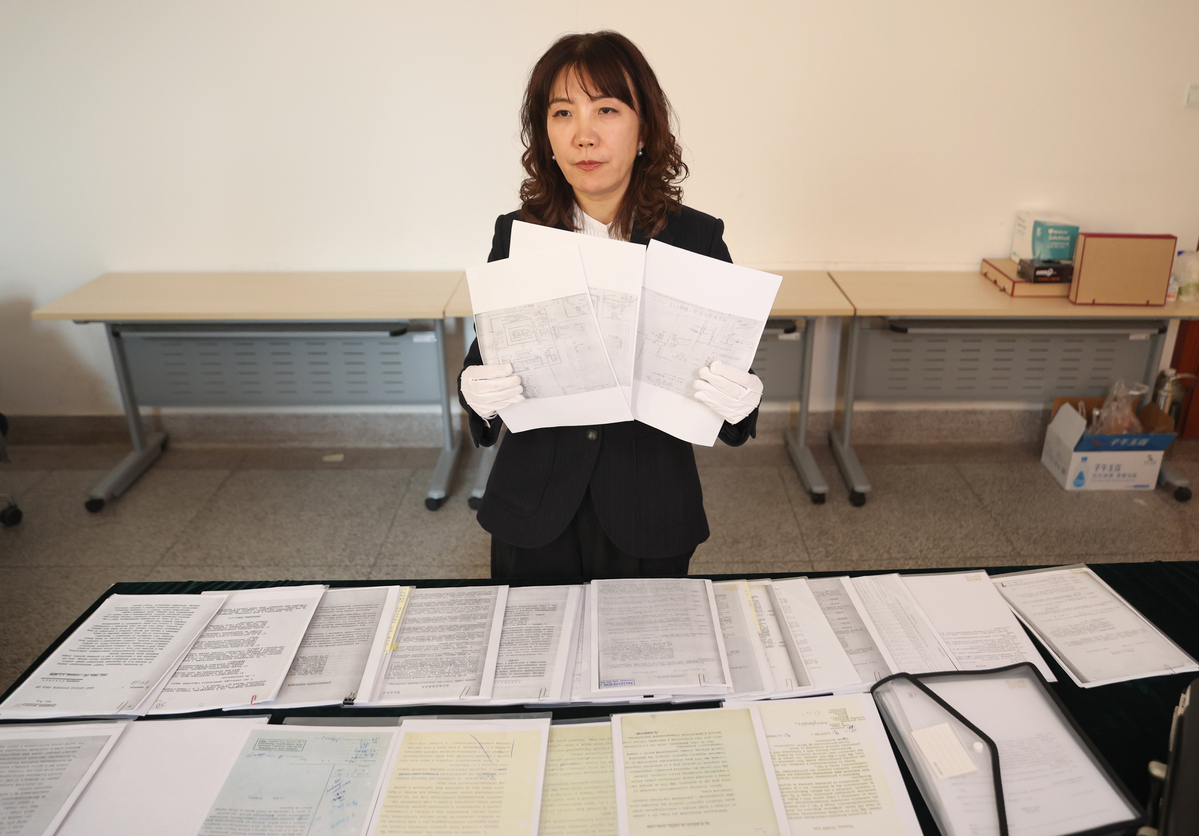
On Dec 13, the 12th national memorial day for victims of the Nanjing Massacre, history spoke again — this time through newly declassified archives received from Russia. The National Archives Administration of China released declassified archives given by Russia, including records of Soviet interrogations of members of Japan's notorious Unit 731, investigations of the unit's crimes and official Soviet correspondence. These archives complement the evidence preserved in China, forming a more complete body of proof of the heinous acts of Japan's biological warfare unit.
Some of the archives are being made public for the first time. During interrogation, Japanese war criminals admitted to preparing and carrying out germ warfare, crimes that flagrantly violate international conventions. They are irrefutable evidence of the atrocities committed by Unit 731 and leave no scope for denial.
Yet, denial has only become louder. In recent years, historical revisionism in Japan has intensified, and voices denying, downplaying or even glorifying Japan's wartime aggression have grown shriller. The current Japanese government bears a strong right-wing imprint, persists in glorifying war criminals and denies the country's history of aggression.
Japanese Prime Minister Sanae Takaichi has even made provocative remarks on the Taiwan question. On Nov 7, she hinted at a possible military intervention in the Taiwan Strait, revealing ambitions of a return to militarism. Even 80 years after World War II, Japan is reluctant to acknowledge its wartime responsibility. The persistent denial of the crimes committed by Unit 731 is a telling example.
Established in Northeast China after the Sept 18 Incident in 1931, Unit 731 was a dark laboratory of Japanese militarism. As Japan pursued its ambition to annex all of China and dominate Asia, this biological warfare unit conducted live human experiments, developed biological weapons and carried out biological warfare. From 1937 to 1945, it became the hub of a massive biological warfare system that spread across China and other Asian countries, resulting in civilian deaths in China, the Korean Peninsula and beyond, and inflicted unspeakable suffering on the people of Asia.
But after the war, the Japanese government neither fully acknowledged nor reckoned with these crimes. Instead, it buried facts for decades, claiming that there were "no materials showing the details of the unit's activities".
History may be obscured, but it cannot be erased. Unearthed biological bomb casings, remains of experimental facilities, incriminating documents, testimonies of survivors and families of victims, forced laborers and even former Unit 731 members have clearly established irrefutable evidence of Japan's inhuman crimes.
The newly released archives add weight to this evidence. Among them are original pretrial interrogation records of 18 Japanese war criminals detained in Khabarovsk, including Kiyoshi Kawashima, a major general and former chief of the bacteria production division of Unit 731. His testimony, wide-ranging and highly classified, is particularly revealing. As more archives are declassified and records get shared, the full history of Japan's atrocities will inevitably be brought to light.
The crimes of Unit 731 were not isolated military excesses, but planned and executed by the state. Previous archives clearly show that these units were established and coordinated by the Japanese government and the Japanese Imperial General Headquarters. This proves that the biological warfare was premeditated.
Unit 731's experiments and production activities were aimed squarely at offensive biological weapons. In a 1949 confession, Kawashima recalled founder Shiro Ishii's rationale that Japan lacked sufficient metal resources and other raw materials needed for conventional weapons and therefore actively sought new types of weapons.
Unit 731 was just the first step. Over the next few years, Japan set up dozens of such units across Asia. Between 1940 and 1942, biological weapons were repeatedly used in China, including contamination of residential areas, water sources and crops. Testimonies also confirm inhumane frostbite experiments. No one captured by Unit 731 was spared, regardless of age, gender or nationality. Victims included civilians and prisoners of war from other Asian countries as well as Western nations.
Historical revisionism distorts public thinking, pushing younger generations further from the truth and planting the seeds of militarism. The logic is simple: deny war crimes, shed the burden of apology and dismantle the postwar order.
Preventing the revival of Japanese militarism is a global responsibility. Japan's denial of aggression runs parallel to its push for a constitutional revision and military expansion, posing a serious threat to regional security. Japan's move to go beyond its exclusively defense-oriented policy is bound to heighten concerns among neighboring countries and destabilize the security environment.
The newly transferred archives have revealed far more sinister plans. Assessments by Soviet medical and scientific experts conclude that the biological research was aimed at destroying human life on a large scale. When such atrocities are deliberately downplayed, peace and justice lose a vital safeguard.
This year marks the 80th anniversary of victory in the Chinese People's War of Resistance Against Japanese Aggression (1931-45) and the World Anti-Fascist War. At this critical historical juncture, Japan should seriously confront the truth of Unit 731 and other war crimes. Only by facing history honestly, engaging in profound reflection and making a clean break with militarism can Japan truly earn genuine trust.
The author is a researcher at the Institute of Japanese Studies in the Chinese Academy of Social Sciences.
The views don't necessarily reflect those of China Daily.
If you have a specific expertise, or would like to share your thought about our stories, then send us your writings at opinion@chinadaily.com.cn, and comment@chinadaily.com.cn.





