


Xi Story: Revisiting dialogue in cave dwelling










BEIJING -- The year 2026 will open a new chapter in China's economic and social development, marking the start of the country's 15th five-year blueprint. As Chinese President Xi Jinping and his colleagues sketch out their vision for growth, they are also signaling a preoccupation with the risks and challenges confronting the governing party.
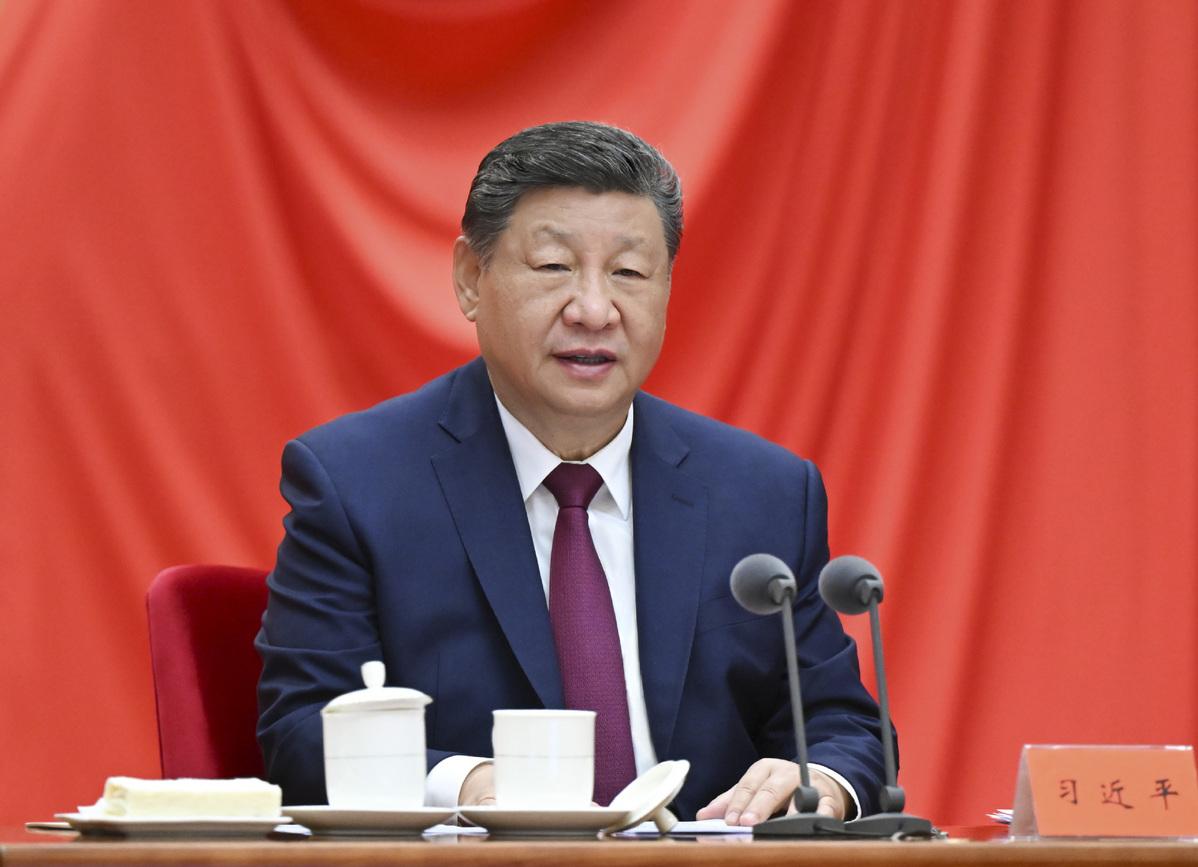
On Monday, speaking at a major meeting of the Communist Party of China (CPC) top anti-corruption body, Xi cast graft as an existential threat. Corruption, he said, was a "roadblock and a stumbling block" to China's development, and the campaign to root it out a fight the Party "can neither afford to lose nor allow itself to lose."
Xi, also general secretary of the CPC Central Committee and chairman of the Central Military Commission, urged officials to bring a clearer sense of purpose and greater resolve to the anti-corruption fight, calling for tougher standards and more concrete steps to tighten discipline.
The remarks echoed a theme Xi touched on in his 2026 New Year message, when he revisited a question first posed in a cave dwelling in China's loess hills about 80 years ago: how to escape the historical cycle of rise and fall and sustain long-term governance.
In 1945, in the revolutionary heartland of Yan'an, a dialogue unfolded inside the modest cave dwelling between Mao Zedong and Huang Yanpei, an acclaimed patriot and educationist. Mao's response to Huang's question was simple: place authority under the watchful eye of the people.
The conversation has been repeatedly invoked by Xi since he assumed the Party's top post in late 2012. He has used it to caution against complacency among Party members, who may overlook the complexities and long-term risks testing the governing party.
Xi, who lived in cave dwellings on the Loess Plateau during his youth, added his answer to Mao's cave conversation: the Party must carry on its self-reform to escape the historical cycle of rise and fall.
He likens the Party's self-reform to "using a surgical knife to eliminate the Party's ailments." As he once put it, "The Party is great not because it never makes mistakes, but because it always owns up to its errors and has the courage to confront problems and reform itself."
Xi emphasized that fighting corruption represents the most thorough kind of self-reform. He has singled out corruption as a primary concern among the many severe challenges facing the Party, calling it a "cancer" that erodes both the vitality and capability of the century-old Party.
Xi has led an unprecedented anti-corruption campaign since 2012, driven by a determination to "offend a few thousand rather than fail 1.4 billion," targeting both high-ranking and low-level corrupt officials. This relentless effort has yielded an overwhelming victory, with the gains fully consolidated.
He has also leveraged the strength of institutions. Under his leadership, a wide range of Party regulations have been instituted and revised, a supervision network covering all holders of public office has been established, and disciplinary inspection has been strengthened. This has shaped a distinctly Chinese approach to combating corruption, designed to ensure that officials do not have the audacity, opportunity or desire to be corrupt.
Over the past year, this system has brought down a string of corrupt officials, including 65 officials registered and supervised by the CPC Central Committee.
At Monday's meeting, Xi reiterated the importance of such institutions, saying that compliance with law and regulations admits no privilege and that enforcement of the law and regulations allows no exceptions.
It is imperative to ensure that institutions and regulations truly become "live high-voltage lines" that must not be touched, he said.
"As long as the breeding grounds and conditions for corruption still exist, we must keep sounding the bugle and never rest, not even for a minute, in our fight against corruption," Xi once said.
As China begins its 15th Five-Year Plan, Xi's reference to the cave-dwelling conversation underscores his sobriety despite an array of successes achieved under his leadership, observers said.
The message, they noted, is clear: the CPC must lead China toward the goals clearly set out, staying ahead of waves and adapting with purpose.
"The tasks of advancing Chinese modernization entrusted to our Party are extremely arduous, and the governing environment is unusually complex. We must pull the string of self-reform tighter," Xi has told Party members.
In Xi's view, China's success hinges on the Party, especially on the Party's efforts to exercise effective self-supervision, and full and rigorous self-governance.
Not long after his trip to Yan'an, Huang penned his observations on the rising political party in a book published in August 1945:
"I believe that the most invaluable spirit of our friends in the CPC lies in their constant pursuit of excellence and progress."
"When this spirit is brought out in full, both the future and hope become limitless," he wrote.





