China's currency, the renminbi, has been weakening in recent months, resurrecting familiar charges of manipulation, competitive devaluation, and beggar-thy-neighbor mercantilism. In mid-April, the US Treasury expressed "particularly serious concerns" over this development, underscoring what has long been one of the most contentious economic-policy issues between the United States and China.
This is a timeworn debate - politically inspired and grounded in bad economics - that does a serious disservice to both sides by diverting attention from far more important issues affecting the US-China economic relationship. Taken to its extreme, America's accusations risk pushing the world's two largest economies down the slippery slope of trade frictions, protectionism, or something even worse.
 |
 |
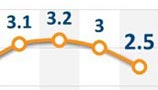
Over the same period, there has been a dramatic adjustment of China's international balance-of-payments position. The current-account surplus - the most telling symptom of an undervalued currency - has narrowed from a record 10.1 percent of GDP in 2007 to just 2.1 percent in 2013. The International Monetary Fund's latest forecast suggests that the surplus will hold at around 2 percent of GDP in 2014.
Seen against this background, US officials' handwringing over the recent modest reversal in the renminbi's exchange rate appears absurd. With China's external position much closer to balance, there is good reason to argue that the renminbi, having appreciated by nearly one-third since mid-2005, is now within a reasonable proximity of "fair value." The IMF conceded as much in its latest in-depth review of the Chinese economy, which calls the renminbi "moderately undervalued" by 5-10 percent. This stands in contrast to its earlier assessments of "substantial" undervaluation.
America's fixation on the renminbi is a classic case of political denial. With US workers remaining under intense pressure in terms of both job security and real wages, politicians have understandably been put on the spot. In response, they have fixated on the Chinese component of a long-gaping trade deficit, charging that currency manipulation is the culprit to the long festering woes of the American middle class.

Copyright 1995 - . All rights reserved. The content (including but not limited to text, photo, multimedia information, etc) published in this site belongs to China Daily Information Co (CDIC). Without written authorization from CDIC, such content shall not be republished or used in any form. Note: Browsers with 1024*768 or higher resolution are suggested for this site.
License for publishing multimedia online 0108263 Registration Number: 20100000002731