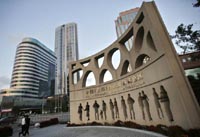
Several editors at Shanghai-based business news website 21cbh.com were detained last week for allegedly blackmailing enterprises. According to the police, the case involved a huge amount of money.
Xinhua News Agency's branch in Shanghai "automatically" ended a 3.5 million yuan ($590,000) contract with Bank of Communications last week after the central authority's disciplinary inspection team found the contract actually was a way for the bank to buy good news or ignorance from the State-run media.
The two cases came after President Xi Jinping vowed to reform the media last month and are believed to be a starting point for the authorities to deal with corruption in the media.
 |
 |
Three kinds of media corruption prevail in China.
First, as the 21cbh.com case indicates, some unscrupulous editors and reporters seek illicit profits from their interviewees, enterprises and governments. In exchange, they agree to report positive news about the interviewees, or become selectively blind to their negative stories.
Many enterprises' public relations budgets are spent to muffle the media in cases of scandal or production accidents, or employ the media to trumpet their products and services. Envelopes containing so-called traffic fees are common at many press conferences organized by companies and local governments.
In the process, news reporting becomes an exchange of money and publicity.
The media lose their public credibility and independence. Paid reporting is actually a manipulation of public opinion and an abuse of public tools. Money talks at the expense of the public interest and media ethics.
Second, some star reporters develop close personal connections with senior officials and big bosses. They are middle men for underhanded dealings between the officials and businesspeople. Or, some officials of powerful media monopolies take advantage of their power through extortion.
Last month, several notable anchors, producers and an advertising department head from China Central Television were investigated for an alleged connection to senior officials and abuse of power.
Rui Chenggang, star anchor of business news for CCTV, was found to be running a public relations company with his family, and most of the company's clients were his interviewees.
Third, as Xinhua's Shanghai case shows, the media's branches across the country are usually important moneymakers for their headquarters in Beijing, Shanghai or provincial capitals.

Copyright 1995 - . All rights reserved. The content (including but not limited to text, photo, multimedia information, etc) published in this site belongs to China Daily Information Co (CDIC). Without written authorization from CDIC, such content shall not be republished or used in any form. Note: Browsers with 1024*768 or higher resolution are suggested for this site.
License for publishing multimedia online 0108263 Registration Number: 20100000002731