The management of foreign investment will become more flexible under the new investment law, and the final version of the law will focus on equal treatment of foreign and domestic investments to eliminate terms such as "foreign-invested enterprises", experts said.
The existing requirement to examine and approve each and every case of overseas investment will be eliminated under the law, which is now in draft form.
Management of foreign investment will be conducted under the principle of pre-establishment national treatment and a "negative list" will also be adopted.
Pre-establishment national treatment means that foreign companies enter a nation on the same terms as their domestic counterparts.
A "negative list" specifies any bans or limits on foreign investment. Businesses not on such a list are presumed to be unrestricted. This system was adopted in the China (Shanghai) Pilot Free Trade Zone, which opened in September 2013.
Since then, authorities in China have been eager to replicate the system.
"These measures are intended to cut restrictions on foreign investment while giving foreign investors and their investment equal treatment to Chinese companies," said Yu Bin, director of the Department of Macroeconomic Research at the State Council's Development Research Center.
Yu Fachang, spokesman for the State Administration for Industry and Commerce, said that with the government easing investment access and revising laws and regulations, the service sector and information technology industry will attract more foreign investment in 2015.
New foreign-funded enterprises increased almost 5.8 percent to 384,000 in 2014 after two years of declines. Total investment value was $276.33 billion, according to the SAIC.
"The recovering global economy was another contributing factor," Yu said on Thursday.
The three current foreign investment laws are to be repealed and substituted with a unified law.
Foreign business chambers such as the European Union Chamber of Commerce in China and the US-China Business Council have frequently urged China to consider eliminating terminology such as "foreign-invested enterprises" and other such definitions.
"Continued use of this term invites differential treatment for various types of domestic enterprises versus others, based solely on ownership," said He Jingtong, a professor of foreign investment at the Tianjin-based Nankai University.
He said that governments at all levels in China should act independently and transparently and ensure that all domestic enterprises, including foreign-invested ones, are treated equally and allowed to compete fairly.
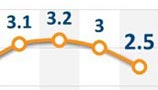
China's actual use of foreign investment was $119.6 billion in 2014, up 1.7 percent. Growth of foreign investment in China was faster than other major economies including the United States, the European Union, Russia and Brazil.

Copyright 1995 - . All rights reserved. The content (including but not limited to text, photo, multimedia information, etc) published in this site belongs to China Daily Information Co (CDIC). Without written authorization from CDIC, such content shall not be republished or used in any form. Note: Browsers with 1024*768 or higher resolution are suggested for this site.
License for publishing multimedia online 0108263 Registration Number: 130349